

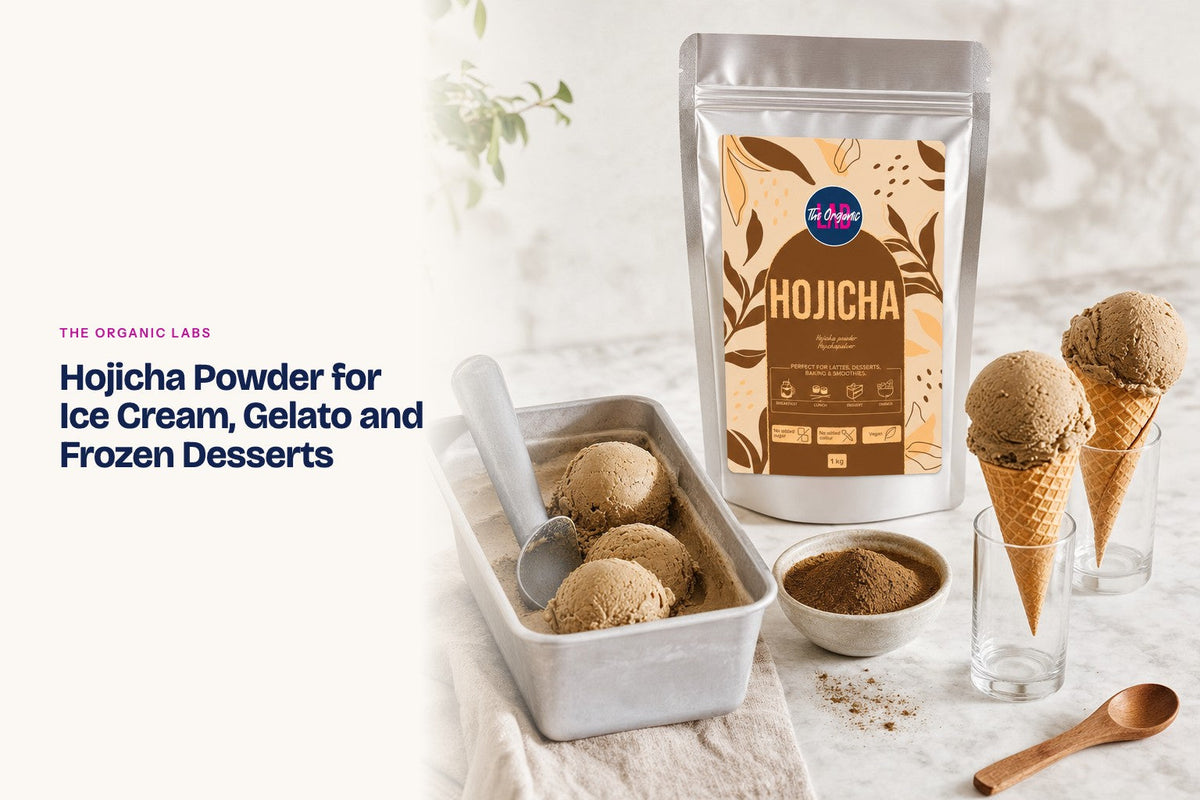
Hojicha ice cream tastes like a cold, creamy cup of roasted tea with milk: toasty and nutty, with a caramel edge. In Japan, hojicha soft-serve and ice cream sit beside matcha on many dessert menus, and the flavour has found a place in gelato cabinets in Europe too.
For producers, hojicha has a practical appeal: one ingredient gives both the flavour and a warm beige colour. This guide covers dosage, dispersion, the choice of base, colour in the cabinet and how to test a recipe before production.
Why Hojicha Suits Frozen Desserts
- Its roasted flavour has enough depth to come through cold, where lighter flavours fade.
- It sits comfortably beside caramel, coffee, chocolate and nut flavours, yet looks and tastes different from all of them.
- Its colour is a natural roasted beige to tan that looks right for the flavour.
- It works in dairy and plant-based bases alike.
Dosage
Start with 2–4% of the base, adjusted for the colour and flavour you want. Towards 2%, you get a pale beige ice cream with a soft tea note; towards 4%, a deeper tan and a clear roasted flavour with more bitterness.
Freezing mutes flavour, so taste at serving temperature, not only as a liquid mix. A base that tastes just right warm will taste weaker in the cabinet. Sugar matters too: sweetness softens the gentle bitterness of the tea, so a change to the sugar level changes how strong the hojicha seems.
Getting the Powder Into the Base
Tea powder disperses rather than dissolves. Poor mixing shows up as specks, a slightly gritty texture or sediment at the bottom of the batch. Good practice:
- Dry-blend first. Mix the hojicha powder thoroughly with the sugar and any other dry ingredients, such as milk powder or stabiliser.
- Add to the liquid while mixing. Sprinkle the dry blend into the milk with a stick blender or high-shear mixer running.
- Add before pasteurisation where your process allows, so the powder is hydrated and mixed during heating.
- Age the mix. Resting the base in the fridge before churning, as with most gelato bases, gives the powder time to hydrate and the flavour time to round out.
- Blend again before churning to bring back any powder that has settled.
Dairy Bases
Milk fat carries hojicha well. A fior di latte-style base without egg lets the roasted tea stand at the front, while an egg-yolk base adds richness and a slight custard note that suits hojicha. Higher-fat bases soften the bitterness, so they can take the top of the dosage range.
Hojicha powder adds dry solids. At 3–4%, account for it in your solids balance, especially in recipes that are already close to their limit, or the ice cream may set firmer than intended.
Plant-Based Bases
Hojicha works well in plant-based ice cream, and our powder is vegan. Each base brings something different:
- Oat: a natural partner, its cereal sweetness matching the roast.
- Soy: neutral and creamy, letting the tea lead.
- Almond and cashew: bring out the nutty side of hojicha.
- Coconut: rich, but with a strong flavour of its own. Combine it with another base if hojicha should lead.
Plant bases differ from dairy in fat, solids and how they hold particles in suspension, so dispersion and mouthfeel need their own trials rather than a straight swap from the dairy recipe.
In the Cabinet: Colour and Serving Temperature
Hojicha gives a warm beige to light tan, depending on dose and base. Egg-yolk bases make it slightly more golden, and plant bases shift it according to their own colour. There is no bright green to lose, which makes hojicha easier to keep looking consistent than matcha. Even so, check a tub after several days in the display cabinet to make sure it still looks the way it did on day one.
Serving temperature affects how hojicha tastes. Slightly warmer gelato releases more of the roasted aroma, while a hard-frozen product tastes flatter. If your cabinet runs cold, taste at that temperature during development and adjust the dose to match.
Sorbets, Soft-Serve and Other Frozen Desserts
Without fat, hojicha's bitterness is more noticeable, so water-based ices need careful sugar balance and usually a lower dose. Beyond classic gelato, hojicha works in:
- soft-serve mixes, where it is a familiar flavour in Japan
- frozen yoghurt, where a little tang meets the roast
- ice cream sandwiches made with hojicha cookies
- semifreddo and frozen mousse
- plated desserts, paired with a warm brownie or caramel sauce
Ripples and Inclusions
Hojicha gelato stands on its own, but it also takes ripples and inclusions well: salted caramel or brown sugar ripples, white chocolate stracciatella, candied pecans or hazelnuts, black sesame, sweet red bean or small pieces of mochi. Add sweet inclusions with restraint, as they make the base taste milder.
Testing Before Production
- Make test batches at 2%, 3% and 4% and taste them side by side at serving temperature.
- Check for specks and sediment in the mix and in the finished product.
- Keep samples for the expected shelf life and recheck colour, flavour and texture at the end.
- Record the dose and the powder batch number in your production notes.
Our guide for food manufacturers working with hojicha covers documentation and batch consistency in more depth.
Bulk Hojicha for Ice Cream Makers
The Organic Labs supplies hojicha powder in 25 kg drums, with full pallets of 20 drums for food manufacturers, ice cream producers and distributors, stocked and shipped from Sweden. Each batch comes with a certificate of analysis. Request a quote or a sample on the Bulk Hojicha Powder 25kg page, or ask a question through our contact page. For home ice cream makers, our guide to how to use hojicha powder includes a simple method.


