

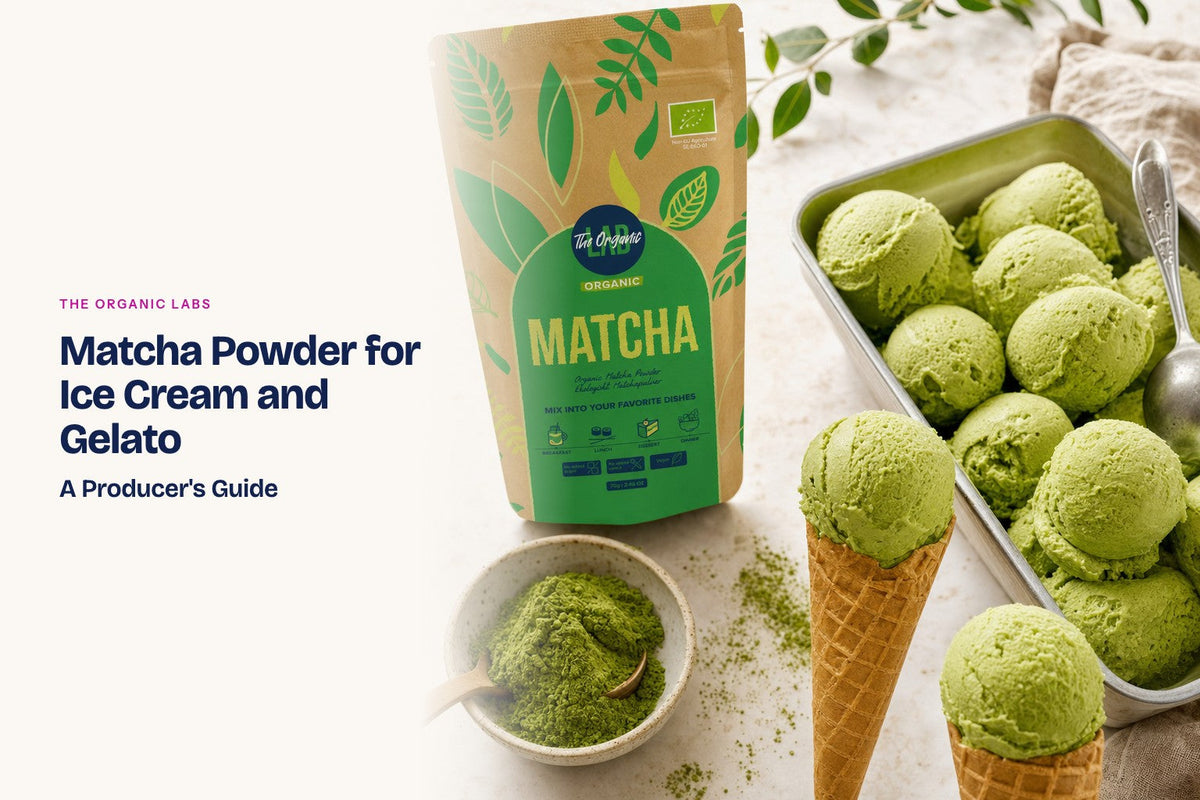
Matcha ice cream has been a classic in Japan for a long time, and matcha gelato is now a regular in gelaterias and dessert shops across Europe. The flavour suits frozen desserts: cream and sugar soften the bitterness, and the green stands out in a display cabinet.
It also brings practical challenges. Matcha does not dissolve, it reacts to heat and light, and freezing changes how strong it tastes. This guide covers what ice cream and gelato producers need to know, for dairy and plant-based bases alike.
How Much Matcha to Use
A practical starting range is 2–4% of the base. For a 5 kg batch of base, that is 100–200 g of matcha. Adjust according to the colour and flavour you want, the fat and sugar level of the base and the matcha you use.
At the lower end, the flavour is gentle and milky. Towards the upper end, the tea character is pronounced and the bitterness becomes part of the profile. A shop with a loyal matcha following could even run two versions: a mild matcha milk and an intense matcha.
Remember that matcha adds dry solids but almost no sweetness. At the top of the range, the base can taste less sweet and freeze slightly firmer, so check your balance of sugars and solids rather than simply adding more powder to a proven recipe.
Dispersion: Avoiding Lumps and Specks
Matcha is a very fine powder that clumps when it meets liquid. In a gelato base, undispersed matcha shows as dark green specks and leaves a dusty, bitter feel on the tongue.
- Dry-blend matcha with the sugar, or with the sugar and other powders such as milk powder and stabiliser, before adding it to the liquid.
- Add the dry mix gradually while blending with an immersion blender or high-shear mixer.
- Check the base for sediment after it has rested.
- Blend again briefly before the base goes into the batch freezer, as matcha particles can settle during ageing.
When to Add Matcha: Before or After Pasteurisation
Heat dulls matcha's colour and fresh aroma. Matcha added at the start of a hot process gets the most heat exposure; matcha added once the base has cooled loses less colour and keeps more of its fresh aroma.
The right point depends on your process and your food safety procedures. If matcha goes in after the heat step, make sure that fits your HACCP plan. Compare both methods in trials and decide on the colour and flavour of the frozen product.
Dairy Bases
Milk fat carries matcha's flavour and softens its bitterness, which is why matcha works so well in milk and custard bases. A few points to keep in mind:
- Egg yolk custard bases give a round, creamy matcha ice cream, but the yellow of the yolks shifts the colour towards a softer yellow-green.
- Milk-based gelato without egg shows a cleaner green.
- Higher fat levels mute the flavour slightly, so adjust the dose to match.
- White chocolate or condensed milk in the base pairs naturally with matcha.
Plant-Based Bases
Matcha suits plant-based frozen desserts, and the powder itself is a single ingredient listed as vegan in our specification.
- Oat bases add a gentle cereal sweetness that works with matcha.
- Coconut bases give body and fat, and coconut pairs well with matcha, though it can dominate at high levels.
- Soy bases are fairly neutral, with a slight beany note that vanilla helps to round off.
- Sorbet-style bases without fat let more bitterness through, and fruit acidity shifts the colour, so they need careful testing.
Plant-based bases vary widely in fat, solids and sugar, so a dose that works in dairy needs retesting in each.
Colour in the Frozen Product
Colour changes between the liquid base and the finished product. Air incorporated during freezing makes the colour look lighter, and fat and dairy soften it further. Judge colour in the frozen, extracted product, not in the mix.
In the cabinet, light is the main enemy. Matcha gelato under bright display lighting fades over time, starting at the surface. Rotate tubs, keep them out of direct sunlight and do not hold display stock longer than necessary. Lids help in storage.
Flavour at Serving Temperature
Cold reduces how strongly flavour and sweetness are perceived. A base that tastes well balanced at room temperature will seem weaker once frozen. Make the base slightly stronger than intended, then confirm the result at serving temperature. Our guide to what matcha tastes like explains how milk, sugar and cold change the flavour.
Ideas for Matcha Frozen Desserts
- matcha gelato with a white chocolate or black sesame ripple
- matcha and red bean ice cream
- matcha soft-serve
- matcha affogato: whisked matcha poured over a scoop of vanilla gelato
- matcha ice cream sandwiches made with butter cookies
- matcha and strawberry swirl for summer menus
- plant-based matcha and coconut ice cream
Testing Before Production
- Make three trial batches at different doses and compare them frozen, at serving temperature.
- Check colour on day one and again after several days in storage and display.
- Test each new batch of matcha in a small run before full production.
- Record the dose, the process step at which matcha is added and the blending time.
Producers making frozen desserts at industrial scale will find more on documentation and batch consistency in our guide for food manufacturers using matcha.
Matcha Supply for Ice Cream Producers
Gelato shops and ice cream producers can order Bulk Organic Matcha Powder 25kg in 25 kg drums, from a single drum to full pallets, stocked and shipped from Sweden, with a sample available for trials. For ice cream at home, the Premium Organic Matcha Powder – 70g is a convenient pack.


