


For a food or beverage manufacturer, pink pitaya powder is more than an eye-catching colour. It is a raw material that has to behave the same way across thousands of units, come through the process with its colour intact, sit correctly on the label and arrive with the right paperwork.
This guide is written for product developers, food technologists and buyers evaluating red dragon fruit powder (Selenicereus costaricensis) for manufactured foods and drinks in Europe. It covers the points that usually decide whether a bench trial becomes a listed product.
Where Manufacturers Use Pink Pitaya Powder
Typical applications include:
- Beverages: smoothies, milk drinks, lemonades and powdered drink mixes
- Bakery: frostings, creams, fillings and decorated products
- Ice cream, gelato, sorbet and other frozen desserts
- Confectionery and chocolate, including coloured white chocolate and coatings
- Yoghurt-style desserts, breakfast products and dessert preparations
- Private label products and ingredient blends
In each case the powder brings colour and a mild fruity flavour from one fruit ingredient. That keeps the ingredient list short and lets the colour come from the fruit named on the pack.
Starting Dosages for Trials
Dosage depends on the target shade, the base and the process. As starting points before trials in your own formulation:
- Drinks: 3–5 g per 300 ml serving
- Cakes and sponges: 3–6% of flour weight
- Ice cream and gelato base: 2–4% of the base
- Fillings, spreads and confectionery: 3–6% of the recipe
Run a ladder of three or four dosages and judge each one at the end of the process, not in the mixing vessel. A filling that looks bright before baking will look different afterwards, and an ice cream mix looks darker before air is whipped into it.
More powder also means more dry matter. The powder absorbs moisture, so higher dosages can change viscosity, water binding and texture, and liquid levels may need adjusting to compensate.
Dispersion and Mixing
Pink pitaya powder is milled fruit, not a soluble dye, and it needs good dispersion to avoid specks, lumps and streaks:
- Pre-blend it with other dry ingredients such as sugar, flour or milk powder before liquid is added.
- For liquid systems, disperse it into part of the liquid under high shear, then combine with the main batch.
- Give liquid bases time to hydrate before final colour readings, as the shade can change while the powder wets out.
- In fat-based systems such as chocolate and compound coatings, check the powder's particle size against your refining step and test for any change in viscosity.
Colour Under Heat, pH and Light
The magenta colour comes from betalain pigments, and their behaviour drives most processing decisions:
- Heat: brief, moderate heat is usually tolerated, while long or intense heat treatment fades the colour and can shift it towards brown. Add the powder as late in the process as your food safety plan allows, and assess colour after pasteurisation, baking or cooking rather than before.
- pH: the colour is most comfortable in mildly acidic to neutral products. Alkaline conditions speed up degradation.
- Light and oxygen: prolonged exposure fades the colour, so packaging, headspace and display conditions all matter.
- Water activity: low-moisture products such as drink mixes, coatings and dry blends generally keep the colour longer than high-moisture products.
Shelf-life testing of the finished product in its final packaging is the only reliable way to set a best-before date for a pink product. Plan it into the development timeline from the start.
Batch Consistency
Pink pitaya is an agricultural raw material, and its shade can vary slightly between harvests. Manufacturers manage this in a few ways:
- Set an internal colour standard and check each incoming batch against it.
- Keep a retained sample from every approved batch.
- Allow a small dosage window in the recipe so the finished colour can be matched.
- Agree the relevant specification parameters with the supplier before the first order.
A certificate of analysis issued per batch, carrying the batch number you receive, links each delivery to its paperwork and makes traceability straightforward.
Documentation and Food Safety
The Organic Labs works under an ISO 22000 food safety management system with HACCP-based procedures implemented. The certification covers handling, storage and dispatch of the powder supplied, and the company is a registered food facility in the Swedish sanitary registry.
For your technical file, the following are available:
- Certificate of analysis (COA), issued per batch
- Technical data sheet (TDS), the complete product specification including analysis parameters
- Ingredient and allergen declaration: single ingredient, declared for your labelling
For confidentiality, certificates and technical documents are sent by email with your quote, usually within 24 hours of your request.
Labelling Considerations
The ingredient is 100% dragon fruit (pink pitaya) and vegan. How you name it in the ingredient list, and how you describe the colour on pack, belongs in your own regulatory review. EU rules on colours and colouring ingredients are detailed, so confirm the declaration and any front-of-pack wording with your regulatory adviser before launch.
Storage and Handling on Site
Fruit powders draw moisture from the air. Keep drums closed in a cool, dry place below 25 °C, reseal part-used drums promptly and use dry scoops. Shelf life is 2 years from production date. The powder is packed in 25 kg drums, with 20 drums to a pallet, which makes stock rotation simple to plan.
From Pilot to Production
Once a formulation passes trials, the questions become volume and continuity. The Organic Labs supplies from one 25 kg drum to full pallets and scheduled tonnes, with capacity of up to 60 tonnes per month. For recurring volumes, production can be reserved against your forecast and delivered on a call-off schedule, and the powder is also supplied for private label products.
Our overview of bulk pink pitaya powder supply in Europe explains volumes and ordering, and our guide to pink pitaya in ice cream and gelato goes deeper into frozen applications.
Request Samples and Documents
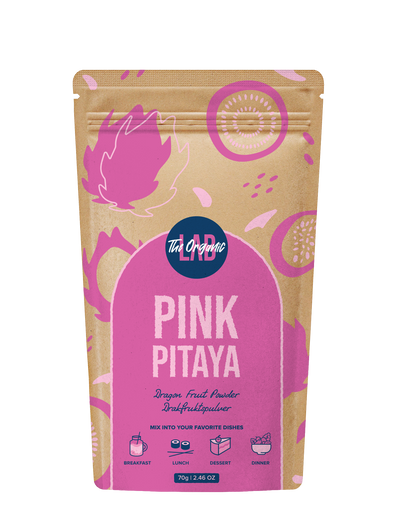
To start a trial, request a sample, the COA and the TDS through the Bulk Pink Pitaya Powder 25kg page. For a quick first bench test, or for home cooks who simply want to try it, the Pink Pitaya Powder – 500g and Pink Pitaya Powder – 70g packs are available in the shop.


