


Ube vs Purple Sweet Potato: What Is the Difference?
Ube and purple sweet potato are often confused because of one very obvious characteristic: they are both purple.
Once processed into powders and used in lattes, cakes, desserts or other foods, the finished products can look remarkably similar. However, Ube and purple sweet potato are not the same ingredient.
They come from different botanical families, have different flavour profiles and have their own culinary traditions.
Understanding the difference is particularly important when choosing an ingredient for food and beverage applications.
What Is Ube?
Ube is a purple yam botanically known as Dioscorea alata.
It is particularly associated with Filipino cuisine, where it has a long history of use in traditional desserts and sweet preparations.
Fresh Ube can have flesh ranging from violet and lavender to deeper shades of purple. Its distinctive appearance has helped make Ube increasingly recognisable outside the Philippines, particularly through Ube lattes, cakes, ice cream and other desserts.
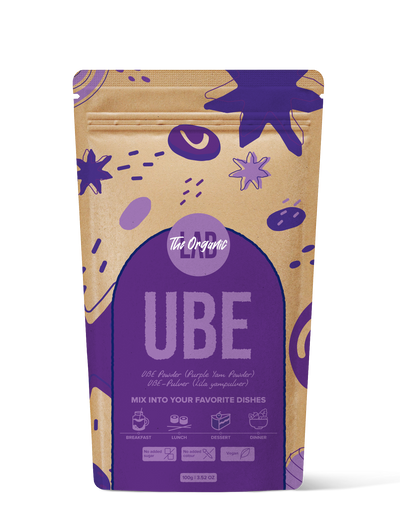
Ube can also be dried and milled to produce Ube Purple Yam Powder.
What Is Purple Sweet Potato?
Purple sweet potato is a type of sweet potato belonging to the Ipomoea batatas species.
This means it is botanically different from Ube.
There are several varieties of purple sweet potato, and their appearance, colour intensity and flavour can vary.
Purple sweet potatoes are cultivated in different parts of the world and are used in both traditional and modern food applications.
Like Ube, purple sweet potato can also be dried and processed into powder.
This is where confusion between the two ingredients becomes particularly common.
Ube vs Purple Sweet Potato: Botanical Difference
The most important difference is their botanical identity.
Ube: Dioscorea alata — a yam.
Purple sweet potato: Ipomoea batatas — a sweet potato.
Although both are underground crops and can naturally have purple flesh, they belong to completely different botanical families.
The words Ube, purple yam and purple sweet potato should therefore not be used interchangeably.
If a product is genuinely Ube, its botanical identity should be Dioscorea alata.
Is Ube a Purple Sweet Potato?
No.
Ube is a purple yam, not a purple sweet potato.
This is probably one of the most common misunderstandings surrounding Ube.
The confusion is understandable because both ingredients can have striking purple flesh and can create similar-looking foods.
However, appearance alone does not determine botanical identity.
Ube belongs to the yam family, while purple sweet potato belongs to the sweet potato family.
They are separate ingredients.
Ube vs Purple Sweet Potato: Appearance
Fresh Ube and purple sweet potato can sometimes appear similar once cut open because both may reveal purple flesh.
Their external appearance, however, can differ considerably.
Ube typically has the characteristics of a yam, often with rougher, more irregular skin.
Purple sweet potatoes generally resemble other sweet potato varieties in shape and skin texture.
There is also considerable natural variation within both crops.
Not every Ube has exactly the same shade of purple, and not every purple sweet potato has identical colour intensity.
Agricultural variety, growing conditions and processing can all influence appearance.
Ube vs Purple Sweet Potato Powder
Once the ingredients have been dried and milled into powder, distinguishing them visually can become much more difficult.
Both Ube powder and purple sweet potato powder can range through different shades of lavender, violet and purple.
For professional buyers, colour alone is therefore not a reliable method of identifying the ingredient.
The botanical identity and product documentation are considerably more important.
Ube Purple Yam Powder should originate from Dioscorea alata, while Purple Sweet Potato Powder should originate from Ipomoea batatas.
This distinction matters when developing products that will specifically be marketed as containing Ube.
Does Ube Taste Like Purple Sweet Potato?
Not exactly.
Both ingredients have relatively mild flavour profiles, but they have different characteristics.
Ube is often described as mildly sweet, earthy and subtly nutty. Its flavour works particularly well with ingredients commonly found in desserts, such as coconut, vanilla and dairy or plant-based alternatives.
Purple sweet potato generally has a more familiar sweet-potato character with an earthy, naturally sweet and starchy profile.
The difference can be subtle when the ingredients are incorporated into complex recipes.
Sugar, milk, coconut, vanilla and other ingredients can significantly influence the final flavour of a drink or dessert.
For this reason, the taste of an Ube latte should not necessarily be taken as the taste of pure Ube itself.
Why Do Ube and Purple Sweet Potato Look So Similar?
Their natural purple pigmentation is the main reason the two ingredients are frequently confused.
Both can contain naturally occurring anthocyanin pigments responsible for red, blue and purple colours in many plants.
However, having similar pigmentation does not make two plants botanically identical.
This is comparable to different red fruits sharing a similar colour while remaining completely different ingredients.
The same principle applies to Ube and purple sweet potato.
Ube vs Purple Sweet Potato in Lattes
Both powders can be explored for colourful beverage applications.
However, an Ube latte and a purple sweet potato latte are not technically the same drink.
If a beverage is being marketed specifically as an Ube latte, the ingredient identity becomes particularly important.
Using purple sweet potato solely because it creates a similar purple colour does not make the finished beverage Ube.
Professional cafés developing an Ube menu should therefore verify that the powder they are purchasing is actually Dioscorea alata.
Purple sweet potato can instead be presented as an ingredient in its own right.
Ube vs Purple Sweet Potato in Baking
Both ingredients can also be used in bakery and dessert development.
Ube has a particularly strong connection with Filipino desserts and is increasingly used internationally in cakes, cheesecakes, cookies, pastries and other sweet products.
Purple sweet potato is also widely used in bakery products and desserts.
The two powders should not automatically be substituted for one another in an existing commercial recipe.
Their flavour, composition, moisture interaction and behaviour within a formulation can differ.
Professional users should test each ingredient under their own production conditions before moving to larger-scale manufacturing.
Which One Has the Stronger Purple Colour?
There is no single answer that applies to every Ube and purple sweet potato powder.
Natural colour can vary considerably.
The variety of raw material, growing conditions, drying process, heat treatment, particle size and other processing conditions can influence the appearance of the final powder.
A very intensely coloured purple sweet potato powder should therefore not automatically be considered Ube, while a lighter Ube powder should not automatically be considered poor quality simply because it is less intensely purple.
For commercial buyers, ingredient identity should be established through specifications and documentation rather than colour alone.
Why the Difference Matters for Food Businesses
For a consumer experimenting at home, confusing two purple powders might simply result in a different recipe.
For a professional food business, the distinction is much more important.
If a product is marketed as containing Ube, the business should know whether the ingredient it purchases is actually Dioscorea alata.
Professional buyers should therefore pay attention to information such as botanical identity, ingredient declaration, product specifications and batch documentation.
This becomes increasingly important as Ube becomes more popular and more purple ingredients enter the European market.
Ube and Purple Sweet Potato Are Two Different Ingredients
The simplest distinction is:
Ube = Dioscorea alata = Purple Yam
Purple Sweet Potato = Ipomoea batatas = Sweet Potato
Both are naturally colourful ingredients with interesting applications in drinks, desserts, bakery products and food manufacturing.
But they are not different names for the same product.
Ube has its own botanical identity, flavour and particularly strong connection with Filipino culinary tradition.
Purple sweet potato is a separate ingredient with its own characteristics and applications.
For businesses sourcing either powder, identifying the actual botanical ingredient is more important than simply choosing whichever powder appears the most purple. Get your UBE in Bulk with The Organic Labs


