

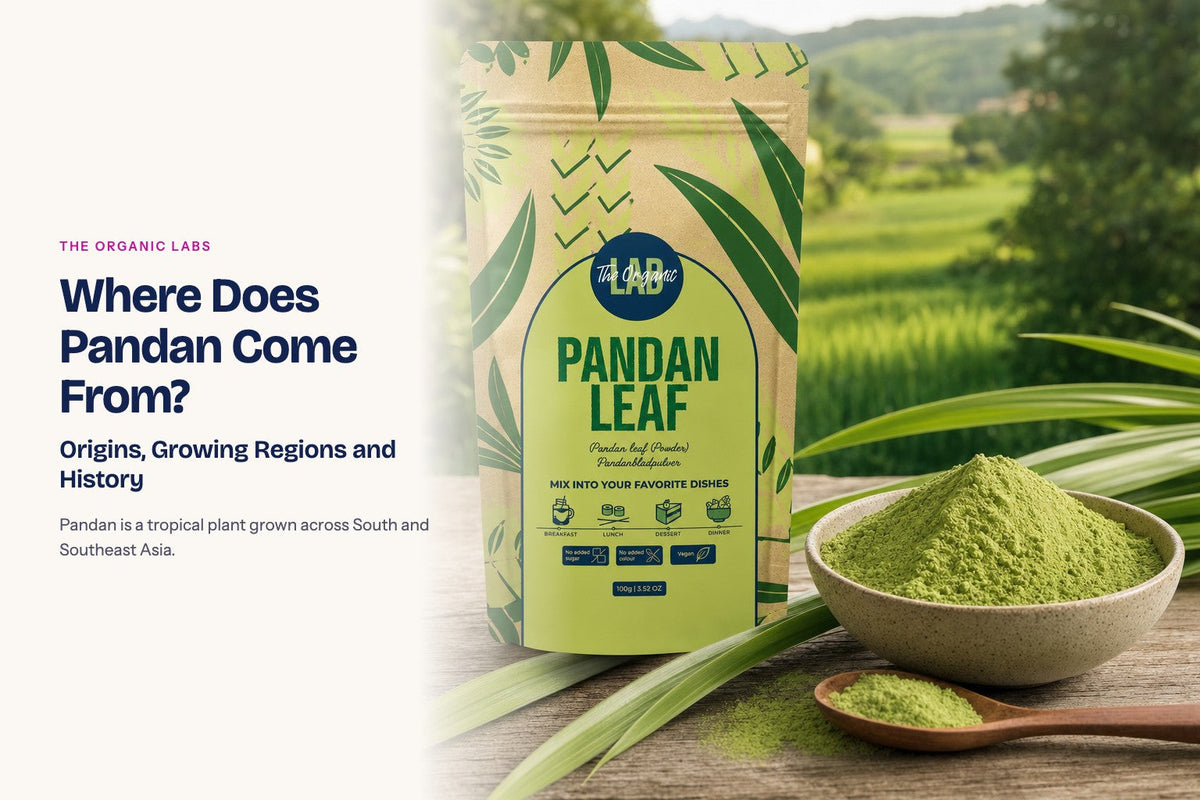
Pandan is one of the defining flavours of Southeast Asian cooking. It scents the coconut rice of Malaysian nasi lemak, colours Indonesian rice cakes, flavours Filipino desserts and wraps Thai fried chicken. Yet the plant itself is modest: a leafy tropical shrub that many families grow in a pot or a corner of the garden.
This guide looks at where pandan grows, how different cuisines use it and how it travelled from tropical gardens to cafés and bakeries in Europe.
The Plant Behind the Flavour
Culinary pandan is Pandanus amaryllifolius, a member of the screwpine family. It grows as a clump of long, narrow, glossy leaves spiralling out from a short stem, and it is grown for those fragrant leaves alone.
The species is known almost entirely as a cultivated plant. Its exact wild origin is uncertain, and it is usually propagated from cuttings and offshoots rather than from seed. What is clear is that it has been grown across tropical Asia for a very long time, passed from garden to garden as a kitchen plant.
Where Pandan Grows Today
Pandan needs warmth, humidity and moist soil, and it does not tolerate frost. It is grown across Southeast Asia and beyond, including:
- Malaysia and Singapore
- Indonesia
- Thailand
- Vietnam and Cambodia
- the Philippines
- Sri Lanka
It is also grown in other tropical regions with a similar climate. Production ranges from farms and smallholdings to home gardens. In the tropics the plant keeps producing new leaves, so they can be cut repeatedly from the same clump through the year.
In most of Europe, pandan can only be grown indoors or under glass, which is one reason fresh leaves are rarely seen outside Asian grocery shops, where they are usually sold frozen.
Pandan Across Southeast Asian Cuisines
Each cuisine uses pandan in its own way, but the pairing with coconut and sugar runs through almost all of them.
Malaysia and Singapore
Pandan flavours kaya, the coconut and egg jam eaten on toast at breakfast, and the coconut rice of nasi lemak. Pandan chiffon cake, tall, soft and pale green, is one of the region's best-loved cakes, and many kuih, small sweet cakes made with rice flour and coconut, are scented or coloured with pandan.
Indonesia
Pandan colours klepon, glutinous rice balls filled with palm sugar and rolled in grated coconut, and dadar gulung, thin green pancakes rolled around sweetened coconut. It also scents many cakes, puddings and drinks.
Thailand
Thai cooks wrap marinated chicken in pandan leaves before frying it, and use the leaf in coconut desserts, layered steamed sweets, custards and sweet drinks.
Vietnam
Pandan gives Vietnamese waffles their green colour and fragrance, and flavours sticky rice dishes and sweet dessert soups.
The Philippines
Buko pandan, young coconut with pandan-flavoured jelly and cream, is a classic Filipino dessert, and pandan leaves are often cooked with rice for their aroma.
Sri Lanka
Known there as rampe, pandan is used in savoury cooking too, often added to curries and rice together with curry leaves.
How Pandan Was Traditionally Prepared
For generations, pandan was used fresh. Leaves were knotted and dropped into rice, syrups and coconut milk, then removed before serving. For colour, cooks pounded or blended the leaves with a little water and squeezed out a green juice. Left to stand, the juice separates, and the darker layer that settles at the bottom is often used as a stronger pandan extract.
Fresh leaves do not travel well, which kept pandan local for a long time. Drying and milling the leaves into powder changed that, creating a format that can be shipped, stored and measured precisely.
Why Pandan and Coconut Go Together
Look at almost any traditional pandan recipe and coconut is in it too. The reason is partly geography: the coconut palm and pandan grow in the same warm, humid lowlands, so cooks across the region have long had both within reach. Coconut milk, coconut cream and grated coconut were the everyday base for sweets, and pandan was the natural way to scent them.
The pairing also works in the bowl. The fat in coconut milk carries pandan's aroma, and coconut's gentle sweetness rounds off the leaf's grassy edge. Palm sugar, the third member of many of these recipes, adds a caramel depth. That trio still shapes how pandan is used today, from Southeast Asian kuih to European café drinks.
How Pandan Reached Europe
Pandan came to Europe the way many ingredients do: with people. Southeast Asian communities brought it into home kitchens, restaurants and grocery shops. In the Netherlands, long ties with Indonesia mean pandan has been part of the food culture for decades, and green pandan cake is a familiar sight there.
The wider European public discovered pandan more recently, through travel to Southeast Asia, food media and the growth of specialty cafés. Café owners looking for a green drink beyond matcha, and bakers looking for a new flavour for sponges, croissants and doughnuts, found pandan a natural choice. Today it appears in lattes, bubble tea, ice cream and pastries in many European cities.
From Tropical Gardens to European Kitchens
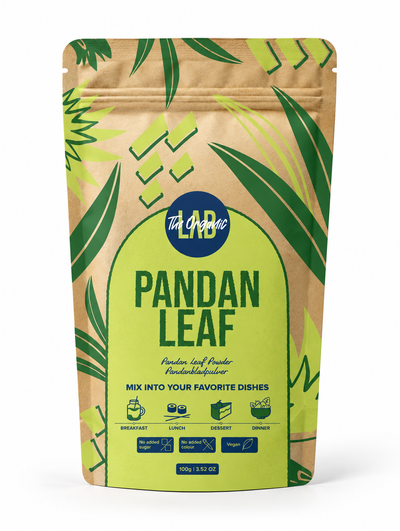
For businesses in Europe, the practical way to work with pandan is as a leaf powder. It keeps both the colour and the aroma of the leaf, stores well when kept cool and dry, and can be dosed to the gram. Our guide to what pandan is explains the plant in more detail, and what pandan tastes like covers its flavour.
Sourcing Pandan Powder
Cafés, bakeries, gelato makers and manufacturers can request a quote or a sample of bulk pandan powder, supplied in 25 kg drums and stocked and shipped from Sweden. Home cooks will find practical tips in our guide on how to use pandan powder.


