

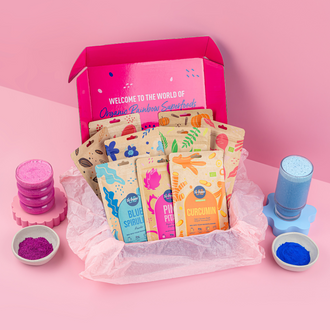
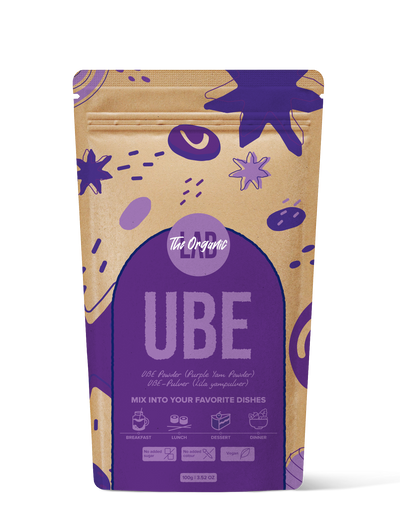
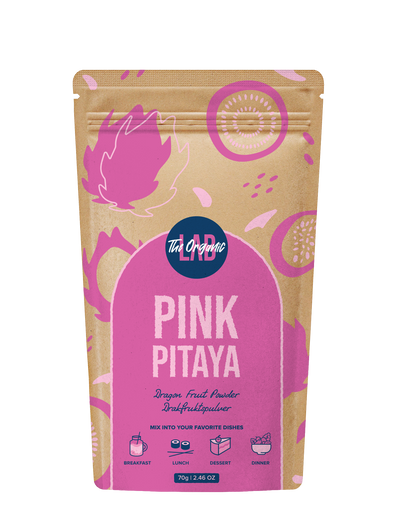
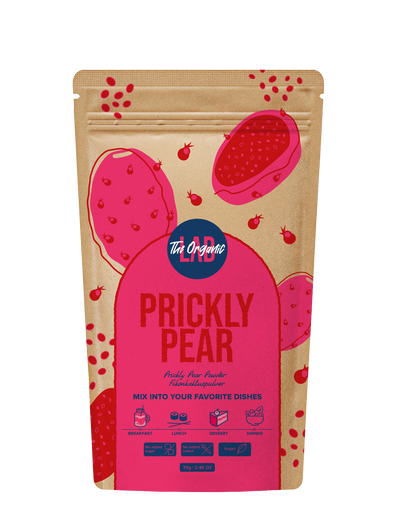
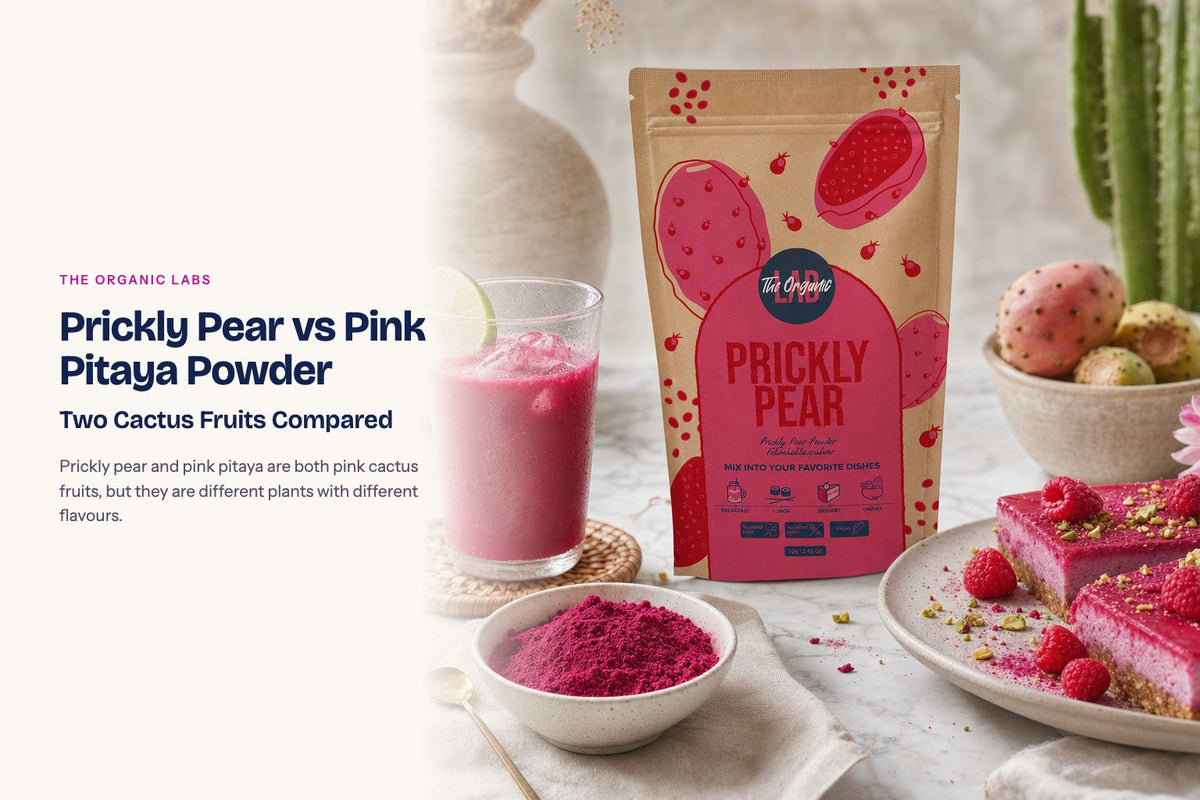
Two of the pinkest powders on a café counter come from cactus plants. Prickly pear is the fruit of Opuntia ficus-indica, the flat-padded cactus of Mexico and the Mediterranean. Pink pitaya, better known as red dragon fruit, grows on a climbing cactus of the Selenicereus genus. Both give magenta-pink powders, and both turn up in lattes, smoothie bowls, frostings and gelato.
They are not interchangeable, though. The plants, the fruit, the flavour and the shade all differ, and those differences decide which one belongs in a particular drink or dessert. This comparison is written for cafés, bakeries and product developers choosing between the two, or planning to use both.
Two Different Cacti
Prickly pear grows on an upright, shrubby cactus made of flat oval pads. Its fruits sit along the edges of the pads and are covered in small tufts of fine bristles called glochids. If you are new to the fruit, our explainer on what prickly pear is covers the plant in more detail.
Pitaya grows on a climbing cactus with long, three-sided stems that scramble over trees, walls and posts. It is known for its large flowers, which open at night. The fruit is bigger than a prickly pear, with a leathery pink rind set with green-tipped, scale-like flaps instead of bristles, and white or red flesh dotted with tiny black seeds. Pink pitaya powder comes from the red-fleshed types.
Both plants are native to the Americas. Prickly pear has spread around the Mediterranean and other dry regions, while pitaya is now grown widely in tropical and subtropical areas, including Southeast Asia.
The Same Pigment Family
The pink in both fruits comes from betalains, the group of pigments that also colours beetroot. This is the main thing the two powders have in common, and it shapes how both behave in recipes.
Betalain colours generally keep their pink across the mildly acidic to neutral range of most drinks, dairy products and desserts. Both are sensitive to long heating, strong light and air. Whichever powder you choose, a cold drink, a frosting or a gelato will show the colour more clearly than a cake that spends a long time in the oven.
Shade: How the Pinks Compare
Pink pitaya powder is typically an intense magenta to deep pink. Prickly pear powder is magenta-pink; ours is described as naturally pink to reddish-pink. In milk or a pale base, both soften into pastel pinks.
The exact shade of either depends on the fruit, the crop and the recipe, so the only reliable comparison is a side-by-side test. Mix equal weights of each into the same milk, buttercream or gelato base and look at them together in daylight.
A few points help when judging the results:
- Fat and dairy soften both colours, so a buttercream or latte looks lighter than the dry powder.
- Lemon, lime and yoghurt keep both in their pink range; strongly alkaline mixes can dull them.
- A pink that looks right in raw batter may bake paler, so judge baked goods after baking and cooling.
Flavour: The Biggest Difference
Pink pitaya has a mild, delicate flavour. It is lightly sweet with a gentle tropical note and, in most recipes, it stays in the background. That is why it is often chosen when the goal is colour with little effect on taste.
Prickly pear has more to say. Its taste is still mild, but it is distinctly fruity and slightly tangy, with notes often compared to watermelon and berries. In a latte or a frosting, customers can taste that there is fruit in it, not only see that it is pink.
- Choose prickly pear when the fruit flavour is part of the product: a prickly pear lemonade, a prickly pear and lime sorbet, a berry-style buttercream.
- Choose pink pitaya when another flavour should lead, such as vanilla, coconut or mango, and the pink is mainly there for appearance.
Our guide to how prickly pear tastes covers its flavour and pairings in more depth.
Drinks and Café Menus
Both powders work in lattes, iced milk drinks, smoothies and bubble tea. Pitaya is a familiar choice for smoothie bowls and as a colour accent in layered drinks. Prickly pear suits drinks where a fresh, tangy fruit note is welcome, such as lemonades, iced teas, sodas and mocktails, as well as milk drinks with vanilla or white chocolate.
Offering both on one menu is possible, but the drinks look alike on a menu board. If you list them side by side, describe the taste rather than the colour, so customers understand what they are choosing.
Baking, Frostings and Fillings
In baking, both powders add dry fruit solids that absorb some liquid, so recipes may need a small adjustment. Both colours are at their brightest in elements that are not baked, or only gently heated: buttercream, cream cheese frosting, white chocolate ganache, mousse and glazes.
Prickly pear has the edge where a cake or filling should actually taste of fruit. Pitaya is the safer pick when a delicate flavour such as vanilla, almond or coconut has to stay in front.
Ice Cream, Gelato and Sorbet
Frozen desserts show off both colours because there is no long bake. Prickly pear suits fruit-led sorbets and gelato, where its tang and watermelon-like freshness come through. Pitaya works well in coconut and other plant-based bases and in ripples and swirls, where the main job is a strong colour contrast.
Which One Should You Choose?
- A fruit flavour customers can taste: prickly pear.
- A strong pink with little flavour: pink pitaya.
- Fruit-led sorbets, lemonades and mocktails: prickly pear.
- Vanilla, coconut or tropical recipes where the pink is decorative: pink pitaya.
Some kitchens use both, with pitaya to set the shade and prickly pear for the fruit note. Whatever you decide, test in the finished product, at serving temperature and under the light your customers will see it in.
Ordering Prickly Pear Powder
Businesses can request a quote, documents or a sample for the Bulk Prickly Pear Powder 25kg, packed in 25 kg drums and shipped from Sweden, and businesses that also want a pitaya pink can ask for the Bulk Pink Pitaya Powder 25kg at the same time. For home kitchens, the Prickly Pear Powder – 70g pack is an easy way to taste the difference.


