


What Is Ube? A Guide to Purple Yam (Dioscorea alata)
Ube is a purple yam known botanically as Dioscorea alata. Recognised for its naturally purple to violet flesh, Ube has a long culinary history and is particularly associated with Filipino cuisine.
In recent years, its distinctive appearance has helped introduce Ube to a much wider international audience. Purple lattes, cakes, cheesecakes, ice cream and pastries featuring Ube can now be found far beyond Southeast Asia.
But despite its growing popularity, there is still considerable confusion about what Ube actually is.
What Exactly Is Ube?
Ube is an edible tuber belonging to the yam family.
Its botanical name is Dioscorea alata, a species of yam cultivated in tropical and subtropical regions around the world.
The word “Ube” is particularly associated with the Philippines, where purple yam has an important place in traditional cuisine.
When cut open, Ube can reveal flesh ranging from lighter lavender and violet shades to much deeper purple tones.
Its striking appearance is one of the characteristics that has made the ingredient so recognisable internationally.
However, Ube should not simply be considered a “purple ingredient.” It is a specific botanical ingredient with its own identity, history and culinary uses.
Ube Is a Purple Yam
One of the simplest ways to understand Ube is:
Ube = Purple Yam = Dioscorea alata
This botanical identity is important.
Several purple ingredients are now used in drinks, desserts and bakery products, and their similar appearance can sometimes cause confusion.
Ube is specifically a yam belonging to the Dioscorea genus.
It should therefore not automatically be confused with other purple tubers or ingredients simply because they produce a similar colour.
We explore those differences separately in our guides to Ube vs Taro and Ube vs Purple Sweet Potato.
Where Does Ube Come From?
Dioscorea alata is cultivated across tropical regions, but Ube is especially closely associated with the Philippines and Filipino cuisine.
Purple yam has been used there for generations in traditional sweet dishes and desserts.
One of the most recognisable traditional preparations is Ube halaya, a purple yam preparation that is itself used in or served alongside numerous Filipino desserts.
Ube can also be found in cakes, pastries, ice cream and other traditional and modern preparations.
Its international popularity may feel relatively recent, but Ube itself certainly is not.
The ingredient has a much longer culinary history than the purple drinks and desserts that have helped make it internationally recognisable today.
Why Is Ube Purple?
One of the most distinctive characteristics of Ube is its colour.
Depending on the particular yam and growing conditions, the flesh can display shades ranging from lavender and violet to a considerably deeper purple.
The purple colour is associated with naturally occurring pigments called anthocyanins.
Natural variation is important here.
Real agricultural ingredients are not manufactured to an identical colour specification in the way an artificial colour might be. The exact appearance of Ube can vary between crops, raw materials and processing methods.
This means not every Ube tuber—or Ube powder—will necessarily display precisely the same shade of purple.
We discuss this subject in much greater detail in our separate guide to Ube colour and colour stability.
Ube in Filipino Cuisine
Ube occupies a particularly important place in Filipino desserts.
Perhaps its most famous traditional preparation is Ube halaya, but purple yam is also used across a wide variety of cakes, pastries, frozen desserts and sweets.
As Filipino food has gained greater international visibility, Ube has travelled with it.
Today, the ingredient has been adapted into many contemporary products while retaining its connection to Filipino culinary tradition.
This is an important distinction because Ube's popularity did not begin with social media.
The colourful Ube lattes and desserts now appearing internationally represent a modern chapter in a considerably older food tradition.
From Fresh Ube to Ube Powder
Fresh Ube is not readily available everywhere.
For businesses and consumers outside Ube-growing regions, transporting and storing fresh yam can also be impractical.
One solution is to process the yam into Ube powder.
The yam can be prepared, dried and milled into a powdered format. This creates an ingredient that is considerably easier to transport, store and incorporate into food products.
Ube powder has consequently helped make the ingredient more accessible to cafés, bakeries, restaurants and food manufacturers outside traditional Ube markets.
If you want to understand the powder itself in more detail, read our separate guide: What Is Ube Powder?
Why Is Ube Becoming So Popular?
Ube has several characteristics that make it particularly attractive to modern food and beverage businesses.
Its purple appearance is immediately recognisable.
That has helped Ube become particularly visible in cafés, bakeries and desserts, where presentation can be almost as important as flavour.
At the same time, increased international interest in Filipino food has introduced more consumers to an ingredient that has existed in Filipino cuisine for generations.
Today, Ube can be encountered in everything from traditional Filipino desserts to modern café drinks, bakery products and ice cream.
Its growing visibility has also encouraged more European cafés, restaurants and food manufacturers to explore Ube as an ingredient.
Ube in Europe
Until relatively recently, Ube was unfamiliar to many European consumers.
That is changing.
Ube drinks and desserts are increasingly appearing in cafés, bakeries and food concepts across Europe, while social media has made the characteristic purple colour instantly recognisable to a much larger audience.
For professional food businesses, powdered Ube also makes the ingredient considerably easier to source and work with than fresh purple yam.
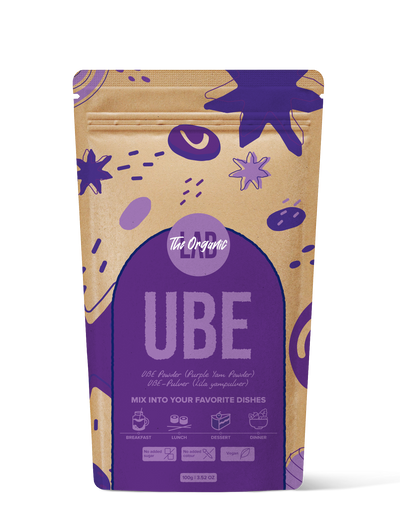
The Organic Labs supplies Ube Purple Yam Powder (Dioscorea alata) from Sweden to customers throughout Europe.


