

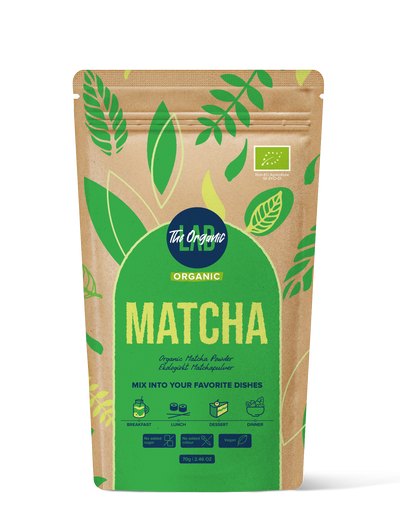

Matcha has become a familiar flavour on bakery counters: green swirled croissants, layered roll cakes, cookies, cheesecakes and white chocolate tarts. For a pastry kitchen it offers flavour and colour in one ingredient, but it does not behave like a synthetic colour, and the oven changes it.
This guide covers what bakeries and pastry chefs need to know to get consistent results with matcha: dosage, moisture, colour under heat, the best applications and how to test before a product goes on sale.
Dosage: Start With Flour Weight
For cakes and sponges, a useful starting range is 3–6% of flour weight. For 500 g of flour, that means 15–30 g of matcha. For fillings, creams and confectionery, start at 3–6% of the recipe weight.
At the low end, matcha gives a gentle tea note and a soft green. At the high end, colour and flavour are stronger, but so is the bitterness, and the finish can feel drying. Bake three or four test batches across the range and taste them side by side before fixing the recipe.
Moisture and Texture
Matcha is a dry powder that absorbs liquid. At higher doses it can make a batter thicker and a sponge slightly drier. Adjust the liquid slightly when the dose is high: a little more milk, egg or syrup usually brings the texture back.
Sift matcha with the flour, or blend it with the sugar, so it is evenly spread before the wet ingredients go in. Undispersed matcha shows up as dark green specks and bitter pockets in the crumb.
Heat and Colour: What to Expect
The green in matcha comes from chlorophyll, which changes with heat. In the oven, bright green shifts towards olive, and surfaces that brown take on a yellow-brown tone. A few techniques help:
- Gentler baking: sponges baked at moderate temperatures for a shorter time keep more green than those baked hot and long.
- Cover the top: a sheet of baking paper or foil towards the end limits browning on cakes.
- Watch acidity: lemon juice, buttermilk and other acidic ingredients push the colour towards olive.
- Limit light: matcha products fade faster under strong display lighting or in sunlight.
Thin, crisp items such as cookies and tuiles brown fastest, so their colour changes most. Thick sponges keep a greener crumb inside. When colour is critical, put matcha in the unbaked components, such as creams, glazes and a final dusting, where it stays brightest.
Cakes and Sponges
Matcha suits light, airy sponges such as chiffon, genoise and Swiss rolls, which bake relatively quickly and show a green crumb when sliced. Layer them with whipped cream, white chocolate ganache or red bean paste. In butter cakes, pound cakes and financiers, the browned crust hides some of the colour, but the flavour comes through well with butter.
Cookies, Doughs and Enriched Breads
Shortbread and butter cookies are good matches: they bake at moderate temperatures, and their butteriness balances the bitterness. Matcha with white chocolate chunks is a common combination. For cookies that must look green, bake slightly lower and take them out before the edges colour.
Matcha can also be worked into laminated and enriched doughs, either through the whole dough or as a separate coloured layer for bi-colour croissants and swirl buns. Add it with the flour, adjust hydration slightly and check how the dough handles, as the extra dry matter changes its consistency.
Frostings, Creams and Fillings
Unbaked components show matcha at its brightest and most aromatic:
- Buttercream: sift matcha into the icing sugar before beating it into the butter.
- Whipped cream and chantilly: mix matcha with the sugar first, then whip.
- Pastry cream and custard: whisk matcha into a little of the milk before cooking, or stir it into the finished cream once it has cooled slightly for a brighter colour.
- Ganache: white chocolate ganache is the classic carrier; stir in sifted matcha while it is still warm.
- Cheesecake: blend matcha with the sugar, then into the cream cheese mixture. Baked cheesecakes turn slightly duller than no-bake versions.
Creams are also a good place to adjust strength without touching a proven sponge recipe.
For decoration, a light dusting of matcha through a fine sieve gives the brightest green on a finished cake or tart. Dust shortly before the product goes on display, because the powder fades in light and darkens as it absorbs moisture from creams and glazes.
Flavour Pairings for Pastry
White chocolate, vanilla, cream and condensed milk soften matcha. Black sesame, red bean, almond and pistachio add nutty depth. Strawberry, raspberry and yuzu give contrast in layers and toppings, ideally kept as separate components so their acidity does not dull the green. For more on flavour, see our guide to what matcha tastes like.
Testing Before You Launch
- Bake test batches at two or three dosage levels and taste them side by side.
- Check colour on the day of baking and again after a day in the display, as it fades.
- Test with the exact flour, butter and dairy used in production.
- Record the dose, oven settings and baking time so every shift can repeat the recipe.
- When a new batch of matcha arrives, bake one test piece before full production.
- Keep matcha sealed, dry and below 25 °C, away from the ovens and bright light, and decant a working amount so the main pack is opened less often.
Matcha Supply for Bakeries
Bakeries using matcha every day can buy Bulk Organic Matcha Powder 25kg in 25 kg drums, with a certificate of analysis per batch and stock shipped from Sweden. Ask for a sample to test in your own recipes first. Home bakers can start with the Premium Organic Matcha Powder – 70g, and our complete guide to using matcha powder covers drinks and desserts too.


