

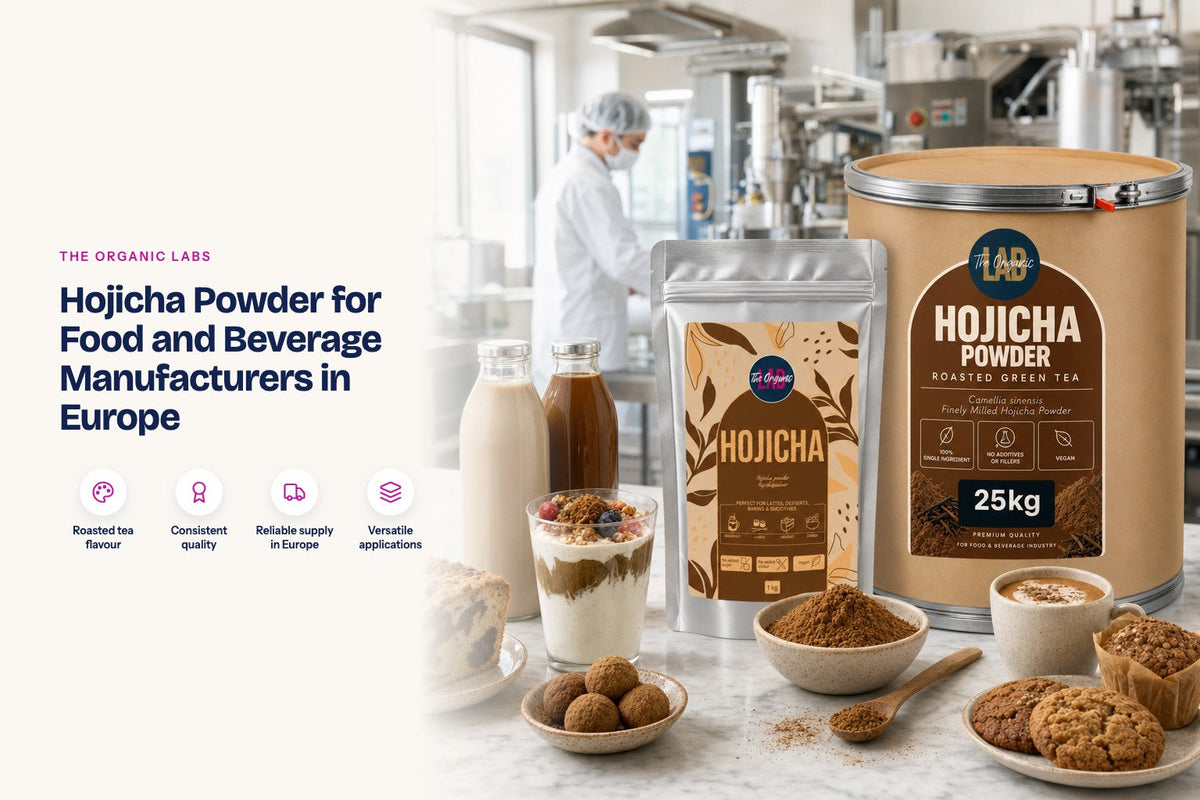
Hojicha gives a product two things at once: a warm roasted brown colour and a toasty, nutty tea flavour. Both come from a single ingredient, roasted green tea, which makes hojicha attractive for drinks, bakery, frozen desserts and confectionery with a short ingredient list.
Turning a café favourite into a stable product is a different job, though. This guide covers the practical points manufacturers should work through with hojicha powder, from the first dosage trials to batch approval and documentation.
Where Hojicha Fits in a Range
Hojicha powder is used in:
- beverage production, including powdered and ready-to-drink lattes and milk teas
- bakery: cakes, sponges, cookies, doughnuts and pastries
- ice cream, gelato and frozen desserts
- chocolate, confectionery, spreads and fillings
- chilled desserts such as cheesecakes, puddings and mochi
- private label products for retail
Its roasted profile places it close to coffee, caramel and cocoa, which makes it a logical line extension for brands that already sell those flavours and want something recognisably different.
Setting Up Dosage Trials
There is no universal dose. The right amount depends on the base, the sweetness, the fat content and how prominent the roasted note should be. These ranges are a sensible place to start:
- Lattes (300 ml): 3–5 g per serving, mixed into warm milk or water before pouring
- Bubble tea base: 3–5 g per serving, blended into the milk base before ice is added
- Cakes and sponges: 3–6% of flour weight, with a slight adjustment to the liquid, as the powder absorbs moisture
- Ice cream and gelato: 2–4% of the base
- Fillings, spreads and confectionery: 3–6% of the recipe, combined thoroughly with the other ingredients
Run trials at the bottom, middle and top of each range, and judge them in the finished product after the usual resting, cooling or freezing time. Roasted flavours can taste different on day one and day three, and frozen products taste weaker than the liquid mix suggests.
Dispersion and Mouthfeel
Hojicha powder is milled tea leaf. It disperses in liquid but does not dissolve, so the particles stay in suspension and can settle over time. Points to plan for:
- Dry-blend the powder with sugar or other dry ingredients before it meets liquid. This separates the particles and prevents lumps.
- Use high-shear mixing for liquid bases, and inspect pale products for dark specks.
- In ready-to-drink beverages, test for sediment across the full shelf life. Homogenisation and suitable stabilisers are the usual tools, and packaging should allow a shake before drinking.
- At the top of the dosage range, check mouthfeel. Too much powder can leave a slightly dusty finish.
Colour Through Processing
This is where hojicha behaves very differently from green tea powders. Its warm roasted brown is already a product of heat, so baking and pasteurisation do not have a vivid green to dull. That removes one of the main colour problems of working with tea powders.
It still pays to check. Other ingredients, browning during baking, pH and the colour of the base all influence the final shade. Expect beige to caramel tones depending on dosage. In white bases such as milk, cream or white chocolate, small changes in dosage are clearly visible, so weigh accurately and keep the dose fixed once approved.
Flavour Through Processing
The roasted base note of hojicha is fairly robust, but its finer aromatics are volatile. Long bakes and high-temperature steps can flatten the top notes and leave a more generic toasted taste. Ways to manage this:
- add the powder as late in the process as the method and food safety plan allow
- use fat to carry the flavour: butter, cream, cocoa butter and nut pastes all help
- pair hojicha with flavours that echo the roast, such as caramel, brown sugar, vanilla or toasted nuts
- balance sweetness carefully, as sugar softens the gentle bitterness
Batch Consistency
With hojicha, two things can shift between batches: the leaf and the depth of roast. A slightly lighter or deeper roast changes both colour and flavour intensity. On a production line, build this into the approval process from the start:
- agree a reference sample and the parameters that matter for your product
- retain a sample from each approved batch
- check each certificate of analysis against your specification
- run one quick standard test on every new batch, such as a fixed-dose milk drink
Documentation and Labelling
Documentation for our hojicha powder is prepared for the batch you receive: a certificate of analysis per batch, with the batch number; a technical data sheet on request, with the full product specification, including nutritional values and analysis parameters; and an ingredient and allergen declaration for your labelling. For confidentiality, these are sent by email.
The ingredient declaration is simple: 100% roasted green tea. Hojicha contains caffeine, so beverage developers should check which caffeine labelling rules apply to their product and market.
We work under an ISO 22000 certified food safety management system with HACCP-based procedures implemented, and we are a registered food facility in the Swedish sanitary registry. The powder keeps for 2 years from the production date when stored in a cool, dry place below 25 °C, away from direct sunlight.
Supply for Production
A successful trial is only useful if volume follows. We supply hojicha powder in 25 kg drums, in full pallets of 20 drums (500 kg) and in scheduled volumes of 1,000 kg and above, with capacity of up to 60 tonnes per month. For recurring volumes, we agree a delivery schedule in advance and reserve production for you. Private label projects can be raised in the same request.
More on volumes and ordering is in our overview of bulk hojicha supply in Europe, and bakery teams will find practical detail in our guide to baking with hojicha powder.
Request Documents or a Sample
Product developers can request a quote, COA, TDS or sample from the Bulk Hojicha Powder 25kg page, or get in touch through our contact page. Requests are answered within 24 hours on working days. Home cooks curious about the flavour can start with our guide on how to use hojicha powder.


