

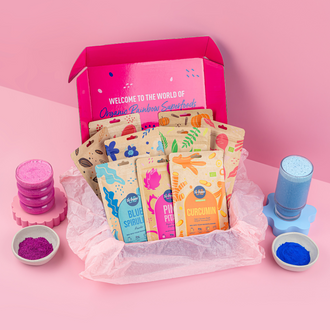
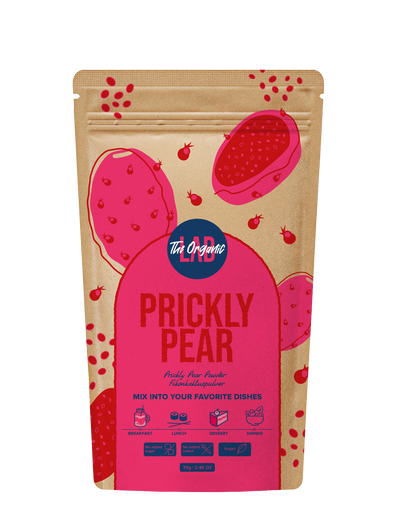

For a manufacturer, prickly pear powder is more than a pink ingredient. It is a dry fruit material that has to disperse in your mixer, come through your heat step, give the same colour from one production run to the next and arrive with paperwork your quality team can approve.
This guide is for product developers, food technologists and buyers at food and beverage companies in Europe who are considering prickly pear powder (Opuntia ficus-indica). It follows the questions that come up between the first sample and a full production run.
What the Ingredient Brings to a Formula
A single-ingredient prickly pear powder contributes two things at once: a magenta-pink colour and a mild, fruity, slightly tangy flavour. In many products that means one ingredient on the label, prickly pear powder, in place of a separate colour and flavouring.
It also contributes fruit solids. These bind water and influence viscosity and texture, especially at higher dosages, so the powder should be treated as part of the recipe balance from the start, not added as a finishing touch once the formula is fixed.
Starting Dosages
The ranges below are starting points for trials, not final recipes:
- Lattes and milk drinks: 3–5 g per 300 ml serving.
- Bubble tea and milk drink bases: 3–5 g per serving, blended into the milk base.
- Cakes and sponges: 3–6% of flour weight, with a slight increase in liquid.
- Ice cream and gelato: 2–4% of the base.
- Fillings, spreads and confectionery: 3–6% of the recipe.
Run a dosage ladder across the range, for example at the low, middle and high points, and assess colour, flavour and texture in the finished product. More powder gives a deeper shade and a stronger fruit note, but also more solids and more tang, so the best result is not always at the top of the range.
Dispersion and Mixing
Fine fruit powders form lumps when they are dumped into cold liquid. In production, these approaches help:
- Dry blending: pre-mix the powder with sugar, flour or other dry ingredients before liquid is added. Sugar crystals break up clusters and spread the powder evenly.
- Pre-mix or slurry: disperse the powder in part of the water or milk under high shear, then add it to the main batch.
- Order of addition: add the powder to a moving liquid, not a still tank, and give the powder time to absorb liquid before final checks.
- Screening: sieve material that has been exposed to humidity, as fruit powders can cake.
In beverages, check for sediment after standing. Fruit solids can settle over time, so ready-to-drink formats may need a shake instruction or a suitable stabilising system.
Colour, Heat, pH and Light
Prickly pear owes its colour to betalains, the pigment group that also colours beetroot. Four factors matter most in processing:
- Heat: prolonged high temperatures can fade the magenta towards a softer pink or a brownish tone. Short heat treatments are gentler than long bakes or extended holding times.
- pH: the colour is generally most stable in mildly acidic to neutral products. Strongly alkaline conditions, such as heavy use of bicarbonate of soda, can dull it.
- Light: exposure on the shelf can fade the colour over shelf life. Opaque or light-protective packaging helps.
- Oxygen: limiting headspace and air contact slows colour loss.
Where the process allows, adding the powder late, after the main heat step, protects the colour. Any change to the order of addition needs to be assessed within your own food safety plan.
Shelf-Life Testing
Colour is often the first attribute to change in a prickly pear product. Include colour measurement or a trained panel in shelf-life studies alongside flavour and microbiological checks, and store test samples under the light and temperature conditions the product will meet in retail, not only in a dark storeroom.
Batch Consistency
Prickly pear is a fruit, so slight colour variation between batches is normal. Manufacturers usually manage it with a few simple controls:
- an agreed colour reference for incoming material;
- a check of each batch against its certificate of analysis;
- a retained sample from every batch used in production;
- an approved dosage window, so small corrections do not mean rewriting the recipe.
Our certificate of analysis is issued per batch and carries the batch number you receive, which keeps incoming checks and traceability simple.
Documentation for Approval
Before a new ingredient enters production, most quality teams need a supplier file. For our prickly pear powder, it consists of:
- a certificate of analysis (COA) per batch;
- a technical data sheet (TDS) with the full product specification, including nutritional values and analysis parameters;
- an ingredient and allergen declaration: single ingredient, declared for your labelling.
Our powder is handled, stored and dispatched under an ISO 22000 certified food safety management system with HACCP-based procedures implemented, and we are a registered food facility in the Swedish sanitary registry. Documents go out by email with your quote, usually within 24 hours of your request.
Volumes, Capacity and Private Label
The powder is packed in 25 kg drums, 20 drums to a pallet. For ongoing production we can supply up to 60 tonnes per month and reserve production against your forecast, with deliveries on a call-off schedule. Private label projects and wholesale supply can be raised with your quote request.
Shelf life is 2 years from production date when stored in a cool, dry place below 25 °C, which leaves room for a sensible stock buffer ahead of planned runs.
From Sample to Production
- Request a sample and the TDS.
- Run bench trials across the dosage range.
- Make a pilot batch on your own equipment, including heat treatment and filling.
- Start shelf-life testing, with colour as a key attribute.
- Agree volumes and a delivery schedule for launch.
Application guides that may help along the way: baking with prickly pear powder and prickly pear powder in ice cream and gelato.
Request Samples and a Quote
Manufacturers can request a quote, COA, TDS and a sample on the Bulk Prickly Pear Powder 25kg page. For home kitchens, the Prickly Pear Powder – 70g pack is the retail size.


