

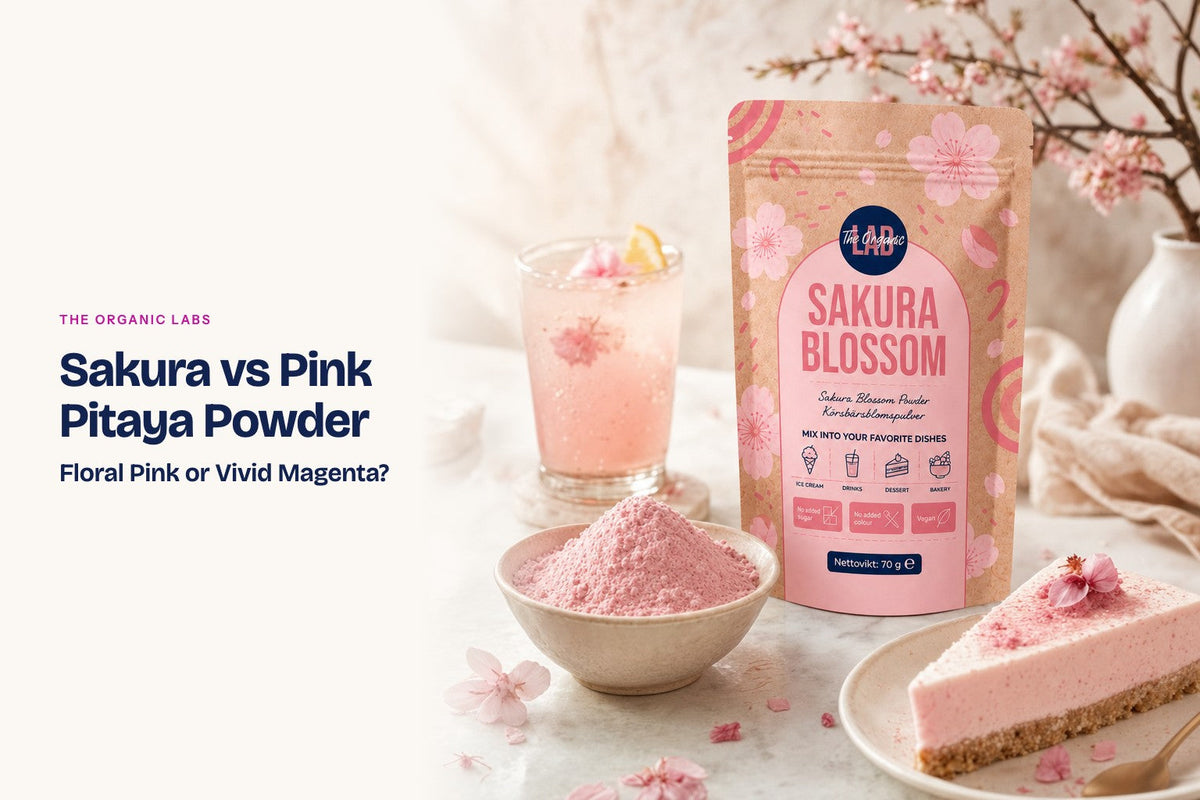
Two pink powders often sit side by side on café counters and in pastry kitchens: sakura and pink pitaya. Sakura powder is made from the blossoms of the Japanese flowering cherry, Prunus serrulata. Pink pitaya powder comes from red-fleshed dragon fruit, the fruit of a climbing cactus in the Selenicereus genus.
Both turn a latte or a buttercream pink, and that is where the similarity largely ends. One is a flower chosen mainly for its flavour, the other a fruit chosen mainly for its colour. This comparison is for cafés, bakeries and product developers deciding which to use, or how to use both.
A Flower and a Fruit
Sakura is the blossom of flowering cherry trees native to Japan, Korea and China. For food, the flowers are dried and finely milled. The ingredient carries the associations of Japanese spring, blossom viewing and seasonal sweets such as sakura mochi. Our explainer on what sakura is covers the plant and its history.
Pitaya, or dragon fruit, grows on a climbing cactus with long, three-sided stems and large flowers that open at night. The fruit has a leathery pink skin set with green-tipped scales, and white or red flesh dotted with tiny black seeds. The plant is native to the Americas and is now grown widely in tropical and subtropical regions, including Southeast Asia. Pink pitaya powder is made from the red-fleshed types.
Two Different Pigments
The two pinks come from different pigment families, and that affects how they behave in a recipe.
- Sakura owes its pink to anthocyanins, the pigments behind many red and purple flowers and fruits. Anthocyanin colours respond to pH: they tend to look pinker in acidic conditions and can turn duller, purplish or greyish as a mix becomes neutral or alkaline.
- Pink pitaya is coloured by betalains, the pigment family that also colours beetroot. Betalains keep their pink across the mildly acidic to neutral range of most drinks and desserts.
Both are natural colours, and both are sensitive to long heating, strong light and air. A cold drink, a frosting or a gelato shows either pink more clearly than a cake that spends a long time in the oven.
Colour: Soft Pink vs Vivid Magenta
This is the difference customers see first. Sakura powder gives a natural soft pink. In milk it becomes a gentle blush, close to the colour of the blossom itself, and it reads as delicate and seasonal rather than bold.
Pink pitaya gives a vivid magenta to deep pink. A small amount colours a large volume, and it stays bright even in milk or a pale cream. If the brief is a pink that stands out from across the room, pitaya does it with less powder.
The only reliable comparison is a side-by-side test. Mix equal weights of each into the same milk, buttercream or gelato base and look at them together, in daylight and under your own shop lighting.
Flavour: Where Sakura Leads
Sakura is a flavour ingredient first. Its taste is delicate and floral, lightly sweet and subtly fruity, and customers notice it: a sakura latte should taste of blossom, not only look pink. Our guide to what sakura tastes like explains how milk, sugar, heat and cold change it.
Pink pitaya has a mild, lightly sweet taste with a gentle fruit note. In most recipes it stays in the background, which is exactly why it is popular: it adds colour without competing with vanilla, coconut, mango or berries.
- Choose sakura when the floral taste is the product: a spring latte, a sakura cream, a cherry blossom gelato.
- Choose pink pitaya when another flavour leads and the pink is mainly for appearance.
Drinks and Café Menus
Both powders work in lattes, iced milk drinks, smoothies and bubble tea. Sakura belongs in drinks sold on their flavour and their seasonal story: hot and iced sakura lattes, sakura milk tea, a layered sakura and matcha drink. Pitaya is the familiar choice for smoothie bowls, fruit smoothies, lemonades and layered drinks where a bright pink band is the point.
On a menu board, two pink drinks look alike. Describe them by taste, for example a floral cherry blossom latte next to a dragon fruit and coconut cooler, so customers know what they are ordering.
Baking and Pastry
Both powders add dry plant solids that absorb some liquid, so batters may need a small adjustment. Both are at their brightest in elements that are not baked, or only gently heated: buttercream, cream cheese frosting, white chocolate ganache, mousse and glazes.
In baked goods, keep sakura's pH sensitivity in mind. Batters raised with a lot of baking soda lean alkaline and can dull its pink, while acidic ingredients such as buttermilk or yoghurt help to keep it. Long, hot bakes also soften sakura's floral aroma. Pitaya gives the stronger colour in a sponge or a macaron shell, but brings little flavour of its own.
Ice Cream and Gelato
Frozen desserts suit both, because there is no long bake. Sakura gives a pastel gelato with a floral flavour that pairs well with milk, white chocolate, red bean or strawberry. Pitaya gives bright magenta sorbets, swirls and ripples, and works well in coconut and other plant-based bases.
Using Both Together
Sometimes a sakura product needs a stronger pink than the blossom alone gives: a gelato in a brightly lit cabinet, or a layered drink that should photograph well. A small amount of pink pitaya can deepen the shade while sakura carries the flavour.
Add the pitaya gradually. At low levels its mild taste stays out of the way, but too much shifts the colour from blossom pink towards magenta and moves the product away from the soft look customers associate with sakura. Both ingredients appear on the label, so customers can see what gives the product its colour.
Which One Should You Choose?
- A floral flavour customers can taste: sakura.
- A strong pink with little flavour: pink pitaya.
- A spring or Japanese-inspired menu: sakura.
- Tropical, berry or smoothie bowl concepts: pink pitaya.
- A sakura flavour with a deeper pink: both, with sakura leading.
Whatever you choose, judge the result in the finished product, at serving temperature and under the light your customers will see it in.
Ordering Sakura and Pink Pitaya
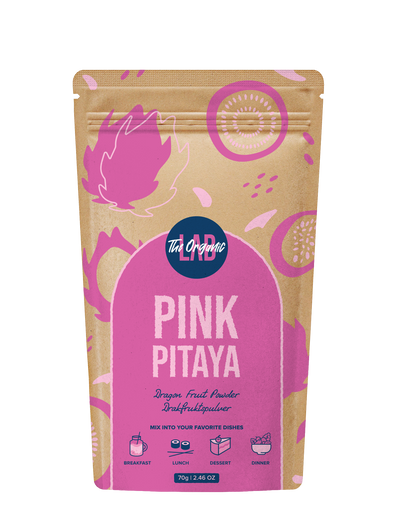
Businesses can request a quote, documents or a sample for Bulk Sakura Powder 25kg, supplied in 25 kg drums and shipped from Sweden. Our other powders are available in bulk on the same terms, so the Bulk Pink Pitaya Powder 25kg can go into the same request. For home kitchens, the Pink Pitaya Powder – 70g pack is an easy way to try dragon fruit colour, and our sakura guides explain how to work with cherry blossom.


