

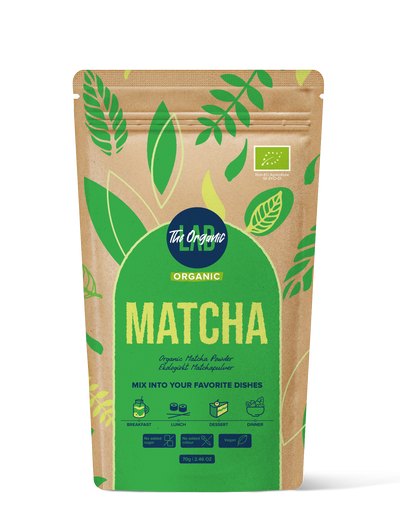

Matcha powder is simple to use once you know how it behaves. It does not dissolve, it disperses. It clumps easily, dislikes boiling water and loses colour with heat and light. Get those basics right and it works in everything from a morning latte to a layered cake.
This guide covers preparation, drinks, baking, desserts and ice cream, with starting amounts as ranges and practical tips for getting the same result every time.
The Basics: Sift, Make a Paste, Then Add Liquid
Matcha is an extremely fine powder, and fine powders clump. Two habits solve most problems:
- Sift first. Push the powder through a small, fine sieve into the cup, bowl or dry ingredients. This breaks up clumps before any liquid touches them.
- Make a paste or concentrate. Add a small amount of warm water and whisk until smooth before adding the rest of the liquid. Clumps that form in a large volume of liquid are hard to break up later.
A bamboo whisk, a small electric frother or a sealed shaker all work. A bamboo whisk is moved quickly in a zigzag rather than in circles, which builds a fine, even foam.
Water Temperature
Use water at around 70–80 °C rather than boiling. Very hot water brings out bitterness and dulls the fresh flavour. Without a thermometer, let a boiled kettle stand for a few minutes before pouring. For iced drinks, matcha can be shaken with cold water, although warm water disperses it more easily.
How Much Matcha to Use
Amounts depend on the recipe and how strong you like it. These ranges are a starting point:
- Matcha with water: about 1–2 g with 60–80 ml of water
- Latte, 300 ml: 3–5 g
- Cakes and sponges: 3–6% of the flour weight
- Ice cream and gelato: 2–4% of the base
- Fillings, spreads and confectionery: 3–6% of the recipe
More matcha gives more colour, but also more bitterness and more dry matter, which can change texture. Adjust in small steps and write down what works.
Matcha Drinks
Whisked matcha
Sift the matcha into a bowl, add a little water at 70–80 °C and whisk to a paste, then add the rest of the water and whisk briskly until a fine foam forms. Drink it straight away, before the powder starts to settle.
Hot matcha latte
Whisk the matcha with a small amount of warm water into a smooth concentrate. Pour it into a cup, add steamed milk and sweeten to taste. Dairy and plant-based milks both work; oat milk is a popular choice.
Iced matcha latte
Make the concentrate, then pour it over cold milk and ice. Pouring the green concentrate on top gives a layered look. Stir before drinking.
Smoothies
Add matcha straight to the blender with banana, mango or pineapple and milk or a plant-based alternative. The blender does the dispersing for you.
Savoury ideas
Matcha is not only for sweet recipes. In Japan, matcha mixed with fine salt is served with tempura, and a pinch of matcha works in salad dressings, on popcorn or in a glaze for roasted vegetables. Use small amounts, as the bitterness is more noticeable without sugar or milk.
Baking With Matcha
Sift matcha together with the flour and other dry ingredients so it is evenly distributed before any liquid goes in. Because matcha absorbs moisture, a recipe with a high dose may need a little more liquid.
Heat dulls the green, so expect a baked sponge to be a softer olive-green rather than bright. Lower oven temperatures, shorter baking times and covering the top towards the end keep more colour, and the inside crumb stays greener than the crust. Our guide to baking with matcha powder covers cakes, cookies, frostings and fillings in detail.
Desserts, Frostings and Fillings
Unbaked recipes show matcha's colour at its best. For buttercream, sift matcha into the icing sugar and beat it into the softened butter. For whipped cream, mix the matcha with the sugar first, then whip. For custard and pastry cream, whisk the matcha into a little of the warm milk before combining it with the rest.
White chocolate ganache is one of the easiest places to start: stir sifted matcha into the warm ganache until smooth, then use it to fill tarts, truffles or macarons.
Ice Cream and Gelato
Mix the matcha with the sugar in the recipe before adding it to the base. The sugar crystals separate the powder particles and stop lumps forming. Blend thoroughly, and if your recipe uses a cooked custard, add the matcha once the base has cooled a little to protect colour and aroma. Frozen desserts taste less intense than the unfrozen base, so make it slightly stronger than you want. There is more in our guide to matcha ice cream and gelato.
Storing Matcha Powder
Matcha is sensitive to air, light, heat and moisture. Store it in a cool place below 25 °C, keep the pack tightly sealed and away from light, and never scoop with a damp spoon. Once opened, use it while it is fresh, as colour and aroma fade over time.
Common Problems and Fixes
- Lumps in the drink: sift first and make a paste before adding the rest of the liquid.
- Too bitter: use cooler water, a little less powder or more milk.
- Dull colour: check storage, avoid boiling water and serve soon after making.
- Gritty texture in desserts: blend the matcha with sugar or a small amount of liquid first.
- Weak flavour in baking: increase the matcha within the suggested range.
Where to Get Matcha Powder
For home use, start with the Premium Organic Matcha Powder – 70g, or choose the Premium Organic Matcha Powder – 500g if you bake with matcha often. Cafés, bakeries and food businesses can request a quote for Bulk Organic Matcha Powder 25kg, supplied in 25 kg drums from Sweden.


