

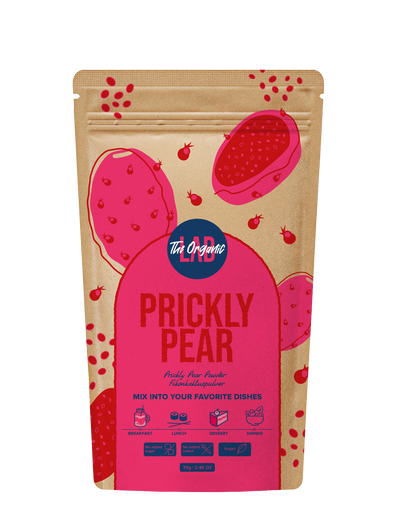

Prickly pear powder is the dried, finely ground fruit of the Opuntia ficus-indica cactus. It gives food and drinks a magenta-pink colour and a mild, fruity, slightly tangy taste, and it works in almost anything that welcomes a fruit flavour: lattes, lemonades, smoothies, cakes, frostings, ice cream and desserts.
Like any fruit powder, it rewards a little technique. This guide covers how to mix it, how much to use, how it behaves in different recipes and how to keep the colour at its best.
How to Mix Prickly Pear Powder
The powder is very fine, and fine powders tend to clump when tipped straight into a large amount of cold liquid. Three methods avoid that:
- Make a paste first. Put the powder in a cup, add a small splash of warm water or milk and whisk until smooth, then add the rest of the liquid. This is the most reliable method for drinks.
- Blend it. In a blender, add the powder with the other ingredients and blend as usual. Smoothies, shakes and sorbet bases need no extra step.
- Mix it with other dry ingredients. For baking, sift the powder with the flour, sugar or icing sugar so it is spread evenly before any liquid goes in.
A small handheld milk frother is a useful tool for single drinks. If the powder has been open for a while and feels lumpy, push it through a sieve before use.
How Much Prickly Pear Powder to Use
The right amount depends on the recipe and on how pink and how fruity you want the result. These ranges are good starting points:
- Smoothies and smoothie bowls: 1–2 teaspoons per portion.
- Lattes and milk drinks: 3–5 g per 300 ml serving.
- Bubble tea: 3–5 g per serving.
- Cakes and sponges: 3–6% of the flour weight; at home, 1–2 tablespoons in a standard cake batter.
- Ice cream and gelato: 2–4% of the base.
- Fillings, spreads and frostings: 3–6% of the recipe.
Colour shows up before flavour. A little powder turns milk pink, but you may need the upper end of the range to taste the fruit clearly. Add in small steps and taste as you go.
Prickly Pear Latte, Hot or Iced
For a hot latte, whisk 3–5 g of powder with a little warm water or milk to a smooth paste. Add sweetener if you like, then pour in steamed milk. The result is a pastel pink drink with a soft berry and melon flavour.
For an iced version, make the paste the same way, stir in cold milk and pour over ice. Iced drinks show the pink clearly and taste a little fresher. Dairy and oat milk both work well; coconut milk takes the drink in a tropical direction.
Espresso and prickly pear are an awkward match in one glass. Coffee turns the pink brown and covers the fruit, so if you want both, pour the espresso over the iced pink milk and keep the layers separate.
Lemonades, Iced Teas and Mocktails
Prickly pear is at its brightest in clear, cold drinks. Dissolve the powder in a little warm water first, then combine it with lemon or lime juice, sugar syrup and cold still or sparkling water. In black or green iced tea, it adds a fruit note and warms the colour towards red.
Fruit solids can settle in clear drinks. Stir just before serving, or shake the drink with ice for an even colour.
Smoothies, Bowls and Breakfast
Add 1–2 teaspoons to a smoothie with banana, berries, mango or pineapple and a splash of milk or juice. For a smoothie bowl, keep the base thick with frozen fruit and top it with fresh fruit, seeds and granola.
The powder also stirs easily into yoghurt, overnight oats, chia pudding or porridge once it has finished cooking. The mild acidity of yoghurt suits the fruit and keeps the colour a clear pink.
Baking
Sift the powder with the flour and other dry ingredients, then mix as normal. Because the powder absorbs moisture, a batter with a generous amount may need a spoonful or two more liquid.
Heat softens the colour. A bright pink batter can bake to a paler or warmer shade, especially in large cakes that spend a long time in the oven. Smaller items such as cupcakes and cookies keep more of the pink, and heavy use of bicarbonate of soda can dull it. We cover this in detail in baking with prickly pear powder.
Frostings, Glazes and Fillings
Unbaked elements show the colour best. For buttercream, sift the powder with the icing sugar before beating it into the butter. For cream cheese frosting, beat it into the cheese together with the sugar. For a glaze, whisk it into icing sugar with a little water or lemon juice and spoon it over doughnuts, cakes or biscuits.
Fruit fillings, mousse, panna cotta and no-bake cheesecake work well too. Disperse the powder in part of the cream or milk before folding it in, so no specks remain.
Ice Cream, Sorbet and Frozen Treats
For ice cream and gelato, use 2–4% of the base. Mix the powder with the sugar first, then whisk it into the base so it disperses evenly. For sorbet, combine it with water, sugar and citrus juice for a fresh, lightly tangy result. Ice lollies made from prickly pear lemonade are an easy option at home.
Frozen desserts look a little paler than the liquid mix, so judge the colour after freezing. There is more on this in our guide to prickly pear powder in ice cream and gelato.
Colour and Storage Tips
- In cooked recipes, add the powder towards the end, after the main heating, where you can.
- Keep finished drinks and desserts out of strong sunlight.
- Favour mildly acidic partners such as lemon, lime and yoghurt.
- Go easy on bicarbonate of soda in pink bakes.
- Cover prepared mixtures to limit contact with air.
- Store the powder tightly closed in a cool, dry place below 25 °C, use a dry spoon and keep it away from the kettle and stove, where steam causes clumping.
Getting Prickly Pear Powder
For home kitchens, the Prickly Pear Powder – 70g pack covers plenty of drinks and bakes. Cafés, bakeries and producers can request a quote or a sample for the Bulk Prickly Pear Powder 25kg.


