





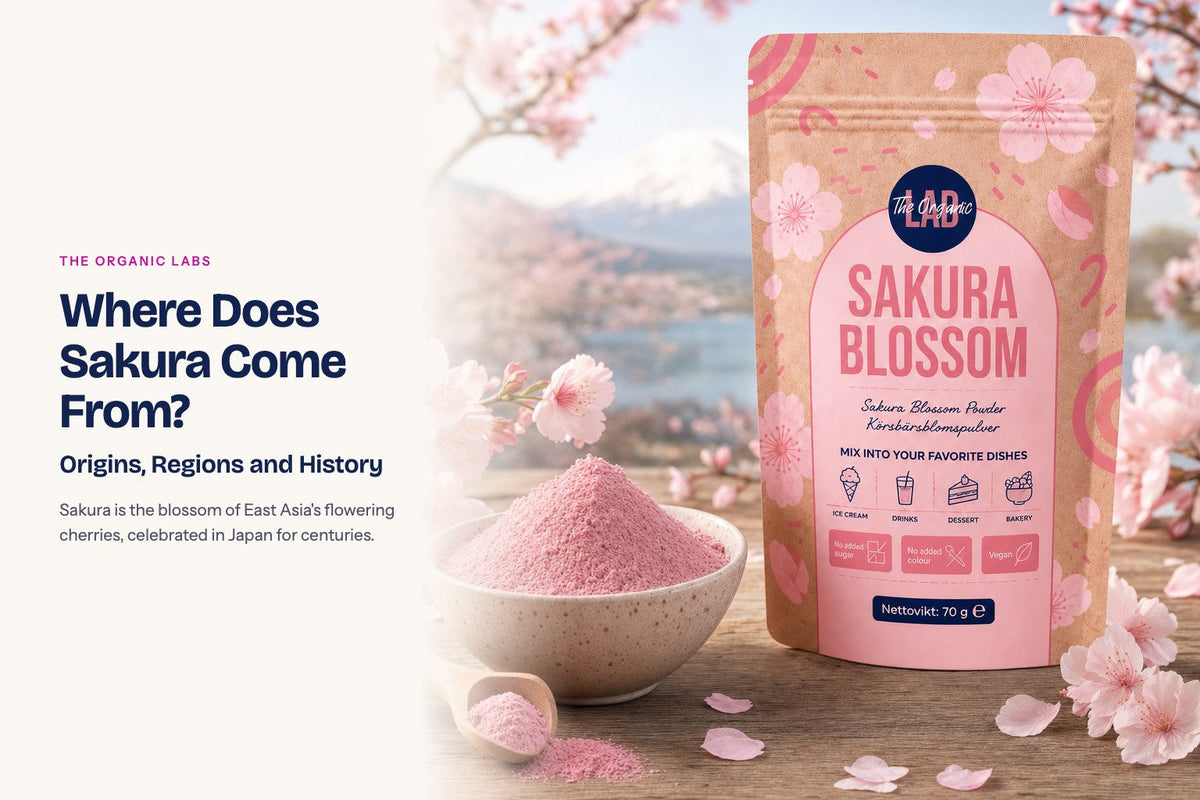
The word sakura is understood far beyond Japan, and it is easy to assume the cherry blossom story begins and ends there. The trees behind it are native to a wider part of East Asia. What Japan added was the culture around them: centuries of blossom viewing, a great many garden varieties and a tradition of eating the flowers.
This guide follows sakura from the hills of East Asia to Japanese tea tables and on to café counters in Europe.
Flowering Cherries of East Asia
Sakura comes from flowering cherry trees of the Prunus genus. Prunus serrulata, the Japanese flowering cherry, is native to Japan, Korea and China. It grows in temperate climates with cold winters, warm summers and clearly separated seasons. The cold winter matters: the flower buds need a period of chill before they open in spring.
Japan's hills and mountains are also home to wild cherries such as the mountain cherry, yamazakura, whose blossoms open at the same time as its reddish young leaves. Wild cherries like these were admired long before garden cherries were planted in towns.
Centuries of Cherry Growing in Japan
Over the centuries, Japanese gardeners selected cherries with particular qualities and kept them true by grafting: early and late flowering, white and pink blossom, single and double flowers, upright and weeping forms. Many of these garden cherries descend from Prunus serrulata and its close relatives.
The double-flowered types, called yaezakura, have many layered petals, often in a deep pink, and open later than most single-flowered cherries. They are the traditional choice for salt-pickled blossoms. The cherry most widely planted for blossom viewing in Japan today is Somei Yoshino, a hybrid with pale, almost white single flowers that cover the branches before the leaves appear.
Hanami: Celebrating the Blossom
In early Japanese court poetry, plum blossom was the flower most admired. Over time, cherry blossom took its place as the flower of spring. Hanami, which means flower viewing, began as a pastime of the imperial court and spread over the centuries to the rest of society.
Today hanami means picnics under the trees with family, friends and colleagues, in parks, along rivers and around castles and temples. The blossoms last only a short time, which is a large part of their appeal, and they have long been a symbol of beauty and of how quickly things pass.
The Cherry Blossom Front
Japan stretches a long way from south to north, so the blossom season moves across the country through the spring, starting in the warm south and finishing in the cooler north. In much of central Japan, including Tokyo and Kyoto, the trees usually flower in late March or early April. Forecasters track the advance every year, known as the cherry blossom front, and people plan trips and picnics around it.
In any one place, the time from the first open flowers to falling petals is short, typically a week or two. That short window has always shaped how cherry blossom is gathered for food.
How Sakura Became Food
Fresh petals wilt within days, so preserving them was the first step towards cooking with them. The Japanese answer was salt. Blossoms and young leaves were packed in salt and plum vinegar, which kept them through the year and gave them their characteristic salty, floral taste.
Those preserved blossoms and leaves found their way into celebrations and seasonal sweets. A salted blossom steeped in hot water becomes sakurayu, a tea served at weddings and other happy occasions. Sakura mochi, pink rice cakes filled with red bean paste and wrapped in a pickled cherry leaf, are closely linked with Hinamatsuri, the Doll Festival on 3 March. Bakers began topping sweet bean buns with a single salted blossom.
More recently, Japanese cafés, convenience stores and ice cream shops have made sakura a seasonal flavour in its own right, launching pink lattes, cakes and soft-serve as the blossom front moves north.
Where Flowering Cherries Grow Today
Flowering cherries are still most at home in Japan, Korea and China, but they have been planted as ornamental trees across the temperate world. In Europe, double pink cultivars such as Kanzan are among the most familiar cherries in streets, parks and gardens, and several European cities hold their own spring blossom festivals.
Ornamental planting is one thing; food is another. Because the petals wilt so quickly, blossom for food has to be processed soon after picking, either salted in the traditional way or carefully dried and finely milled into powder. Powder turned a fragile, seasonal flower into an ingredient that can travel and be stored for use all year.
From Japanese Spring Menus to European Cafés
Sakura reached European menus on the back of wider interest in Japanese food. As sushi, ramen, matcha and mochi became familiar, sakura followed. Travellers who visited Japan in spring came home having tasted sakura drinks and sweets, and photos of pastel pink lattes spread the idea further.
Today, European cafés, bakeries and gelaterias run sakura menus each spring, and some keep a sakura drink or dessert all year. Our guide for cafés and coffee shops using sakura covers drinks and preparation, and our page on sakura powder supply in Europe explains bulk sourcing.
Bringing Sakura Into Your Kitchen
Cafés, bakeries and food manufacturers can request a quote, documents or a sample for Bulk Sakura Powder 25kg, stocked and shipped from Sweden. For home cooks, our guide to what sakura tastes like is a good next step before trying it in a recipe.


