


A tray of sky-blue gelato in a display cabinet does its own marketing. Butterfly pea powder gives that colour from a single plant ingredient, and because its taste is very mild, the flavour of the ice cream stays the maker's own: milk, cream, vanilla, coconut or honey.
Frozen desserts do raise their own questions. How should the powder go into the base? Why does the colour look different after churning? What happens in an acidic sorbet? This guide covers dairy and plant-based ice cream, gelato, sorbet and other frozen desserts.
Why Butterfly Pea Suits Frozen Desserts
Butterfly pea powder is the dried, finely milled flower of Clitoria ternatea. In frozen desserts it offers three practical advantages:
- a blue to indigo colour that stands out in the cabinet
- a very mild, earthy and slightly floral taste that cold temperatures mute further
- a single ingredient to declare: butterfly pea flower
Its main limitation is the one that applies everywhere: the colour depends on pH and on the colour of the base.
Dosage in Ice Cream and Gelato
Our bulk product page gives 2–4% of the base as a starting range for ice cream and gelato, adjusted according to the colour and flavour you want. For a soft pastel, start at the bottom of the range or below it. Make small test batches at stepped dosages and compare them after hardening.
The powder also adds dry matter. Gelato makers who balance their recipes for solids should include it in the calculation, especially towards the upper end of the range.
Dispersion: Getting an Even Colour
Dry powder added straight to a cold base tends to form lumps. The standard gelato method works well here:
- Dry-blend the butterfly pea powder with the sugar, dextrose and stabiliser.
- Add the dry blend to the liquid while it is warm and being mixed.
- Blend with an immersion blender or homogenise to break up any small clumps.
- Age and cool the base as usual, and stir before batch freezing, because fine particles can settle during ageing.
If you see specks in a very pale base, pass it through a fine sieve before freezing.
Dairy Bases
Milk and cream are white, so they soften butterfly pea into pastel shades from sky blue to periwinkle. A higher cream content lightens the shade further.
Custard-style bases made with egg yolk are yellow, and blue plus yellow gives teal to green. For a clear blue, a white base without yolk, such as a fior di latte style base, is the better starting point. Honey and caramel bring yellow-brown tones of their own and have a similar effect.
Plant-Based Bases
Plant-based frozen desserts vary more than dairy ones, because the bases differ so much in colour:
- Coconut milk is white and pairs naturally with butterfly pea in both colour and flavour.
- Oat bases are beige and can pull the shade towards teal.
- Almond and soy bases are pale but not pure white, so check the colour against your target.
As with dairy, test the complete recipe, including sweeteners and stabilisers, rather than only the plain base.
Sorbets and Acidic Bases
In acidic recipes, butterfly pea turns violet, purple or pink. A lemon or lime sorbet with butterfly pea becomes a soft pink to lilac, and the more acidic the sorbet, the pinker it gets.
Rather than fighting this, you can use it: a lemon and butterfly pea sorbet in pink or purple, or a two-tone tray with a blue fior di latte next to a purple lemon sorbet. Frozen yoghurt and yoghurt gelato are mildly acidic and tend to come out lavender rather than blue.
Colour After Heating, Churning and Freezing
The colour of the liquid base is not the colour of the finished product. Churning whips air into the mix, and the higher the overrun, the paler the ice cream looks. Freezing and hardening change how the colour appears as well.
Always judge the colour after hardening, and again after several days in the display cabinet. Strong cabinet lighting can soften plant colours over time, so it is worth checking a tray at the end of its usual display period.
Butterfly pea copes with the warm and hot stages of base preparation, and the flowers are traditionally brewed in hot water. Even so, run your normal pasteurisation programme with the powder in the base and check the colour of the finished product, rather than assuming the shade will match an unheated test.
Ripples, Toppings and Other Frozen Desserts
- Blue ripple: whisk butterfly pea powder into a warm sugar syrup, cool it and ripple it through vanilla or coconut ice cream.
- Soft serve: a blue soft serve mix works like a gelato base; check the colour as it leaves the machine.
- Ice lollies: water-based lollies stay blue, while lemonade lollies turn purple, and layering the two gives a striped lolly.
- Milkshakes: blend a blue base with vanilla ice cream and milk.
- Semifreddo and frozen mousse: add the colour to the cream or meringue component.
Testing and Scaling Up
Start with small batches and record the dosage, base recipe, pH-relevant ingredients and colour after hardening. Once a recipe works, keep the dosage and base exactly the same at scale, and compare new batches of powder against a retained sample of the finished product. Natural variation between batches is normal, and a small dosage window in the recipe makes it easy to correct.
If you also bake cones, wafers or cakes to serve alongside your ice cream, our guide to baking with butterfly pea powder covers the same testing for the oven. For a comparison with another common blue, see butterfly pea vs blue spirulina.
Supply for Ice Cream Makers
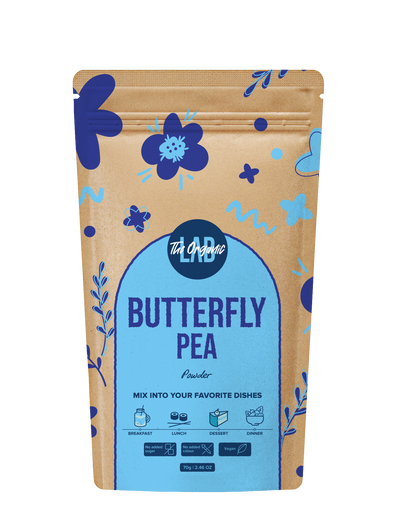
The Organic Labs supplies Bulk Butterfly Pea Powder 25kg in drums, from a single 25 kg drum for kitchens testing butterfly pea on the menu to full pallets of 500 kg (20 × 25 kg drums) for ice cream producers and distributors. A COA is issued per batch, and samples are available so you can test the colour in your own base. For small trials at home or in a test kitchen, our Butterfly Pea Powder 70g is a quick way to begin.


