

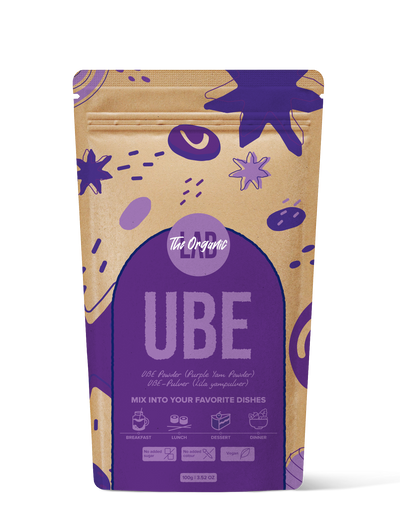

Ube is famous for its striking purple appearance, but colour is only part of what makes this ingredient interesting.
For anyone trying Ube for the first time, one of the most common questions is simple: what does Ube actually taste like?
Ube, botanically known as Dioscorea alata, has a relatively gentle flavour. Rather than being intensely sweet or strongly flavoured on its own, it has a mild, rounded character that works particularly well with milk, cream, coconut, vanilla and other ingredients commonly found in drinks and desserts.
This versatility is one reason Ube has moved beyond traditional Filipino cuisine and into cafés, bakeries and food product development around the world.
How Would You Describe the Taste of Ube?
Ube has a mild, subtly sweet and slightly earthy flavour.
Depending on how it is prepared, people may also notice delicate nutty characteristics. However, Ube does not naturally taste like a strongly flavoured syrup or confectionery product.
This distinction is important.
Many people first encounter Ube in ice cream, cakes or café drinks where sugar, milk, vanilla, coconut or flavourings contribute significantly to the finished taste.
The flavour of the final product therefore shouldn't automatically be considered the flavour of Ube itself.
Is Ube Naturally Sweet?
Ube has some natural sweetness, but fresh Ube is not comparable to a sweetened dessert.
Traditionally, Ube is often combined with other ingredients to create richer and sweeter preparations.
The same principle applies when working with Ube powder.
In commercial recipes, the finished flavour depends on the complete formulation rather than Ube alone.
What Does Ube Powder Taste Like?
Ube powder retains the characteristic mild flavour of purple yam in a dry ingredient format.
Because water has been removed during processing, powder behaves differently from freshly cooked Ube. The exact flavour can also be influenced by the raw material and processing method.
When incorporated into a recipe, Ube powder contributes its own subtle purple-yam character while allowing other ingredients in the formulation to remain noticeable.
For cafés, bakeries and food manufacturers, this makes Ube particularly adaptable.
Does Ube Taste Like Vanilla?
Ube and vanilla are different ingredients and shouldn't be expected to taste the same.
The association probably comes partly from the fact that Ube is frequently combined with vanilla in desserts and drinks.
Vanilla can complement Ube extremely well, but the flavour people experience in an Ube-and-vanilla dessert comes from the combination of the ingredients rather than Ube naturally being vanilla flavoured.
Is Ube Nutty?
Ube can have a subtle nutty quality, particularly after cooking or when incorporated into richer preparations.
However, "nutty" should be understood as a description of part of its flavour profile rather than suggesting that Ube tastes like a particular nut.
Its overall flavour remains comparatively mild.
That makes it easier to combine with other ingredients without completely dominating the finished product.
What Does Ube Taste Like in a Latte?
An Ube latte can taste considerably different from Ube powder on its own.
Milk or plant-based alternatives soften and round the flavour, while sweeteners can emphasise Ube's dessert-like characteristics.
Coconut is another natural pairing frequently used with Ube.
The result can be creamy and gently sweet, with the Ube contributing both flavour and its characteristic purple appearance.
The exact result depends heavily on the recipe and concentration of Ube used.
What Does Ube Taste Like in Baking?
In baked products, Ube generally provides a subtle flavour rather than an overpowering one.
It can be incorporated into cakes, cookies, buns, pastries, cheesecakes and other bakery applications.
Ingredients such as butter, cream, coconut, chocolate and vanilla can significantly influence how noticeable the Ube becomes in the finished product.
For commercial baking, recipe testing is therefore important when determining how much Ube powder is appropriate.
What Flavours Work Well With Ube?
One of Ube's strengths is its ability to work alongside a wide range of flavours.
Common combinations include coconut, vanilla, milk, cream and white chocolate.
Coffee can provide an interesting contrast, which has contributed to the development of Ube coffee drinks and layered café beverages.
The appropriate combination ultimately depends on whether Ube is intended to be the dominant flavour or one component within a more complex product.
Does More Ube Powder Mean More Ube Flavour?
Generally, increasing the amount of Ube powder will make its presence more noticeable, but simply adding more powder isn't always the best approach.
Increasing the quantity can also affect texture, consistency and colour.
Commercial users should therefore establish the appropriate concentration through recipe trials rather than selecting an amount based only on the desired colour.
This is particularly important for beverage and food manufacturers developing products for repeated production.
Why Can Ube Products Taste Different?
Two products labelled as Ube can taste surprisingly different.
The amount of Ube used is one reason, but the complete ingredient formulation also matters.
A sweet Ube latte containing milk and syrup will naturally taste different from an Ube cake, ice cream or product containing primarily Ube powder.
Processing methods can also influence the characteristics of the ingredient itself.
This is why evaluating the actual Ube powder being considered for a commercial formulation is more useful than judging the ingredient solely from an Ube-flavoured consumer product.
Ube as an Ingredient for European Food Businesses
As Ube becomes better known in Europe, cafés, bakeries, dessert producers and food manufacturers are exploring the ingredient for new product concepts.
Its appeal comes from a combination of its distinctive appearance, mild flavour and versatility across different applications.
For professional users, understanding Ube's natural flavour is particularly important when developing recipes.
Ube powder should provide the foundation of the Ube character, while the remaining ingredients determine whether the finished product becomes creamy, sweet, rich, refreshing or more intensely flavoured.
Ultimately, there is no single flavour description that captures every Ube product.
Ube itself is comparatively subtle. It is how the purple yam interacts with the rest of a formulation that has helped make it such a versatile ingredient for drinks, desserts and modern food development.


