

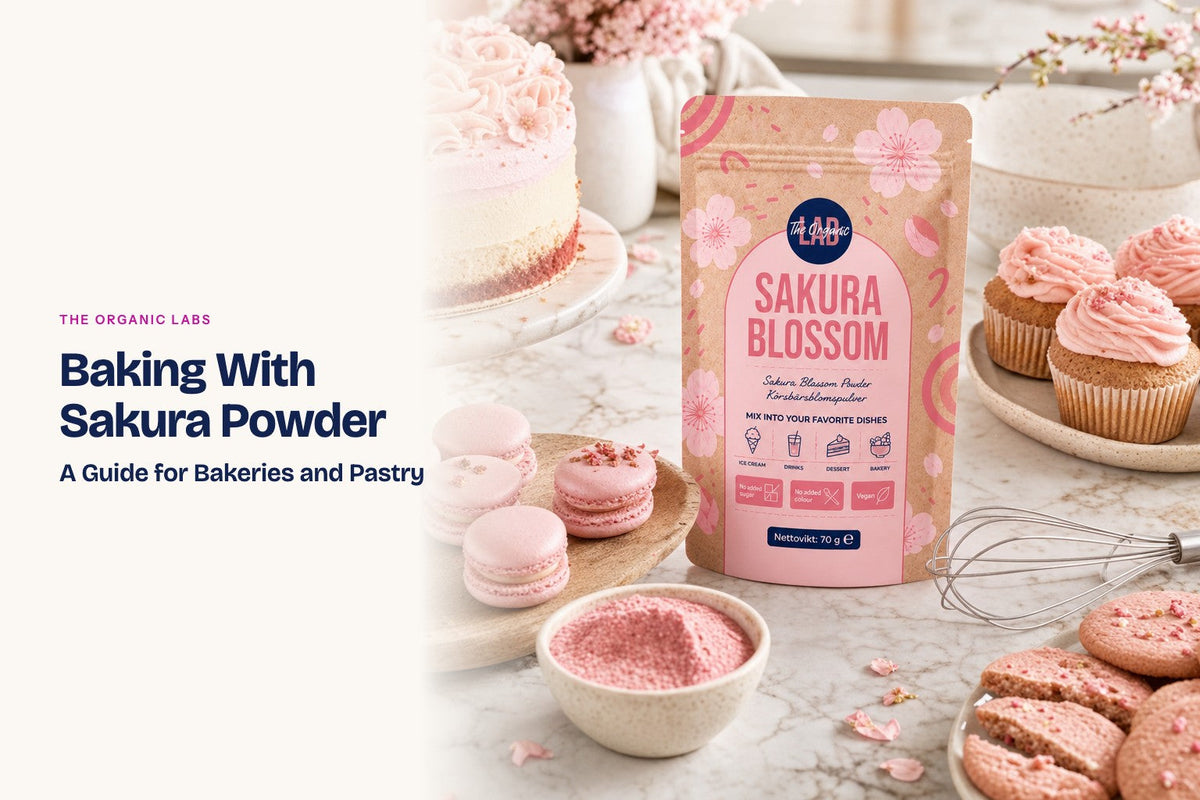
Every spring, pastry counters across Europe turn pink. Sakura sponges, cherry blossom macarons, pink-glazed doughnuts and sakura cream puffs sell on their looks first, and then on a flavour customers rarely find anywhere else. For a bakery, that makes sakura one of the easier seasonal launches to sell.
It is also a delicate ingredient. Heat, leavening and long bakes all affect its soft pink and floral aroma. This guide covers dosage, how sakura behaves in the oven, which products show it best and how to test a recipe before it goes on the counter.
Why Sakura Works in a Bakery
- A seasonal story: cherry blossom says spring without a word of explanation.
- Colour and flavour from one ingredient: the powder gives a natural soft pink and a delicate floral, lightly sweet taste.
- Easy pairings: butter, cream, almond, vanilla, white chocolate and red fruit all suit it.
- A short label: the powder is a single ingredient, sakura cherry blossom.
Dosage for Cakes, Sponges and Doughs
The starting range for cakes and sponges is 3–6% of flour weight. For a recipe with 500 g of flour, that is 15–30 g of sakura powder. Sift it with the flour and other dry ingredients so it spreads evenly before any liquid is added.
Sakura powder absorbs moisture, so adjust the liquid slightly, especially at the top of the range, or the crumb can turn dry. Change one thing at a time and note each adjustment.
In enriched doughs such as brioche and milk bread, start at the lower end and judge the crumb colour after baking. The crust will brown as usual and hide the pink on the outside, so on sakura breads a glaze or filling shows the colour more clearly.
How Heat Affects Colour and Aroma
Sakura's pink comes from natural plant pigments, and its aroma is delicate. Both respond to the oven. A few rules of thumb:
- Browning hides pink. Crust and golden edges mask the colour. Lower temperatures, shorter bakes and covering cakes partway through keep more pink visible.
- Alkaline batters dull the colour. The pink of cherry blossom comes from anthocyanins, which tend to turn duller or greyish in alkaline conditions. Recipes heavy in baking soda can lose their pink; balance them with acidic ingredients such as buttermilk, yoghurt or lemon juice, or rely more on baking powder.
- Yolks and brown sugar shift the shade. Yellow yolks warm the pink towards peach, and brown sugar muddies it. Egg-white sponges, chiffon cakes and white sugar give the clearest colour.
- Aroma fades in long bakes. A sakura loaf cake baked for an hour will taste milder than a thin sponge baked for 15 minutes.
Cakes and Sponges
Light sponges show sakura well: chiffon cakes, Swiss rolls, genoise layers and Japanese-style roll cakes filled with sakura cream. Madeleines and financiers, with their short bake and butter or almond base, carry the flavour nicely. Doughnuts are a good canvas too. The dough can stay plain, with the sakura in a glaze or filling where it keeps its full colour.
Cookies, Biscuits and Macarons
Shortbread and sablés baked at moderate temperatures keep a soft pink and a clear floral note, and they pair well with a white chocolate dip or a sakura icing. Butter cookies can carry sakura in the dough or in a sandwich filling. For macarons, sakura in the shells gives a gentle tint; for a stronger colour and flavour, put it in the ganache or buttercream filling as well, where it is not baked at all.
Frostings, Creams and Fillings
This is where sakura is clearest. Start at 3–6% of the recipe weight and combine the powder thoroughly with the other ingredients:
- Buttercream and Swiss meringue buttercream: sift the powder into the icing sugar, or add it to the finished buttercream on low speed.
- Cream cheese frosting: beat the powder in with the sugar for an even colour.
- Whipped cream and chantilly: mix the powder with the sugar before whipping.
- Pastry cream: whisk the powder in once the cream is off the heat, so the aroma is not cooked away.
- White chocolate ganache: add the powder to the warm cream before pouring it over the chocolate.
- Mousse and bavarois: disperse the powder in the cream or milk portion.
Let creams rest before the final colour check, as the shade evens out once the powder has absorbed moisture.
Pairings for Pastry
Sakura is gentle, so pair it with flavours that let it come through: strawberry, raspberry, red bean, white chocolate, almond, vanilla, cream cheese and a little yuzu or lemon. Matcha is a classic partner for two-tone sakura and matcha cakes. Our guide to what sakura tastes like covers pairings and the flavours that overpower it.
Testing Before Launch
- Bake three versions at different doses, for example 3%, 4.5% and 6% of flour weight.
- Judge colour and flavour after cooling, and again the next day, not straight from the oven.
- Look at the products under your shop lighting as well as in daylight.
- Check how the colour holds in the display over a full trading day.
- Record the dose, oven settings and the batch number of the powder used.
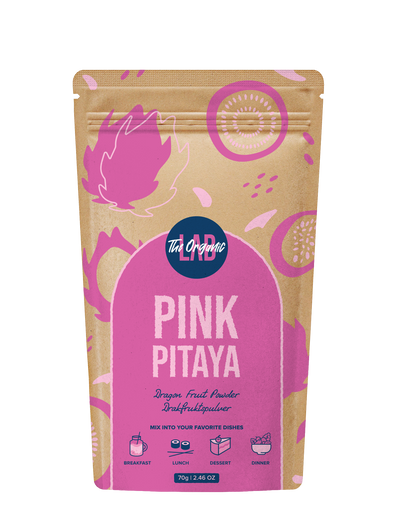
If your concept needs a stronger pink than cherry blossom alone gives, our comparison of sakura and pink pitaya powder explains how the two can work together.
Planning a Spring Sakura Range
Sakura demand peaks in spring. Request samples and develop recipes over the winter, so the range is ready when the blossom season begins. Weigh powder in advance for each production day, keep the drum closed between uses and store it in a cool, dry place below 25 °C, away from direct sunlight. Shelf life is 2 years from the production date.
Sakura Supply for Bakeries
Bakeries and pastry kitchens can request a quote, documents or a sample for Bulk Sakura Powder 25kg. One 25 kg drum suits bakeries testing sakura on the menu, and two drums suit bakeries, dessert brands and café groups with steady sales. Home bakers will find simpler methods in our guide on how to use sakura powder.


