

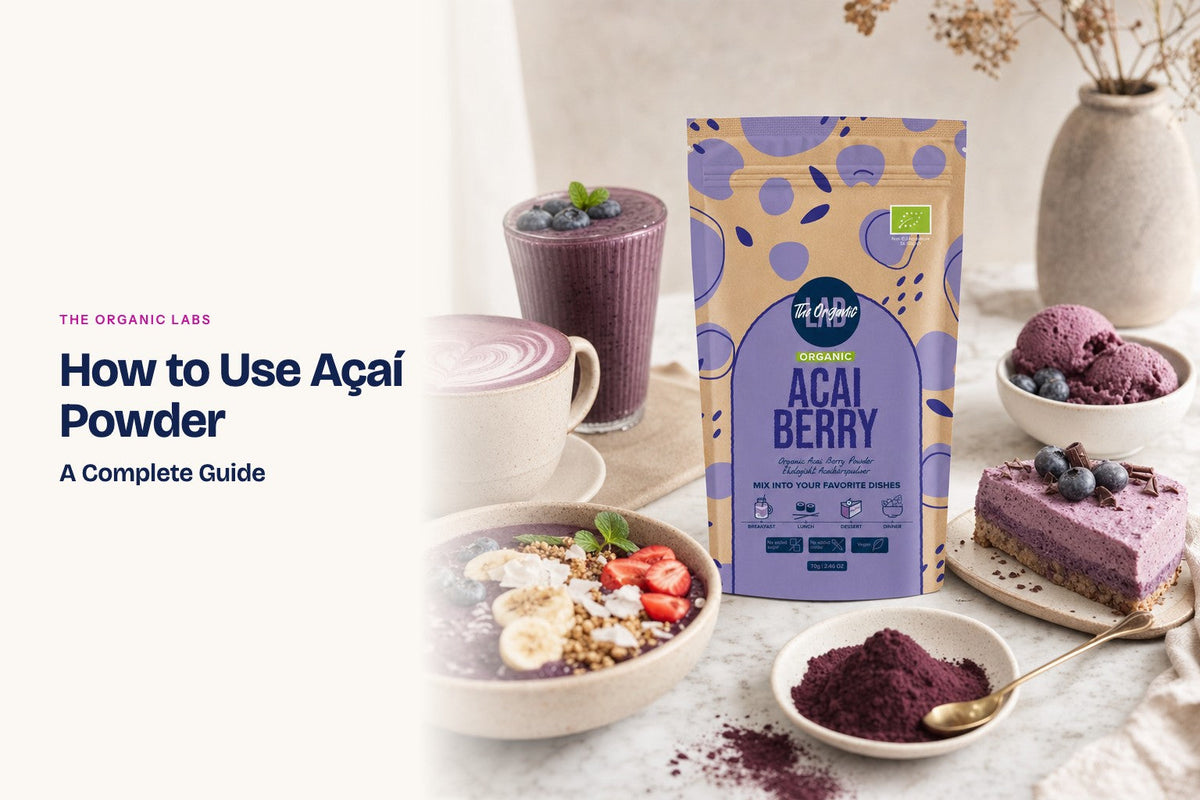
Açaí powder is one of the simplest ways to bring açaí into a kitchen. It keeps in the cupboard, weighs out precisely and works in drinks, bowls, bakes and frozen desserts. It does have a few quirks, and knowing them is the difference between a smooth, deeply coloured result and a lumpy, dull one.
This guide covers how to mix açaí powder, how much to use and how to use it in the most common recipes, with tips that apply both at home and in professional kitchens.
Before You Start: What Açaí Powder Is Like
Açaí powder comes from the fruit of the açaí palm, Euterpe oleracea. The powder from The Organic Labs is finely ground and deep purple, made from spray-dried açaí berries.
Three things shape how you use it. It is not sweet, so recipes usually need fruit or a sweetener. It contains natural fruit oil, so it does not dissolve the way sugar does. And its colour reacts to heat, acidity and the other ingredients, so the finished shade depends on the recipe.
How to Mix Açaí Powder
The most reliable method is to make a paste first:
- Measure the powder into a cup or small bowl.
- Add a small splash of liquid, such as warm water, milk or juice.
- Stir or whisk into a smooth paste with no dry pockets.
- Add the rest of the liquid gradually, stirring as you go.
A blender, milk frother or cocktail shaker does the job even faster. For dry recipes such as cake batter and cookie dough, sift the powder with the flour instead, so it is evenly spread before any liquid is added.
Avoid dropping a spoonful straight into a full glass of cold milk. It will float and form clumps that are hard to break up.
How Much Açaí Powder to Use
The right amount depends on the recipe and how strong you want the colour and flavour. Use these ranges as starting points:
- Smoothies: 1–2 teaspoons per glass
- Smoothie bowls: 1–2 teaspoons per bowl, more for a deeper colour
- Milk drinks: 1–2 teaspoons per cup
- Cake batter: 1–2 tablespoons per cake
- Frostings and fillings: about 1 teaspoon per 100 g, adjusted to taste
- Ice cream and sorbet bases: around 2–4% of the base weight
The product page gives a recommended serving of 1–2 tablespoons. Start at the lower end, taste and add more gradually, because too much açaí turns earthy and slightly bitter. In professional kitchens, record amounts by weight rather than by spoon so every batch is the same.
Smoothies and Bowls
Smoothies
Smoothies are the easiest place to begin. Blend açaí powder with fresh or frozen fruit and a liquid such as milk, a plant-based drink, juice or water. Banana gives sweetness and body, berries a fresher, sharper taste.
Put the liquid and powder in the blender jug first, then the fruit, so the powder is pulled straight into the blades and does not stick to the sides.
Bowls
A bowl base needs to be thick enough to hold its toppings, and with powder that thickness comes from frozen fruit. Blend frozen banana and frozen berries with the açaí powder and only a splash of liquid, stopping to scrape down the jug when needed. Add more liquid a spoonful at a time.
Spoon the base into a chilled bowl and add toppings just before serving: granola, sliced fruit, coconut flakes, nut butter or seeds.
Açaí Milk Drinks and Lattes
For a cold açaí milk drink, whisk the powder into a paste with a little warm water, sweeten it, then add cold milk and ice. For a hot drink, whisk the paste into steamed milk. Hot açaí drinks taste more earthy, so a spoonful of cocoa and a little vanilla round them out nicely.
Milk lightens the colour to lilac or mauve; a little more powder gives a deeper shade.
Baking with Açaí Powder
For cakes, muffins, pancakes and cookies, sift the powder with the flour and other dry ingredients. It adds dry matter, so larger amounts may call for a touch more liquid.
Heat dulls açaí’s colour and baking soda can tip it towards grey or green, so baked goods usually come out darker and browner than the batter. For a clear purple, use açaí in frostings, glazes and fillings. Our guide to baking with açaí powder goes into detail.
Desserts and Frozen Treats
No-bake desserts
Açaí keeps its colour and fruitier flavour best in cold, unbaked recipes:
- no-bake cheesecake and mousse
- yoghurt pots and overnight oats
- chia pudding
- whipped cream and buttercream
- chocolate truffles and bark, where it pairs with dark chocolate
Mix the powder into a small portion of the base first, then fold that into the rest to avoid streaks.
Ice cream and sorbet
To add açaí to an ice cream or sorbet base, mix the powder with the sugar first, then whisk it into the liquid. This stops it clumping. Let the base rest in the fridge before churning so the powder hydrates fully. Frozen desserts usually need a little more açaí than you expect, because cold mutes flavour. Producers will find more detail in our açaí ice cream and gelato guide.
Savoury Ideas
In the Amazon, açaí is eaten with savoury food, and the powder can work in small amounts in savoury cooking too. Try a pinch in a berry vinaigrette, a glaze for roasted vegetables or a dark fruit sauce for duck. Keep the amount small so the earthiness balances the dish rather than taking it over.
Tips for Better Results
- A little acidity, such as lemon juice or tart berries, keeps the colour brighter.
- Pair açaí with cocoa in hot and baked recipes.
- Store the powder sealed in a cool place below 25°C, and always use a dry spoon.
- Serve drinks and bowls fresh; colour and texture are best straight away.
- In a café, prepare an açaí paste or pre-weighed portions before service. Our guide for cafés and coffee shops explains how.
Buy Açaí Powder
For home cooking, Organic Açaí Powder – 70g covers plenty of smoothies, bowls and bakes. Cafés, bakeries and food producers that use açaí regularly can order the larger 500 g pack or contact us for bulk pricing.


