

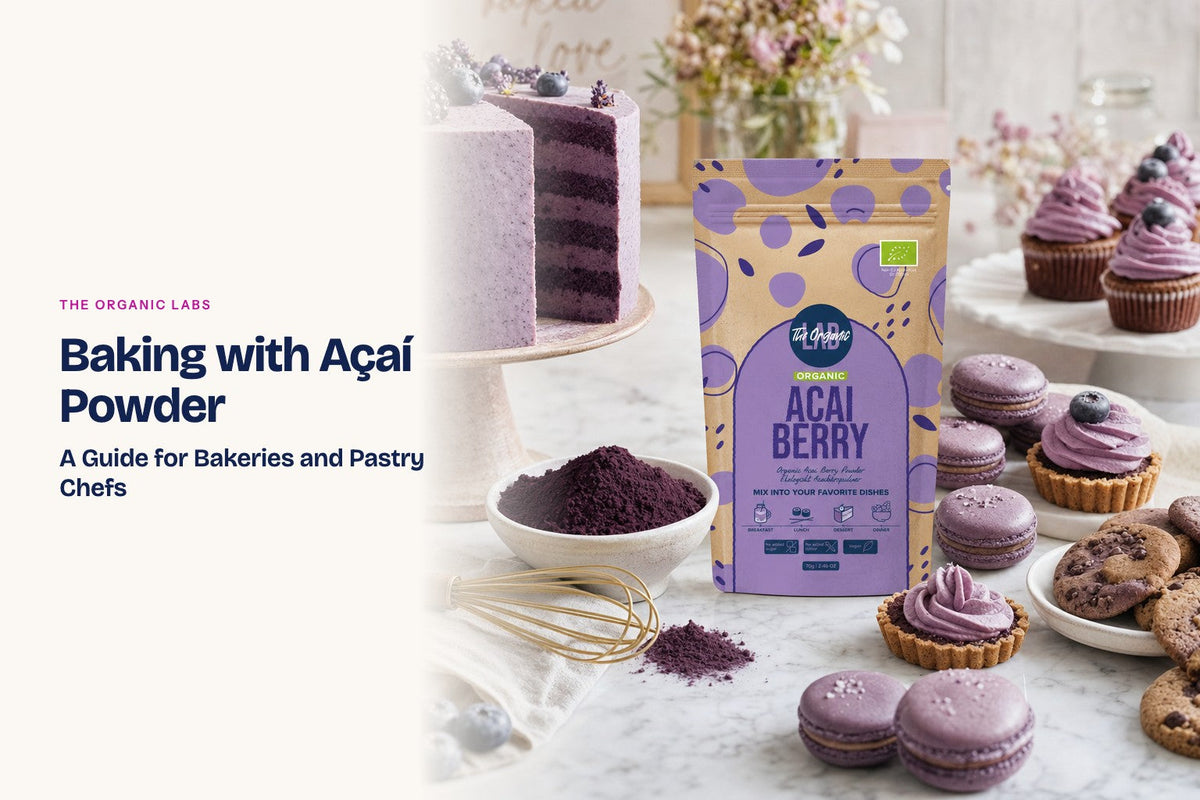
Açaí suits the bakery counter. Its dark colour stands out in a display, and its earthy, berry and cocoa-like flavour sits well with chocolate, cream and fruit. But açaí powder is a fruit ingredient, not a food colouring, and it behaves in its own way once it meets heat, raising agents and fat.
This guide is written for bakeries and pastry chefs. It covers where açaí works best, how to use it in cakes, cookies, frostings and fillings, what happens to its colour in the oven, and how to test recipes before they go on sale.
What Açaí Brings to Baked Goods
Açaí powder contributes three things: flavour, colour and dry solids. The flavour is earthy with dark berry and chocolate notes. The colour is a deep purple in the powder. The dry solids absorb some liquid and affect texture, much as cocoa powder does.
Of the three, flavour is the most dependable. Colour is the most sensitive, and it is where recipe testing matters most.
How Heat and pH Change the Colour
Açaí’s purple comes from anthocyanins, pigments that change with temperature and acidity:
- Heat: in the oven, açaí darkens and dulls towards a brownish purple. Longer bakes and higher temperatures increase the effect.
- Alkalinity: baking soda raises the pH of a batter and can push the colour towards grey, blue-green or brown. Recipes with a lot of bicarbonate show this most.
- Acidity: buttermilk, yoghurt, lemon juice or cream of tartar keep the colour closer to red-purple.
In practice, a baked açaí sponge will look darker and less vivid than its raw batter. For many products, especially chocolate bakes, that is not a problem. Where a clear purple is the selling point, put the açaí in an unbaked element.
Cakes and Sponges
For cakes, sift açaí powder with the flour, cocoa and raising agents so it is evenly spread before the wet ingredients go in. The product page suggests 1–2 tablespoons for a cake batter as a starting point; for production recipes, convert that to grams and test from there.
Açaí is particularly good in chocolate sponge, where it adds a dark fruit note. In light vanilla sponges the baked colour can look muddy, so an açaí frosting or syrup soak may give a better result. If you raise the açaí dose significantly, add a little more liquid to keep the crumb moist, and consider balancing the raising agents with an acidic ingredient to protect the colour.
Brownies and Cookies
Brownies are one of the easiest places to start. Their dense texture and strong cocoa flavour hide any colour change, and açaí’s berry note gives the chocolate more depth. Stir the powder in with the cocoa, or whisk it into the melted chocolate and butter.
For cookies, mix açaí with the dry ingredients before they meet the butter and sugar. Shorter bakes at moderate temperatures keep more colour. Pale doughs such as shortbread can bake to a dusky purple-grey rather than a bright purple, so test before you commit to a look. White chocolate chunks add a strong visual contrast.
Frostings, Buttercream and Glazes
Unbaked toppings are where açaí’s colour shows best. Sift the powder with the icing sugar for buttercream or glaze, or beat it into cream cheese frosting with a few drops of lemon juice to brighten both colour and flavour.
Because the powder carries natural fruit oil, it blends readily into butter- and cream-based toppings. In water-based glazes it needs thorough whisking, and it is worth straining the glaze before it goes on the cake.
Frostings and glazes with açaí can deepen in colour as the powder hydrates, so make a test batch and check it again after an hour before fixing the dose.
Fillings, Creams and Cheesecakes
Pastry creams, mousses, ganache and cheesecake fillings all take açaí well:
- Ganache: whisk açaí into the warm cream before pouring it over the chocolate. Dark chocolate gives a deep, fruity flavour; white chocolate shows more colour.
- Pastry cream: add açaí once the cooked cream has cooled slightly, which limits colour change from heat.
- No-bake cheesecake: mix açaí into the cream cheese base for the clearest purple.
- Baked cheesecake: expect a darker, more muted colour; an açaí glaze or topping layer brings back the visual effect.
- Macaron and choux fillings: açaí buttercream or ganache gives a dark berry filling without adding extra liquid.
Breads, Buns and Pastries
Enriched doughs such as brioche and sweet buns can carry açaí in the dough or in a filling. With laminated pastries such as croissants, açaí is usually most effective in the filling or glaze, since in the dough it bakes to a muted shade. In any yeast dough, treat açaí much as you would cocoa: it adds dry solids, so check the hydration.
Testing Açaí Recipes in a Bakery
Before an açaí product goes on sale, run a structured test:
- Make two or three versions at different açaí doses, weighed in grams.
- Bake them under normal production conditions, in your own ovens.
- Judge colour and flavour after cooling and again after the product’s usual display time.
- Check texture: higher doses can make a crumb slightly drier.
- Record the final recipe, dose and method so every batch matches.
Each new batch of powder can vary a little in shade, as with any fruit ingredient, so keep a reference bake and compare against it when you open new stock.
Flavour Pairings for the Bakery
Açaí works best with dark chocolate, cocoa, banana, raspberry, blueberry, coconut, vanilla and cream cheese, while lime and passion fruit add brightness in small amounts. For a closer look at the flavour, read what açaí tastes like; for mixing basics, see how to use açaí powder.
Açaí Powder for Your Bakery
For recipe development, the Organic Açaí Powder – 500g pack gives you enough to test several products. When an açaí line is ready for regular production, contact us for bulk pricing. Home bakers can start with Organic Açaí Powder – 70g.


