

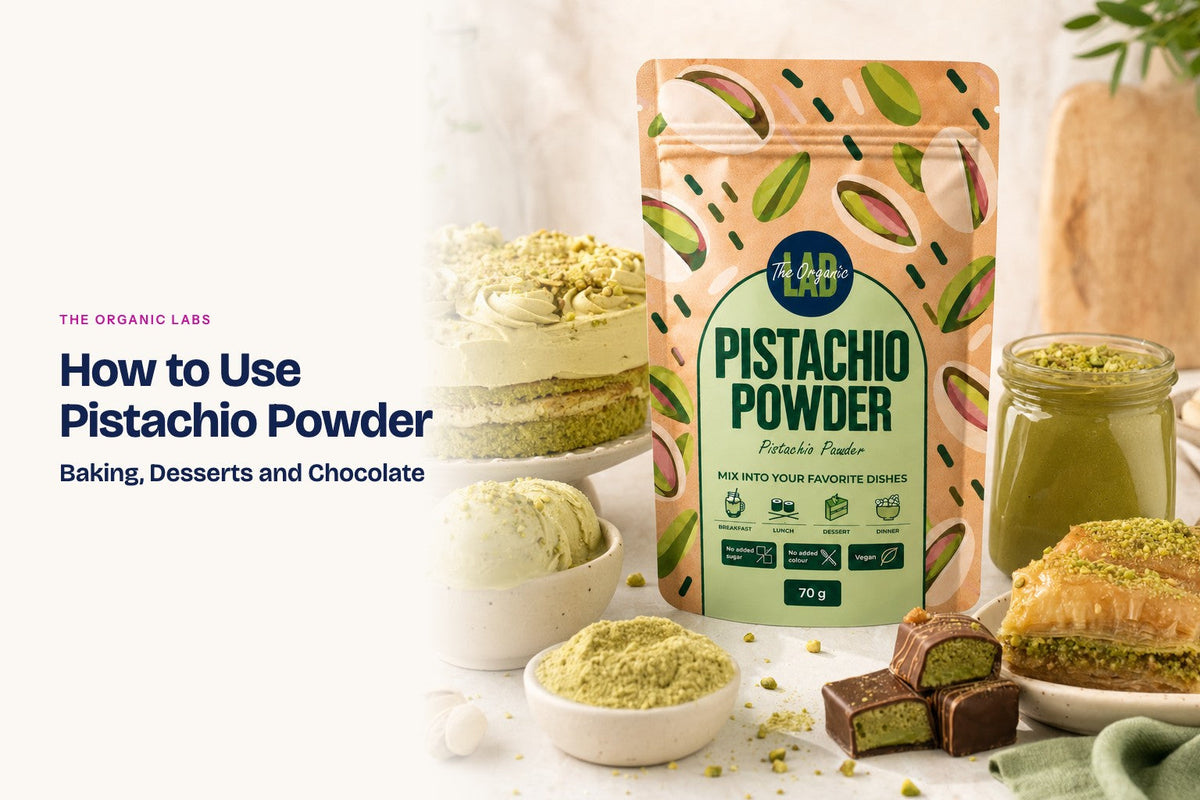
Pistachio powder is one of the simplest ways to bring pistachio into home baking. There is no shelling, chopping or grinding: the kernels are already milled, so the powder can be weighed and mixed in like flour or ground almonds. It gives cakes, creams, chocolate and desserts a nutty, rich flavour and a natural green colour.
This guide covers how to prepare and mix the powder, how much to use, how to use it in baking, creams, spreads, chocolate, desserts and ice cream, and how to store it.
Before You Start: Sift and Weigh
Pistachio kernels contain natural oil, and that oil stays in the powder. It gives pistachio its richness, but it also means the powder can form soft clumps, especially if it has been pressed down in its container or kept somewhere warm. Push it through a sieve, or whisk it with the sugar or flour, before you use it. The clumps break up easily.
Weigh rather than measure by the spoon. The weight of a spoonful changes with how tightly the powder is packed, and a kitchen scale gives the same result every time.
How Much to Use
These ranges are a good starting point:
- Cakes and sponges: 3–6% of the flour weight
- Ice cream and gelato: 2–4% of the base
- Fillings, spreads and confectionery: 3–6% of the recipe
For a cake made with 250 g of flour, 3–6% means roughly 8–15 g of powder. Start in the middle, taste the finished result and adjust within the range next time for more or less colour and flavour. The powder absorbs moisture, so towards the top of the range a batter may need a splash more milk or water.
Cakes, Muffins and Biscuits
Whisk pistachio powder into the flour, raising agents and other dry ingredients before the butter, eggs or milk go in. That spreads it evenly and avoids pockets of powder in the crumb.
- Sponges and loaf cakes: pistachio works well with lemon zest or a raspberry layer.
- Muffins: add the powder to the dry mix and fold in fresh berries.
- Shortbread and butter biscuits: the powder keeps the dough short and gives a delicate green tint.
- Financiers and frangipane: replace part of the ground almonds with pistachio powder.
Expect the colour to soften in the oven. Baked pistachio goods are a gentle, muted green rather than a bright one, and the flavour turns rounder and toastier. For more pistachio impact, add some to a topping or filling that does not go in the oven. Our guide to baking with pistachio powder goes further.
Creams, Frostings and Fillings
Unbaked creams show the powder's colour and fresh flavour best. Blend the powder with the sugar first, then add it to the cream.
- Whipped cream: add the pistachio sugar to cold cream and whip to soft peaks.
- Buttercream: sift the powder in with the icing sugar.
- Pastry cream: whisk the powder into the pastry cream while it is still warm from cooking, then cover and chill.
- Mascarpone or cream cheese frosting: beat the powder in with the sugar for a soft green, nutty frosting.
A Simple Pistachio Spread
Melt white chocolate gently, stir in pistachio powder at 3–6% of the total weight with a pinch of salt, and loosen with a little neutral oil until it is soft enough to spread. Pour it into a clean, dry jar and keep it cool. Use it on toast or crêpes, as a cake filling or to sandwich biscuits. Keep water out of it, as even a drop can make melted chocolate seize.
Chocolate at Home
- Truffles: roll ganache truffles in pistachio powder instead of cocoa.
- Chocolate bark: spread melted chocolate thinly and scatter pistachio powder and freeze-dried raspberries over it before it sets.
- Filled bars: brush a thin chocolate shell into a bar mould, fill it with the pistachio spread above and seal with more chocolate.
Make sure the powder and all your tools are completely dry before they touch melted chocolate.
Tiramisu, Cheesecake and Other Desserts
- Pistachio tiramisu: beat pistachio powder into the mascarpone cream, layer it with savoiardi soaked in milk, and finish with a dusting of powder instead of cocoa.
- Cheesecake: add the powder to the filling, or mix it into the biscuit base.
- Panna cotta: whisk the powder into the warm cream with the sugar before adding the gelatine, then pour into moulds.
- Mousse and layered pots: spoon pistachio cream between layers of fruit and crumbled biscuit.
Ice Cream at Home
Mix the powder with the sugar for your ice cream base, whisk it into the warm milk and cream so it disperses fully, and chill the base well before churning. Use 2–4% of the base, and taste it cold, because freezing makes flavours milder. A no-churn ice cream of whipped cream and condensed milk takes pistachio powder well too. Dust each serving with a little extra powder for colour. Our guide to pistachio ice cream and gelato goes into more depth.
Decoration
A light dusting of pistachio powder is a quick finish for cakes, tarts, choux buns, chocolate bars and plated desserts. Use a small, fine sieve and dust just before serving if the surface is moist. For a pattern, hold a paper doily or a cut-out stencil over the cake and dust through it.
Storage and Allergens
Keep the powder sealed in a cool, dry place below 25 °C, away from direct sunlight, and close the container after each use to keep air out. If it ever smells stale or bitter, it is past its best. Pistachio is a tree nut, so tell anyone you bake for that the recipe contains pistachio.
Where to Get Pistachio Powder
Pistachio powder from The Organic Labs is currently supplied in bulk from 25 kg, for bakeries, pastry kitchens, chocolate makers and gelato shops, who can ask for a quote or a sample on the Bulk Pistachio Powder 25kg page. To understand the flavour you are working with, see our guide to what pistachio tastes like.


