


Frozen desserts are one of the best homes for pink pitaya powder. An ice cream base is not baked after the powder goes in, so the vivid magenta survives, and the display cabinet does the selling. A tray of pink gelato or a scoop of magenta sorbet is hard to walk past.
This guide is for gelato makers, ice cream producers and dessert kitchens working with red dragon fruit powder in dairy, plant-based and sorbet bases. It covers dosage, dispersion, how the colour looks once frozen and how to build flavours around it.
Why Pink Pitaya Suits Frozen Desserts
Three things make pink pitaya a good match for ice cream and gelato. The colour is not exposed to oven heat, so it stays far brighter than in baked goods. The flavour is mild and fruity, so it fits creamy, fruity and tropical profiles alike. And because the powder is simply dragon fruit, it works in vegan and plant-based ranges as well as dairy ones.
The powder is also easy to handle in a gelato lab: it is dry, it keeps in a cool, dry store rather than a fridge and it can be weighed precisely for each batch.
Dosage in Ice Cream and Gelato
A starting point is 2–4% of the base, adjusted for the shade and flavour you want. At the lower end you get a soft pastel; at the upper end, a deep pink.
Pink pitaya powder adds solids to the mix. If you balance recipes by total solids, include the powder in your calculation, and reduce other dry ingredients slightly at higher doses so the texture stays smooth and scoopable.
Getting Good Dispersion
Undispersed powder shows up as specks in a pale base, so mixing matters.
- Blend the powder thoroughly with the sugar and any stabiliser before it meets the liquid.
- Add the dry blend to the base with an immersion blender or high-shear mixer.
- Age the mix before batch freezing so the powder hydrates fully and the colour settles.
Heat treatment can soften the shade, so some producers add the powder after pasteurisation, as the mix cools. Anything added after the heat step is not pasteurised, so this has to fit your own HACCP plan. If the powder goes in before pasteurisation, judge the colour on the finished product.
Dairy Ice Cream and Gelato
Milk, cream and their fat soften the colour into a creamy, pastel pink. In a fior di latte or vanilla base, pink pitaya gives a gentle fruit flavour that suits a pink milk or berry-cream style. The richer the base, the softer the colour tends to look.
Yoghurt gelato is a particularly good partner. The slight acidity keeps the pink bright and lifts the mild fruit flavour, and pink pitaya and yoghurt look and taste fresh together.
Plant-Based Frozen Desserts
Pink pitaya works well in vegan bases, and the colour of the base influences the result:
- Coconut gives a clean, bright pink and a tropical flavour that suits pitaya well.
- Oat has a beige tone that pulls the colour slightly warmer and duller.
- Almond and soy sit in between and are fairly neutral in taste.
Plant-based bases often rely more on stabilisers and added fats for texture, so test the powder in your full recipe rather than in plain plant milk.
Sorbet
Sorbet shows pink pitaya at its brightest. With no milk fat to soften it, the colour reads as a vivid magenta and the fruit flavour comes through more clearly.
Pink pitaya on its own makes a gentle sorbet, so most producers pair it with a fruit that brings acidity and aroma: lime, lemon, passion fruit, mango or raspberry. Combine the powder with the sugar, whisk it into the syrup and fruit purée, and balance sweetness and acidity as you would for any fruit sorbet.
Colour in the Frozen Product
The mix in the tank is not the colour the customer sees. Several things change between the two:
- Air: incorporated air lightens colour. Gelato, with less air, shows a deeper shade than high-overrun ice cream made from the same mix.
- Base: fat and milk solids make the colour more opaque and pastel, while water-based sorbets look more saturated.
- Light: bright cabinet lighting can fade the surface of a tray over several days. Covering trays overnight and rotating stock helps.
Judge the colour after batch freezing and hardening, under the lighting of your display cabinet, before finalising the dosage.
Flavour Pairings and Menu Ideas
- Pink pitaya and coconut, dairy-free
- Pink pitaya and lime sorbet
- Pink pitaya and mango, as a two-colour swirl or a layered pot
- Pink pitaya yoghurt gelato with a raspberry ripple
- Vanilla gelato with a pink pitaya variegato or sauce
- Pink pitaya and white chocolate
- Pitaya sorbet served in a bowl with fresh fruit and granola
For ripples and sauces, a starting point is 3–6% of the recipe, in a syrup that stays soft at serving temperature. Our guide to what pink pitaya tastes like has more on pairings.
Scaling Up Production
For larger producers, the priorities are consistency and documentation. Check each new batch of powder against a retained reference sample, record dosage by weight and keep the certificate of analysis for each batch with your production records. Store the powder in a cool, dry place below 25 °C and reseal opened drums promptly, since fruit powders take up moisture from the air. Businesses with several shops can weigh the powder and sugar into ready-made dry blends in a central kitchen, one bag per batch, so every site makes the same colour. Our guide for food manufacturers using pink pitaya powder covers process and documentation in more depth.
Supply for Gelato Makers and Producers
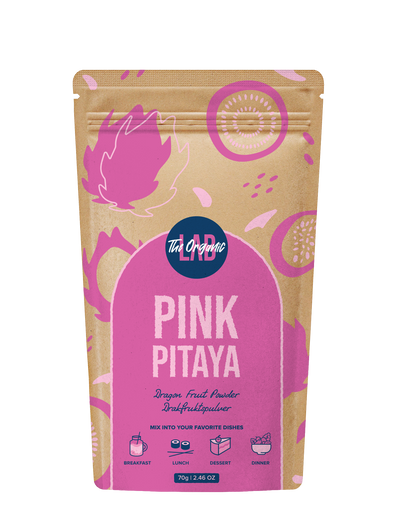
The Organic Labs supplies Bulk Pink Pitaya Powder 25kg in drums, from a single drum for a gelato shop to full pallets for ice cream producers, stocked and shipped from Sweden, with a sample on request. For a small batch at home, the Pink Pitaya Powder – 70g pack is enough to try several recipes.


