

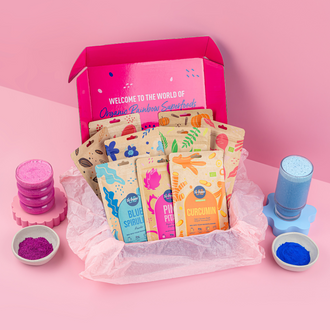
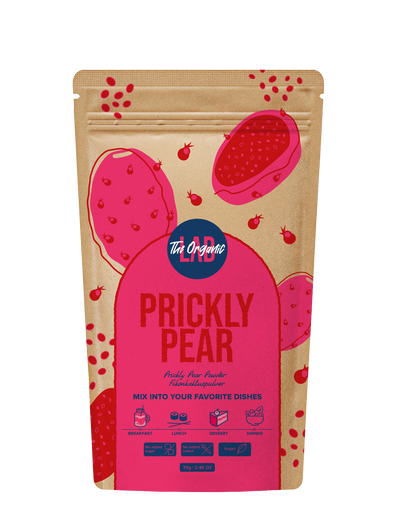
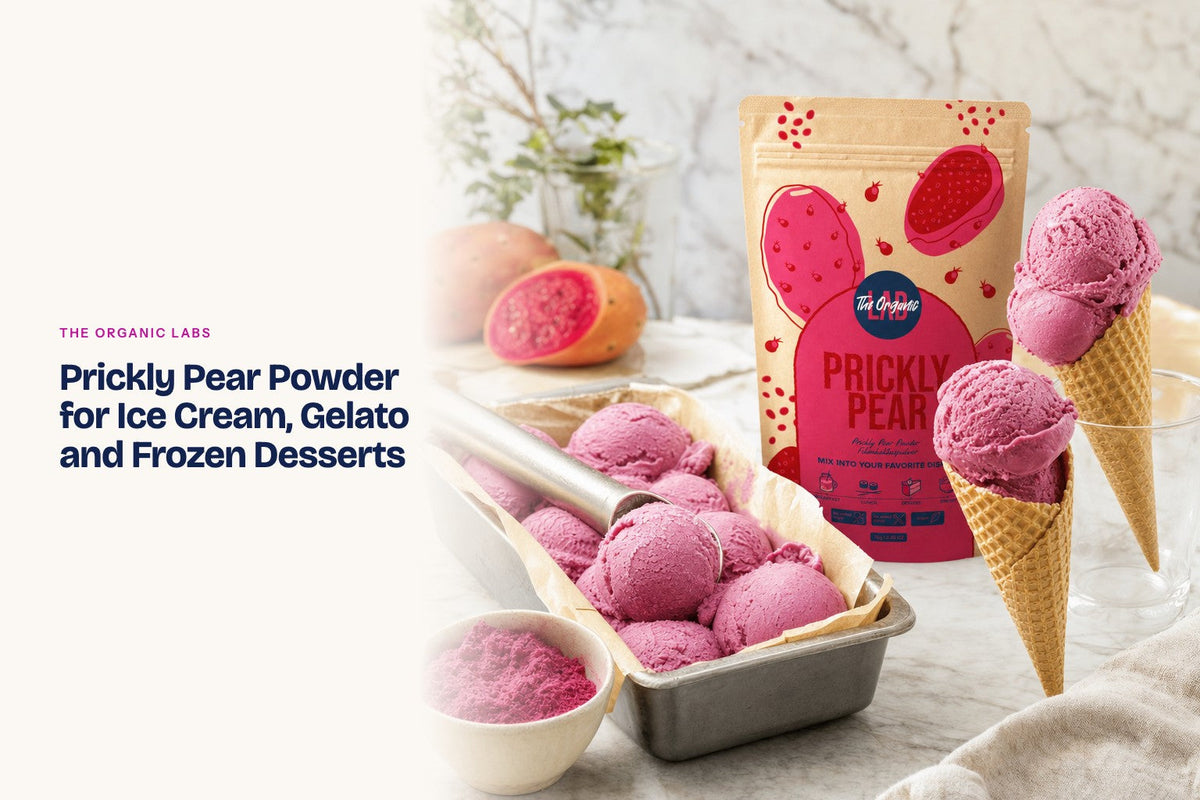
Frozen desserts are one of the best uses for prickly pear powder. There is no long bake to soften the colour, the fruit's mild, slightly tangy flavour comes through clearly in a cold product, and a magenta-pink pan stands out in any display cabinet.
This guide is for gelato makers, ice cream producers and dessert kitchens working with prickly pear powder (Opuntia ficus-indica) in dairy, plant-based and sorbet bases.
Why Prickly Pear Works in Frozen Desserts
Fresh prickly pear is seasonal, has to be peeled carefully because of the fine bristles on its rind, and its many hard seeds have to be strained out before the pulp can go into a base. A dry powder skips all of that. It gives colour and flavour together, can be weighed to the gram and is available all year.
The flavour suits the format. In sorbet it is fresh and fruity; in a milk or cream base it turns softer, close to berries and cream with a watermelon-like freshness.
Dosage
Start at 2–4% of the base. For a 5 kg batch, that is 100–200 g of powder. The lower end gives a pastel pink and a gentle flavour; the upper end a deeper shade and a clearer fruit taste. Sorbets may need the upper end, as there is no dairy to round out the flavour.
The powder adds dry solids, so at higher dosages include it in your recipe balance to keep texture and scoopability where you want them. The technical data sheet gives the composition values you need for the calculation.
Getting Good Dispersion
- Dry-blend first. Mix the powder with the sugar, and with your stabiliser if you use one, before it meets any liquid.
- Add to moving liquid. Whisk or blend the dry mix into the base while it is circulating, rather than tipping it onto a still surface.
- Use shear. A stick blender or high-shear mixer gives the smoothest result.
- Allow time. Let the base rest before batch freezing so the powder absorbs fully, as you would with other dry ingredients.
Specks in the finished product usually mean the powder went in too quickly or without a dry blend.
Once a recipe works, write down the order of addition as carefully as the weights. In gelato production, a change in method can alter colour and texture as much as a change in dosage, and a clear recipe card lets every member of the team produce the same batch.
Pasteurisation and Colour
Heat is the main risk to the pink. In a hot process, the colour can soften during pasteurisation, particularly with long holding times. Some producers therefore add colour-sensitive ingredients after the heat step, once the base has cooled. That decision depends on your process and must be made within your HACCP system.
In cold-process bases, the powder simply goes in with the other dry ingredients.
Dairy Bases
In a milk or cream base, prickly pear gives a soft pastel pink. Fat and milk solids mellow the tang and round the flavour. A fior di latte style base with prickly pear makes a clean, fruit-led flavour, while vanilla, mascarpone or white chocolate take it towards a richer dessert profile.
Yoghurt and frozen yoghurt bases suit the fruit especially well. Their mild acidity sharpens the flavour and keeps the colour firmly pink.
Plant-Based Bases
Oat, coconut, almond and soy bases all take prickly pear well, but each changes the result. Coconut gives a richer, tropical profile and a slightly creamier shade. Oat adds a cereal sweetness. Almond keeps the flavour delicate. Test the powder in the exact base you produce, as colour and taste can differ noticeably between them.
Because the powder is vegan and a single ingredient, it fits a plant-based range without adding anything else to the label.
Sorbet and Granita
A prickly pear sorbet needs only water, sugar, the powder and a little citrus. Lime or lemon juice sharpens the fruit and keeps the colour bright. Since the powder brings its own fruit solids, check the sugar and solids balance so the sorbet is neither icy nor too soft.
For granita, whisk the powder into a lukewarm syrup, cool and freeze, scraping as it sets. The coarse ice crystals show the colour off well.
Colour After Freezing
Gelato and ice cream look paler than the liquid mix. Air whipped in during freezing and the ice crystals themselves scatter light, so always judge colour on the frozen, hardened product rather than the base.
In the display, bright lighting fades fruit colours over time. Keep pans covered when you can, rotate stock and compare an older pan with a fresh one. For packaged products, opaque packaging protects the colour through distribution.
Ripples, Swirls and Combinations
For a ripple, make a simple fruit sauce or syrup, let it cool and whisk in the powder. Swirl it through vanilla, coconut or white chocolate gelato for a sharp pink contrast. The same sauce works as a sundae topping or a dip for cones.
Prickly pear also combines well with lime, passion fruit, mango, raspberry, pistachio and mint, which gives a gelato counter several flavours from one ingredient. A prickly pear sorbet next to a pistachio gelato, or a prickly pear and lime pan beside a coconut one, makes an eye-catching pairing in the cabinet.
Supply for Gelato Makers and Producers
Ice cream and gelato producers can request a quote, COA, TDS and a sample on the Bulk Prickly Pear Powder 25kg page; a full pallet holds 20 drums of 25 kg. For processing at scale, see our guide for food manufacturers, and for another pink cactus fruit, our comparison of prickly pear and pink pitaya. Home cooks can make prickly pear ice cream with the Prickly Pear Powder – 70g pack.


