


A blue sponge, a sky-blue macaron or a marbled blue loaf stands out on any counter. Butterfly pea powder lets a bakery make them with a single plant ingredient and very little effect on flavour. It is also the most sensitive colour in the pastry kitchen. The same powder can produce a clear blue sponge, a teal cookie and a lilac frosting, depending on what else is in the bowl.
This guide is for bakeries and pastry professionals who want predictable results: how butterfly pea behaves in the oven, what changes its colour and how to develop and test a new product.
How Butterfly Pea Behaves in Baking
Butterfly pea powder is the dried, finely milled flower of Clitoria ternatea. Its colour comes from anthocyanins, which respond to pH. Four factors decide the shade you take out of the oven:
- the pH of the dough or batter
- the colour of the other ingredients, especially yellow ones
- heat and browning
- dosage
Its flavour is very mild, earthy and slightly floral, and in most baked goods it is hidden by butter, sugar and vanilla.
Leavening and pH: Why Blue Cakes Turn Green
The most common complaint about butterfly pea in baking is a green or teal crumb. The usual cause is baking soda. Sodium bicarbonate makes the batter alkaline, and in alkaline conditions butterfly pea shifts from blue towards green.
Baking powder contains its own acid and usually leaves the crumb closer to neutral, so it is the better choice for a blue result where the recipe allows. On the other side, acidic ingredients such as buttermilk, yoghurt, sour cream, lemon juice and cream of tartar push the colour towards violet and purple.
Once you understand this, pH becomes a tool. A neutral batter gives blue, a slightly acidic one gives lilac to purple, and two batters baked together give a marbled blue and purple cake.
Cakes and Sponges
Sift the powder with the flour so it is evenly distributed before liquids are added. As a starting point, our bulk product page suggests 3–6% of flour weight for cakes and sponges, with a slight adjustment to the liquid because the powder absorbs moisture. For pastel shades, start below that range.
Egg whites give the clearest blue, so chiffon cakes, angel food cakes and white sponges are the easiest place to begin. Recipes rich in egg yolk and butter turn more teal, because yellow and blue mix to green. Ombré layer cakes are simple to make by baking three or four layers at stepped dosages.
Judge the colour on a cut slice after cooling. The crust browns in the oven and usually looks duller than the crumb.
Cookies and Biscuits
Shortbread and other unleavened doughs keep the truest colour, because there is no baking soda to shift the pH. Sugar cookies and soft cookies leavened with soda often bake teal. Butter-rich doughs lean towards blue-green, which can still look attractive if it is planned.
Lower baking temperatures and taking cookies out before the edges colour help keep the shade clean. Marbled cookies, made by folding blue dough into plain dough, show the colour well even at low dosages.
Macarons and Meringue
Macaron shells and meringues are built on egg whites, which makes them one of the best bases for a clear blue. Sift the powder with the ground almonds and icing sugar, and keep the dosage modest so it does not upset the texture of the shell. A lemon filling coloured with butterfly pea turns pink to violet, giving a two-tone macaron with blue shells and a purple centre.
Yeasted Doughs, Buns and Steamed Bao
For bread and enriched doughs, dissolve the powder in part of the dough liquid. Blue swirl loaves and milk bread rolls work well, as does laminating a blue dough with a plain one.
Steamed buns and bao take butterfly pea particularly well: the dough is white, it does not brown, and the blue stays bright. Long fermentations produce acids that may soften the shade towards lilac, so sourdough and long-proofed doughs should be tested.
Frostings, Glazes and Fillings
- Buttercream: beat the butter until pale before adding colour; the more yellow the butter, the more teal the frosting. Swiss and Italian meringue buttercreams give cleaner pastels.
- Glaze and icing: mix icing sugar with a little concentrated butterfly pea liquid for a clean blue glaze on doughnuts and buns.
- White chocolate ganache: disperse the powder in the warm cream first. The pigment dissolves in water, not in fat, so it colours the cream rather than the cocoa butter.
- Cream cheese frosting: slightly acidic, so it may lean lavender.
- Pastry cream and custard: egg yolks make the colour greener.
- Fillings and spreads: start around the 3–6% of recipe range given on our bulk page and adjust.
Heat, Browning and Display
Heat itself is only part of the story. Browning reactions on the crust add yellow and brown tones that dull the blue. Moderate oven temperatures, shorter bakes, covering the top towards the end of baking, or choosing products that are steamed rather than baked all help.
After baking, light is the next factor. A product that looks right in the morning may soften in colour under strong shop lighting or direct sunlight. Check your best sellers after a full day on the counter before committing to them.
Developing a New Butterfly Pea Product
- Define the target colour, ideally with a photo or reference sample.
- List every ingredient that affects pH or colour: leavening, acids, egg yolk, butter, fruit.
- Bake a dosage series of three or four steps.
- Assess the colour after cooling, after cutting and after a day on display.
- Taste each version; if an earthy note shows, reduce the dosage or adjust the flavouring.
- Fix the recipe by weight and record it on the production sheet.
For a wider overview of drinks and desserts, see our complete guide on how to use butterfly pea powder. If you are comparing blue colour sources for cold decorations, our article on butterfly pea vs blue spirulina explains where each one works best.
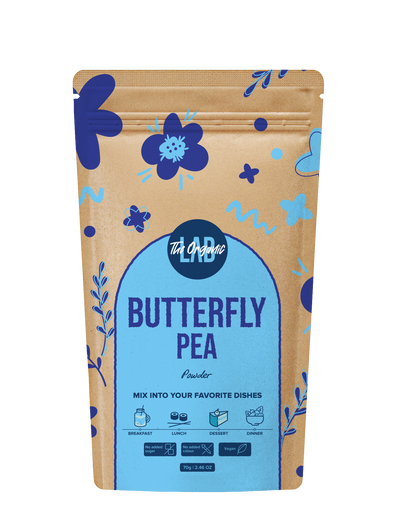
Butterfly Pea Powder for Bakeries
For regular production, The Organic Labs supplies Bulk Butterfly Pea Powder 25kg in drums, from one 25 kg drum for bakeries testing butterfly pea on the menu to 50 kg for bakeries with steady sales, and pallet volumes beyond that. A COA is issued per batch and samples are available. For first recipe trials, our Butterfly Pea Powder 70g is a convenient way to start.


