

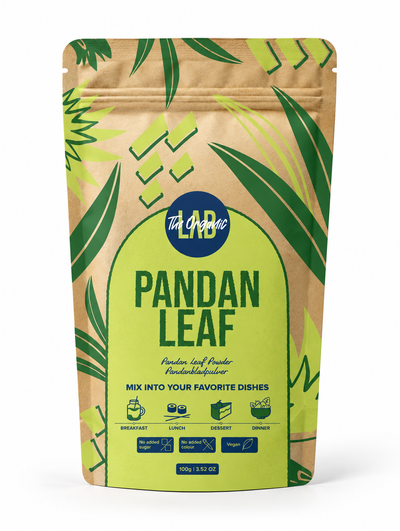

Pandan leaf powder is one of the easiest ways to bring the fragrance of Southeast Asian desserts into an ordinary kitchen. A spoonful turns warm milk into a sweet, vanilla-scented green latte, and the same powder works in sponges, cookies, custards and ice cream.
Like any leaf powder, it needs a little technique. This guide covers how to mix pandan powder, how much to use and how to get the best colour and flavour in drinks, baking and desserts.
What Pandan Powder Is
Pandan powder is the dried, finely milled leaf of Pandanus amaryllifolius, a tropical plant used across Southeast Asia to flavour sweets and rice. It brings two things at once: a natural green colour and a sweet, aromatic, vanilla-like flavour with subtle coconut notes. For more background on the plant, read what pandan is.
How to Mix Pandan Powder
Because pandan powder is milled leaf, it disperses rather than dissolves, and dry powder dropped into cold liquid tends to clump. Three simple methods avoid that:
- Make a paste: stir the powder into a tablespoon or two of warm water or milk until smooth, then add the rest of the liquid.
- Mix with sugar: combine the powder with the recipe's sugar before any liquid goes in. The sugar crystals keep the fine particles apart.
- Mix with flour: for baking, sift the powder together with the flour and other dry ingredients.
A small whisk, a milk frother or a blender all help. Sifting the powder first breaks up any lumps that formed in storage.
Pandan Drinks
Hot pandan latte
Mix 3–5 g of pandan powder into a little warm milk or water, top up with steamed milk to about 300 ml and sweeten to taste. Coconut milk gives the most traditional flavour; oat milk is a good everyday choice.
Iced pandan latte
Make the paste first, then shake it with cold milk and ice, or pour it over a glass of milk and ice for a two-tone drink. Iced drinks taste milder, so lean towards the upper end of the range.
Bubble tea, smoothies and milkshakes
For bubble tea, blend the powder into the milk base before adding ice and tapioca pearls. In smoothies, pandan pairs well with banana, mango and coconut. For a milkshake, blend it with vanilla ice cream and a splash of milk.
Baking With Pandan Powder
For cakes and sponges, a good starting point is 3–6% of the flour weight. For 250 g of flour, that means about 7.5–15 g of pandan powder. Mix it with the flour and other dry ingredients, and add a little more liquid than the recipe calls for, because the powder absorbs moisture.
Pandan works especially well in chiffon cakes, sponges, muffins, pancakes, waffles and butter cookies. Expect the green to soften in the oven: heat moves it towards olive, and crusts brown as usual. A shorter bake at a moderate temperature keeps more colour and aroma. Professional bakers will find more detail in our guide to baking with pandan powder.
Pandan in Desserts, Creams and Fillings
Unbaked desserts show pandan at its best, because the colour and fragrance stay closest to the powder. Try it in:
- pastry cream and custard for doughnuts, tarts and choux buns
- whipped cream, mascarpone cream or white chocolate ganache
- buttercream and cream cheese frosting
- panna cotta, rice pudding and chia pudding made with coconut milk
- a coconut and egg jam in the style of kaya
For fillings, spreads and creams, start at 3–6% of the recipe weight. Mix the powder with the sugar, or into a little warm milk, before combining it with the rest.
Pandan Ice Cream
For homemade ice cream, use about 2–4% of the base, which is 20–40 g per kilo of mix. Whisk the powder with the sugar before adding it to the milk and cream, chill the base well and then churn. Taste the base before churning: it should taste slightly stronger than you want the finished ice cream to be, because freezing dulls flavour.
How Much Pandan Powder to Use
- Latte or bubble tea (300 ml): 3–5 g
- Cakes and sponges: 3–6% of flour weight
- Ice cream and gelato: 2–4% of the base
- Fillings, spreads and creams: 3–6% of the recipe
These are starting points. Pandan's strength depends on the other ingredients: coconut and milk carry it well, while chocolate, coffee and spices can cover it. Start in the middle of the range, taste and adjust. More is not always better, as large amounts bring out a grassier, leafier note.
Colour and Storage
Pandan leaf powder gives a natural green that is softer than the vivid green of many shop-bought pandan cakes, which are often coloured. It is brightest in cold drinks, creams and ice cream, and paler and more olive after baking. Acidic ingredients such as lemon juice or yoghurt dull the colour further, so keep them separate if the green matters to you.
Keep pandan powder in an airtight container in a cool, dry place below 25 °C, away from direct sunlight. Light, air, warmth and moisture all fade colour and aroma. Close the container straight after use and always use a dry spoon, as damp powder clumps.
Troubleshooting
- Lumps in drinks: make a paste with a little warm liquid first, or use a frother.
- Sediment in the glass: normal for a leaf powder; stir before drinking.
- Weak flavour: increase the dose slightly, add a little sweetener or switch to coconut milk.
- Dull colour in cakes: shorten the bake, lower the temperature slightly or move the pandan into an unbaked filling or frosting.
- Dry crumb: add a little more liquid to balance the powder.
Where to Get Pandan Powder
Cafés, bakeries, gelato makers and food manufacturers can request a quote or a sample of bulk pandan powder in 25 kg drums, stocked and shipped from Sweden. For a café menu built around pandan, see our guide to pandan powder for cafés and coffee shops. Home cooks can explore the flavour further in our guide to what pandan tastes like.


