

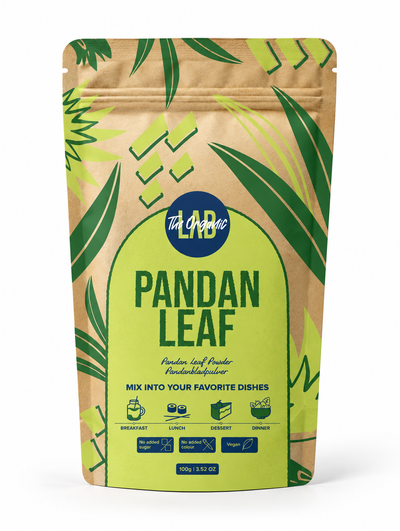

Pandan and frozen desserts have a long partnership. Across Southeast Asia, pandan-scented coconut ice cream and shaved ice with green pandan jelly are everyday treats. In Europe, pandan gelato offers something different from the familiar pistachio and matcha greens: a sweet, vanilla-like flavour with a soft, natural colour.
This guide is for ice cream makers, gelato shops and frozen dessert producers. It covers dosage, dispersion, dairy and plant-based bases, colour and flavour in the frozen product, and testing before production.
Why Pandan Works in Frozen Desserts
Frozen products are one of the best homes for pandan. There is no oven to dull the colour, and the creaminess of the base carries the aroma. Pandan powder gives both colour and flavour from one ingredient, so the recipe and the ingredient list stay short.
It is not limited to scooped gelato either. Pandan suits soft serve, ice lollies, ice cream cakes and plated frozen desserts. Soft-serve mixes need the same careful dispersion as gelato bases, since undispersed particles can collect in the machine. For lollies, a coconut milk base gives a creamy, opaque green bar with a classic Southeast Asian flavour.
Dosage
A common starting point is 2–4% of the base, or 20–40 g per kilo of mix. Cold reduces how strongly we perceive aroma, so a base that tastes right at room temperature will taste weaker once frozen. Make the base slightly stronger than your target and always judge the result at serving temperature.
Fat and sugar carry pandan's flavour. In leaner bases and sorbets, expect to work towards the top of the range.
Getting Even Dispersion
- Pre-blend with sugar: mix the pandan powder with the sugar, dextrose and stabiliser before they go into the liquid.
- Add under agitation: pour the dry blend into moving liquid in the pasteuriser, or use an immersion blender for smaller batches.
- Allow hydration: age the mix in the fridge for several hours so the powder hydrates fully, then blend briefly again before churning.
- Check for specks: a spoonful spread on a white plate shows any particles that have not dispersed.
Pandan powder adds dry solids to the mix. At 2–4% the amount is small, but include it in your solids balance so texture stays consistent across your flavours.
Process and Food Safety
Decide where the powder enters the process as part of your HACCP plan. Adding it before pasteurisation means it is heat-treated with the rest of the mix. Heat can soften colour and aroma a little, so compare results in trials and keep any process changes within your food safety procedures.
Dairy Bases
A classic milk and cream base, in the style of fior di latte, gives a clean background in which pandan's vanilla-like aroma comes through clearly, with a soft pastel green colour. Egg-yolk custard bases add richness and work well too, although the yolks shift the colour towards a warmer yellow-green.
A little condensed milk or caramelised sugar adds depth that suits pandan, echoing the palm sugar used in many Southeast Asian sweets.
Plant-Based Bases
Coconut milk and coconut cream are the natural choice for vegan pandan ice cream, and the pairing is traditional rather than a stand-in. Coconut fat gives body, and the two flavours reinforce each other. Our pandan powder is itself vegan, so it fits plant-based recipes.
Oat bases work well too, adding a mild cereal sweetness. Bases with a strong flavour of their own, such as roasted nut milks, may compete with pandan, so test the balance.
For sorbet, pandan can be paired with coconut water or mango. Without fat to carry it, the aroma is lighter, so dose accordingly.
Colour in the Frozen Product
Pandan gives a natural pale to mid green in ice cream, depending on dose and base. The colour is cleaner in white bases and duller in yellow, egg-rich ones. Chlorophyll fades with light, so the surface of a tray under bright display lighting can lose some colour over time; covering trays outside service hours and rotating stock helps. Acidic additions, such as passion fruit or lime, also dull the green.
Expect slight variation between batches of powder, as with any leaf ingredient, and compare each new batch with a reference before it goes into production. Keep opened drums sealed in a cool, dry place below 25 °C and away from direct sunlight, so the powder you use in the last batch matches the first.
Flavour Combinations
- pandan and coconut, the classic pairing
- pandan with a palm sugar or brown sugar caramel ripple
- pandan with mango pieces or a mango sorbet layer
- pandan with sticky rice pieces, inspired by Southeast Asian desserts
- pandan with a kaya-style coconut custard swirl
- pandan and white chocolate
Pandan also works in ice cream sandwiches with butter cookies and in semifreddo. In frozen yoghurt, the acidity softens the colour, so judge it on flavour.
Testing Before Production
- Make test batches at 2%, 3% and 4% in your chosen base.
- Taste each at serving temperature after hardening, not straight from the machine.
- Check colour under your own display lighting.
- Assess texture and meltdown against your standard flavours.
- Record the batch number of the powder used and keep a reference sample.
Supply for Ice Cream Producers
Gelato shops and ice cream producers can order bulk pandan powder in 25 kg drums, and full pallets of 20 drums suit manufacturers and distributors. Each batch comes with a certificate of analysis, and samples are available for trials. Pastry teams pairing gelato with cakes will find ideas in baking with pandan powder, and for drinks see pandan for cafés and coffee shops. Home cooks can start with our guide on how to use pandan powder.


