

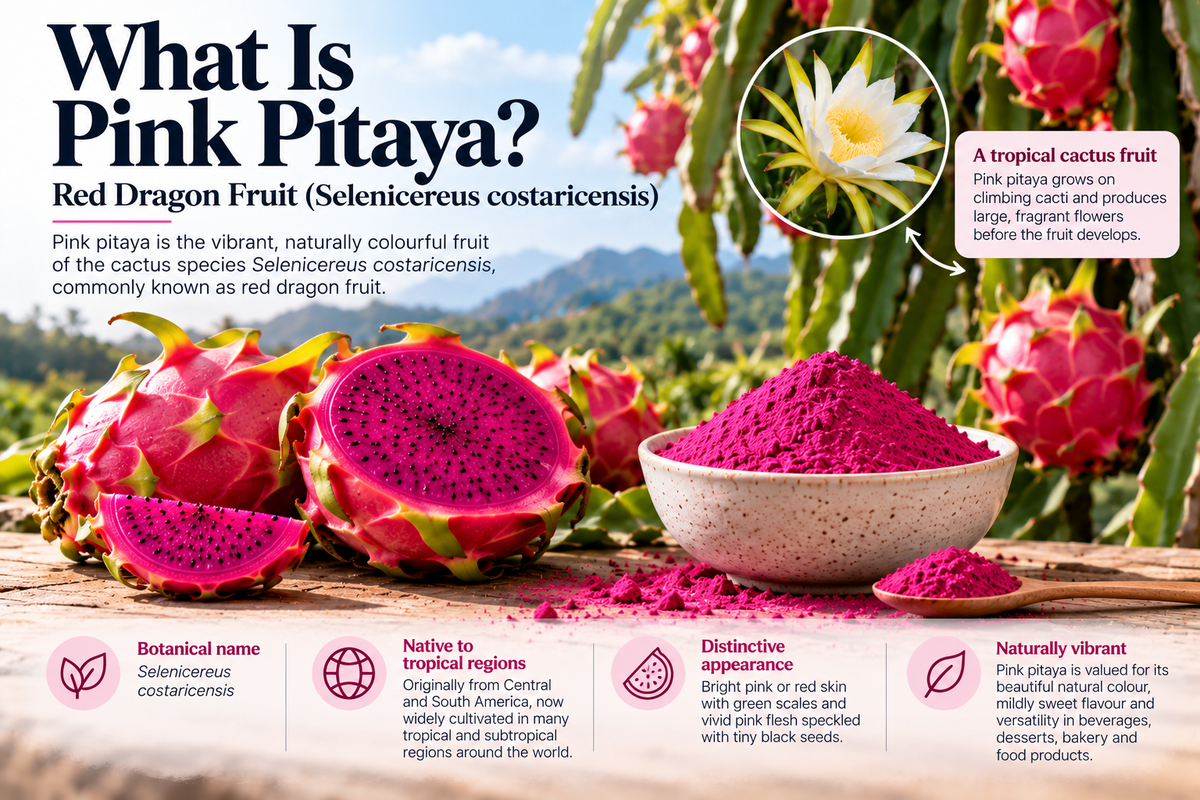
Pink pitaya is the name most kitchens use for red-fleshed dragon fruit. Cut one in half and, instead of the white flesh many people expect, you find deep magenta flesh dotted with tiny black seeds.
That colour is why pink pitaya now turns up in smoothie bowls, pink lattes, frostings and sorbets far from where the fruit grows. This guide explains what pink pitaya actually is, which plant it comes from, why it is so intensely pink and how it becomes a powder that cafés, bakeries and home cooks can use all year round.
Pink Pitaya Is the Fruit of a Climbing Cactus
Dragon fruit does not grow on a tree or a bush. It grows on climbing cacti with long, jointed, three-sided green stems. In the wild the stems use aerial roots to scramble up trees and rocks; on farms they are trained up sturdy posts or trellises and left to hang down in a heavy crown.
Botanically, these cacti belong to the genus Selenicereus. Most cultivated dragon fruit species used to be placed in a separate genus, Hylocereus, until botanists merged the two groups. You will still see the older names in books, on fruit labels and on some ingredient documents.
The red-fleshed pitaya used for pink pitaya powder is Selenicereus costaricensis. As its name hints, it is native to Central America. The fruit is oval, with a bright pink peel covered in leafy scales and flesh that ranges from red to a deep, saturated magenta.
Pink, White and Yellow Dragon Fruit
"Dragon fruit" is a market name for several related fruits that can look alike from the outside but differ once they are cut.
- White-fleshed dragon fruit (Selenicereus undatus) has pink peel and white flesh with black seeds. It is the most widely grown type.
- Red- or pink-fleshed dragon fruit (Selenicereus costaricensis and related red-fleshed kinds) has pink peel and magenta flesh. This is pink pitaya.
- Yellow dragon fruit (Selenicereus megalanthus) has yellow, spiny peel and white flesh.
Only the red-fleshed kinds carry strong colour into a powder. Dried white-fleshed fruit gives a pale cream powder, which is why the botanical name on a specification matters when you buy pink pitaya powder for its colour.
Why Is Pink Pitaya So Pink?
The colour comes from betalains, a group of natural pigments made by a fairly small circle of plants that includes cacti, beetroot, amaranth and bougainvillea. The red-violet members of the group, called betacyanins, give pink pitaya flesh its magenta tone.
Betalains behave differently from anthocyanins, the pigments that colour blueberries, red cabbage and purple yam. Anthocyanins swing from red to purple to blue as acidity changes, while betalains keep a fairly steady pink-red across the mildly acidic to neutral range of most foods. They are, however, sensitive to long heating, strong light and alkaline conditions, which affects how the colour holds up in cooking.
Because the pigment is part of the fruit, the exact shade can vary a little from harvest to harvest. That is normal for a fruit ingredient and worth keeping in mind when you set a colour standard for a product.
What Does Pink Pitaya Taste Like?
Fresh red dragon fruit is juicy, lightly sweet and gently fruity. It is often compared to a cross between kiwi and pear, and the small seeds add a soft crunch much like kiwi seeds.
As a powder, the flavour stays mild: a delicate fruitiness with subtle tropical notes. That gentle profile is useful, because pink pitaya can colour a buttercream or a milk drink without taking over the other flavours. We look at taste in more depth in our guide to what pink pitaya tastes like.
From Fresh Fruit to Pink Pitaya Powder
Fresh dragon fruit is perishable, and the red-fleshed kinds are much harder to find fresh in Europe than the white ones. Powder solves both problems.
To make it, the fruit is dried and finely milled. Freeze-drying is a common method because it removes water at low temperature, which is gentle on colour and flavour. The result is a light magenta powder that is easy to transport, keeps for a long time when stored dry and can be weighed out by the gram.
A straightforward pink pitaya powder is a single ingredient: dragon fruit. Some products sold as pink or pitaya mixes also contain sugar, milk powder, flavourings or other colours, so read the ingredient list before you compare them.
How Pink Pitaya Powder Is Used
Strong colour and a light flavour make the powder flexible:
- Smoothies and smoothie bowls, often sold as pitaya bowls
- Pink lattes, iced milk drinks, lemonades and mocktails
- Bubble tea and milk tea
- Frostings, buttercream, glazes and cheesecake fillings
- Ice cream, gelato and sorbet
- Macarons, cookies, doughnut glazes and other pastry
The colour is at its most vivid in recipes that are not heated for long, such as drinks, frostings and frozen desserts. In long bakes the pink tends to soften and turn duller. Our complete guide to using pink pitaya powder covers methods and starting amounts for each application.
Why Cafés and Bakeries Use It
Pink pitaya became widely known through smoothie bowls and colourful café drinks, and its appeal to businesses is practical. One ingredient delivers a striking pink and a mild fruit flavour, and because it is simply fruit, it fits vegan menus.
For cafés it opens up drinks that look nothing like the usual coffee, chai or chocolate. For bakeries and pastry kitchens it is a way to colour creams, fillings and decorations with fruit. Gelato makers use it in dairy and plant-based bases alike, and food manufacturers use it where a pink product should list a fruit rather than a dye.
Storing Pink Pitaya Powder
Like most fruit powders, pink pitaya draws moisture from the air. Left open, it can clump and lose its free-flowing texture. Keep it in a closed container in a cool, dry place below 25 °C, away from direct light, and use a dry spoon or scoop every time.
Pink Pitaya Powder From The Organic Labs
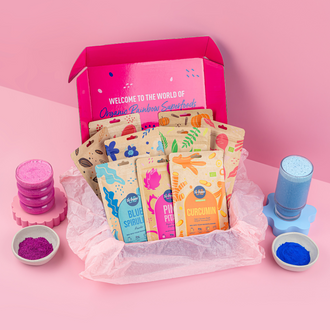
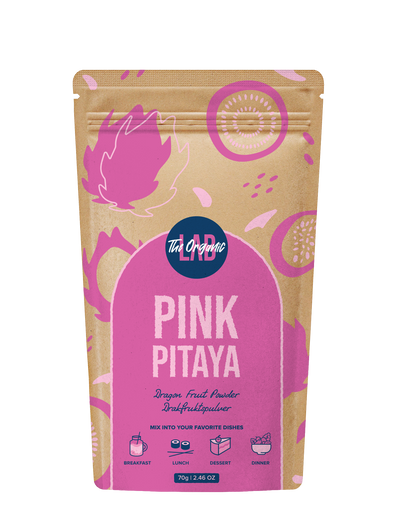
The Organic Labs Sweden AB supplies pink pitaya powder made from 100% dragon fruit (Selenicereus costaricensis), with a vibrant magenta to deep pink colour and a mildly sweet, delicate fruity taste.
For home baking and drinks, the Pink Pitaya Powder – 70g pack is an easy size to start with. Cafés, bakeries, gelato makers and food manufacturers can request a quote, documents or a sample for Bulk Pink Pitaya Powder 25kg, stocked and shipped from Sweden.


