

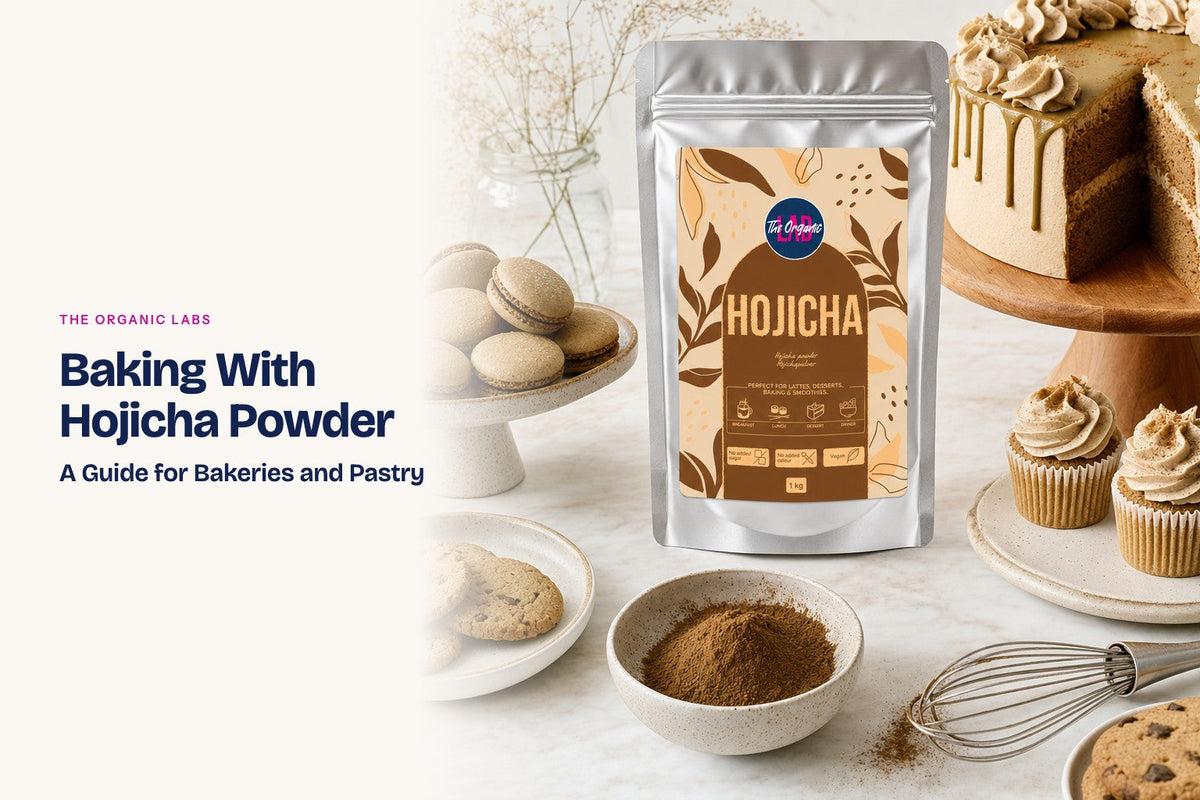
Hojicha is a natural fit for the pastry kitchen for a simple reason: it bakes well. Its warm brown colour and toasty, nutty taste come from roasting, so the oven does not strip away a delicate colour the way it can with green tea powders.
This guide is for bakeries and pastry teams working with hojicha powder. It covers dosage, moisture, how heat affects colour and flavour, which products suit hojicha best, and how to test a recipe before it reaches the counter.
Why Hojicha Works in Baking
- Colour that copes with heat: the warm roasted brown holds up through baking, giving beige to caramel tones in the crumb.
- A flavour made for baked goods: toasty, nutty notes sit naturally beside butter, sugar and browned crusts.
- A single ingredient: 100% roasted green tea, adding colour and flavour without syrups or flavourings.
- Easy to standardise: a dry powder can be weighed to the gram and blended into the dry mix.
How Much Hojicha to Use
For cakes and sponges, start at 3–6% of flour weight. At the lower end, hojicha reads as a gentle tea note in the background. At the upper end, it becomes the main flavour, with more colour and more bitterness. For fillings, creams and confectionery, start at 3–6% of the recipe.
Dosage interacts with sugar and fat. A rich butter cake carries more hojicha than a lean sponge, and a sweet frosting can take the higher end of the range. Make the final decision at a tasting, not on paper.
Moisture and Texture
Hojicha powder absorbs moisture. In a batter or dough it behaves a little like extra flour or cocoa, so adding it to an existing recipe can make the crumb slightly drier and the batter stiffer. Typical adjustments:
- add a little more liquid, such as milk or water, to bring the batter back to its usual consistency
- or take out part of the flour, roughly matching the weight of hojicha added
- check bake times, as a stiffer batter may need slightly longer
Always sift hojicha with the flour and raising agents. Lumps that survive mixing show up as dark specks and bitter pockets in the crumb.
Colour and Flavour in the Oven
Because the leaf has already been roasted, its brown colour holds up well in the oven. In pale bakes, expect beige to light caramel; in recipes with brown sugar or a long bake, the colour deepens along with the rest of the crumb.
Flavour behaves slightly differently. The roasted base note survives, but the lighter aromatics soften in long, hot bakes. Ways to keep hojicha clearly recognisable:
- use the upper end of the dosage range for long bakes such as loaf cakes
- add a second hojicha element after baking: a cream, glaze, syrup soak or dusting
- let cakes rest overnight before judging them, as the roasted notes often settle and round out
Products That Suit Hojicha
Cakes and sponges
Hojicha chiffon and sponge cakes, layer cakes with hojicha cream, roll cakes and loaf cakes. Hojicha with browned butter in financiers or madeleines is a particularly good match.
Cookies and shortbread
Butter-rich doughs carry hojicha well. White chocolate, toasted pecans or a little flaky salt work in cookies, while in shortbread the roast can stand on its own.
Cheesecakes
Cream cheese and hojicha are a natural pairing, in a baked cheesecake or a set version with a hojicha cream on top.
Doughnuts and enriched doughs
Use hojicha in the glaze, the filling or both. A hojicha pastry cream in a brioche doughnut or cream bun keeps the flavour clear, since the filling is not baked.
Creams, fillings and frostings
Pastry cream, diplomat cream, whipped ganache, buttercream and cream cheese frosting all take hojicha well at 3–6% of the recipe. Whisk the powder with the sugar, or into the warm dairy, before combining.
Building a Hojicha Counter
A few combinations that work well on a pastry counter:
- hojicha sponge with salted caramel and a brown sugar crumb
- hojicha and white chocolate cookies
- hojicha cream with poached pear in a tart
- hojicha and black sesame roll cake
- hojicha cream puffs filled with sweet red bean and cream
Hojicha also works well beside matcha for a two-tone display: green and brown, fresh and roasted. More flavour pairings are in our guide to what hojicha tastes like.
Working in Production Quantities
In a busy bakery, consistency depends on routine more than on recipe. Pre-weigh hojicha for each batch together with the flour and raising agents, so the dose is fixed before mixing starts. Sift the dry blend once rather than adding hojicha to the bowl on its own. For creams and fillings made in large batches, blend the powder with the sugar first, and scrape down the bowl to catch any powder stuck to the sides.
Testing Before Launch
- Bake the same recipe at three doses, for example 3%, 4.5% and 6% of flour weight.
- Judge colour, crumb, moisture and flavour on day one and again on day two or three, as the product will actually be sold.
- Look at the product under your shop lighting and next to the rest of the counter.
- Write the chosen dose into the recipe card in grams and weigh it every time.
- Keep a sealed sample of the powder batch used for the approved recipe, as a reference for later deliveries.
Bulk Hojicha for Bakeries
The Organic Labs supplies hojicha powder in 25 kg drums to bakeries and pastry kitchens across Europe, stocked and shipped from Sweden, with a certificate of analysis for each batch. Our 50 kg tier, two drums, is designed for bakeries, dessert brands and café groups with steady sales. Teams developing packaged bakery products will find more on trials and documents in our guide for food manufacturers.
Request a quote, documents or a sample on the Bulk Hojicha Powder 25kg page or through our contact page. Home bakers will find simple methods in our other hojicha guides.


