

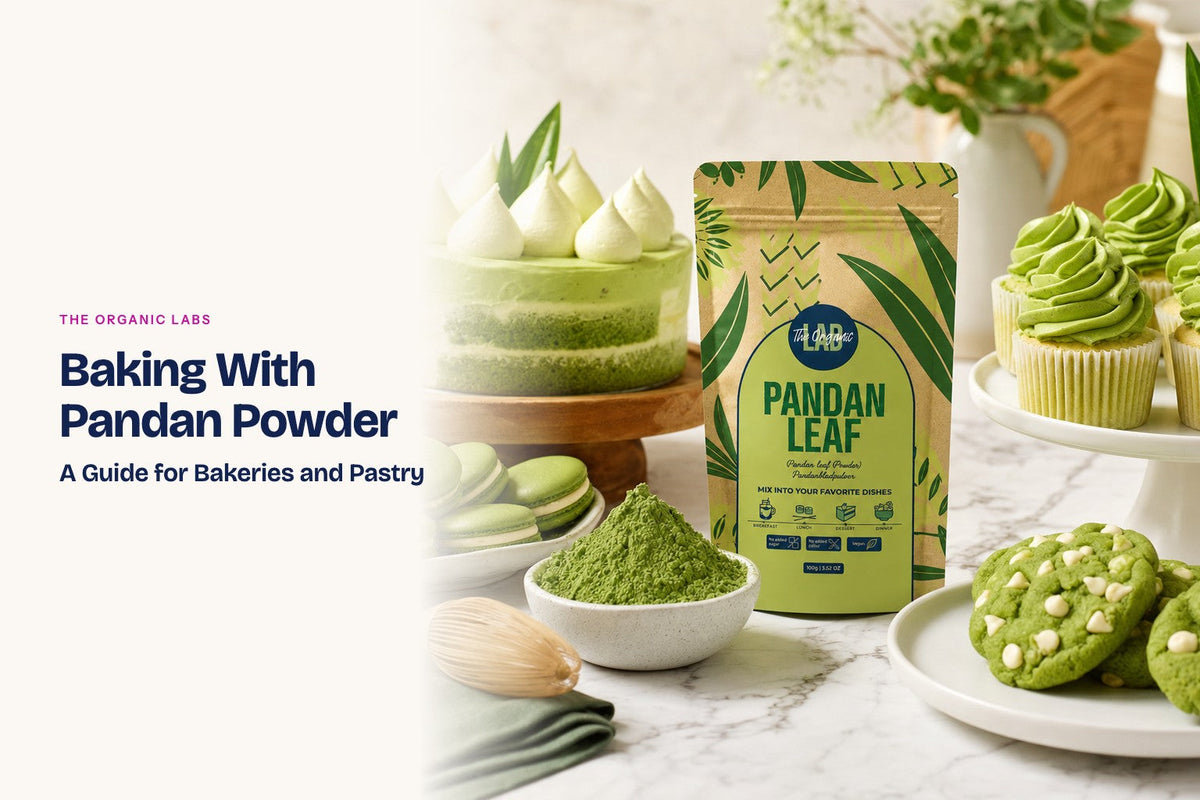
Pandan has a long history in baking. Pandan chiffon cake is one of the best-known cakes of Southeast Asia, and green, fragrant sponges, waffles and doughnuts now appear in bakeries and patisseries across Europe. For a bakery, pandan offers something unusual: a flavour customers associate with sweetness and comfort, plus a natural green colour, from one ingredient.
This guide is for bakeries and pastry kitchens using pandan leaf powder. It covers dosage, moisture, mixing, how heat changes colour and aroma, the products that work best and how to test before launch.
Why Bakeries Use Pandan Powder
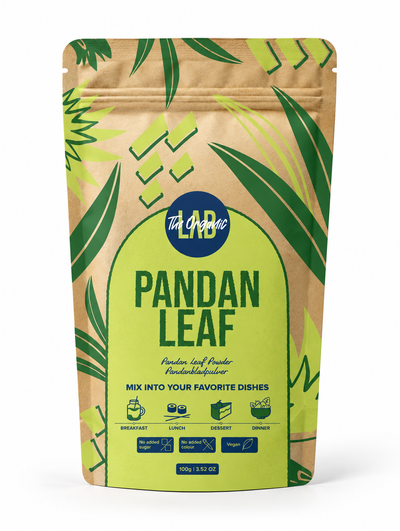
Traditional recipes use pandan juice pressed from fresh leaves. In a professional bakery, that is hard to standardise: fresh leaves are seldom available in Europe, juicing takes time and the strength varies from batch to batch. Leaf powder can be weighed, kept on a dry-store shelf and added straight into the mixer, and one approved batch gives the same result for weeks.
Unlike juice, the powder brings no water with it. It absorbs some instead, which is easy to account for once you know it happens.
Dosage: Where to Start
- Cakes and sponges: 3–6% of flour weight
- Fillings, creams, spreads and confectionery: 3–6% of the recipe weight
For a sponge made with 1 kg of flour, that means 30–60 g of pandan powder. Cookies, enriched doughs and pastry fillings follow the same logic: start in the middle of the range and adjust to the colour and flavour you want. At the top of the range, pandan's leafy, grassy side becomes more pronounced, so taste at each step.
Moisture and Texture
Pandan powder absorbs moisture. In a cake batter, a few extra grams of powder can make the crumb noticeably drier, so increase the liquid slightly as the dose rises. Adjust the liquid in small steps during trials and record each result, rather than changing several variables at once.
In cookies, the extra dry matter can make the dough a little firmer and reduce spread. In creams and fillings, let the mix stand for a few minutes after adding the powder so it hydrates before you judge the consistency.
Mixing Methods
- With the dry ingredients: sift the powder with the flour, starch and raising agents for even colour in sponges, muffins and cookies.
- Bloomed in liquid: for chiffon and other liquid-rich batters, whisk the powder into part of the milk, coconut milk or oil first, so no specks remain.
- With sugar: for creams, fillings and frostings, rub the powder through the sugar before adding fats or dairy.
Heat, Colour and Aroma
Pandan's green comes from chlorophyll, which changes with heat. In the oven the colour moves from fresh green towards olive and yellow-green, and the crust browns as usual, hiding the green on the outside.
Aroma behaves in a similar way. Some fragrance is lost during baking, and long bakes at high temperatures lose more. A few practical rules:
- moderate temperatures and shorter bakes keep more colour and aroma
- steamed cakes and lower-temperature sponges stay greener than high-heat bakes
- acidic ingredients such as buttermilk, yoghurt or lemon juice dull the green
- unbaked components, such as creams, glazes and fillings, keep the brightest colour and the strongest fragrance
Many pastry kitchens therefore use pandan twice in one product: a gently coloured sponge or dough, and a brighter unbaked filling or frosting. That gives a clear pandan flavour and a clean green layer where the customer looks first.
Products That Work Well
Chiffon and sponge cakes
Light cakes carry pandan best. Chiffon, génoise, roll cakes and layer cakes with coconut cream are classic choices.
Doughnuts and enriched doughs
Brioche doughnuts and buns filled with pandan custard or pandan cream make a strong counter item. The dough itself can stay plain or carry a little pandan for a pale green crumb.
Cookies and biscuits
Butter cookies, shortbread and white chocolate cookies all suit pandan. Lower baking temperatures help hold the green.
Waffles and pancakes
Green pandan waffles are a well-known street snack in Vietnam and an easy brunch item for bakery cafés.
Frostings, creams and fillings
Buttercream, cream cheese frosting, whipped white chocolate ganache, pastry cream and coconut custard are where pandan looks and tastes strongest.
Laminated pastry
Croissants and Danish pastries can carry a pandan cream or coconut custard filling. Check whether the filling is bake-stable or should be piped in after baking.
Flavour Pairings for Pastry
Coconut is the classic partner, followed by palm sugar, white chocolate, vanilla, mango and banana. Pandan also sits well with salted caramel and toasted sesame. Dark chocolate and strong spices tend to overpower it, so use them sparingly. More pairings are in our guide to what pandan tastes like.
Testing Before Launch
- Bake the same recipe at three pandan levels across the starting range.
- Adjust the liquid so the crumb stays comparable across the tests.
- Assess colour, aroma and texture the next day as well as fresh from the oven, since both colour and aroma keep changing.
- Check how the products look in your display, as bright light can fade green colours during the day.
- Record the batch number of the powder used and keep a reference sample.
Supply for Bakeries
Bakeries using pandan regularly can order bulk pandan powder in 25 kg drums, with a certificate of analysis for every batch and stock held in Sweden. Bakery groups can move up to 50 kg, 100 kg or pallet volumes as sales grow, and a sample can be sent for testing first. For frozen desserts, see pandan powder for ice cream and gelato. Home bakers will find a simpler overview in our guide on how to use pandan powder.


