


Prickly pear surprises people. Its magenta colour promises something intense, like raspberry or blackcurrant, but the taste is gentler: sweet, fresh and fruity, with a slight tang and hints that people often describe as watermelon and berries.
This guide describes the flavour of the fresh fruit and of the powder, how it changes in drinks, baking and desserts, and which ingredients bring out the best in it.
The Fresh Fruit
A ripe prickly pear is juicy and sweet with a watery, refreshing quality. The comparisons people reach for are watermelon, kiwi, pear and a light red berry, and some even detect a note reminiscent of bubblegum. It has far less sharpness than citrus and a subtle earthy undertone.
Texture is part of the experience: soft flesh studded with many small, hard seeds, which most people swallow whole. As with apples or plums, the flavour varies with the variety and with ripeness, from mild and melon-like to sweeter and more berry-like.
The Powder
Prickly pear powder tastes mild, fruity and slightly tangy, with a soft sweetness and a gently earthy finish behind the watermelon and berry notes. Tasted dry from a spoon, it can seem faint and a little dusty. It comes alive once it meets liquid, fat or sugar.
Because the flavour is gentle, the powder rarely dominates a recipe. That is useful: it adds colour and a fresh fruit note without overwhelming vanilla, citrus or white chocolate. The flip side is that strong partners can drown it, so balance matters.
How Does Prickly Pear Taste in a Latte?
In milk, prickly pear becomes soft and rounded. The tang mellows, and the drink tastes like a light berry milk with a melon-like freshness. A touch of vanilla or honey fills it out; without any sweetness, the flavour can seem thin.
The milk changes the result. Dairy milk keeps the taste clean and lets the fruit come through most clearly. Oat milk adds a cereal sweetness that suits the fruit, and coconut milk pushes it in a tropical direction.
Iced versions tend to taste fresher and more fruit-forward than hot ones. The cold tones down the milky richness and the tang becomes more noticeable.
In Lemonades, Iced Teas and Mocktails
This is where prickly pear tastes most like itself. With water, citrus and a little sugar, the fruit note is clear and the tang is lifted rather than masked. Prickly pear lemonade, a prickly pear and lime soda or a mint and prickly pear iced tea all play to its strengths.
Prickly pear is also a familiar cocktail ingredient, and the same partners work in alcohol-free drinks: lime, ginger, cucumber, mint and a pinch of salt.
In Baking
Heat and long baking soften fruit flavours, and prickly pear is no exception. In a sponge or a cookie, expect a gentle fruitiness and a pink crumb rather than a strong fruit hit. The flavour is much more noticeable in unbaked elements such as buttercream, glaze or a cream cheese filling.
For a cake that clearly tastes of prickly pear, use the powder in both the sponge and the frosting, or pair it with a fruit that underlines it, such as raspberry or lime. Our guide to baking with prickly pear powder covers dosage and colour in the oven.
In Ice Cream, Sorbet and Desserts
Cold desserts suit prickly pear well. In a sorbet, the fruit is right at the front, fresh and lightly tangy. In a cream or milk gelato it becomes softer, closer to berries and cream. Yoghurt, with its own mild acidity, brings out the tang and makes a natural partner in frozen yoghurt and breakfast bowls.
Panna cotta, mousse and no-bake cheesecake carry the flavour well, because their neutral dairy base lets the fruit show and they never see the oven.
In Savoury Food
The same soft sweetness and light tang work outside desserts. Whisked into a dressing with lime juice, olive oil and a pinch of salt, the powder gives a pink vinaigrette that suits salads with cucumber, watermelon, feta or fresh herbs. In a glaze with chilli and lime, it pairs with grilled halloumi, chicken or pork.
Use small amounts in savoury food. The goal is a hint of fruit and a touch of colour, and too much powder makes a sauce taste sweet rather than balanced.
What Goes Well With Prickly Pear?
- Citrus: lime, lemon, orange and grapefruit sharpen the fruit note.
- Other fruit: watermelon, strawberry, raspberry, passion fruit, mango, pineapple and coconut.
- Herbs and spice: mint, basil, ginger and a little chilli, in the spirit of Mexican fresh fruit with lime and chilli.
- Creamy partners: vanilla, white chocolate, cream cheese, mascarpone and yoghurt.
- Floral notes: hibiscus, rose and elderflower, used lightly.
- Nuts: pistachio and almond, especially in pastry.
Handle dark chocolate and strong coffee with care. Both can cover the fruit completely and turn the pink a muddy brown.
How Much Powder for Flavour?
Colour appears before flavour. A small amount of powder turns milk or frosting pink, but you may need more before the fruit clearly comes through. As a starting point, use 3–5 g per 300 ml latte, 1–2 teaspoons in a smoothie and 3–6% of flour weight in cakes. Adjust in small steps and judge the result at serving temperature, since temperature changes how sweet and how tangy it tastes.
Taste It Yourself
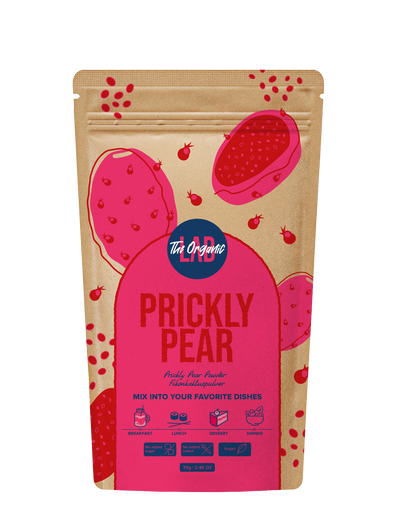
The quickest way to understand the flavour is to try it in milk and in lemonade side by side. The Prickly Pear Powder – 70g pack is the right size for tasting at home. Businesses developing a menu item can ask for a sample or a quote for the Bulk Prickly Pear Powder 25kg. If you are choosing between pink powders, see our comparison of prickly pear and pink pitaya.


