



Prickly pear looks so at home on the dry hillsides of Sicily, southern Spain and North Africa that many people assume it has always grown there. It has not. The cactus behind the fruit, Opuntia ficus-indica, comes from Mexico and only crossed the Atlantic after the Spanish reached the Americas.
This article follows that journey, from Mexican kitchens to Mediterranean landscapes and, much more recently, to the pink drinks and desserts served in cafés across Europe.
A Mexican Origin
Opuntia ficus-indica is a domesticated plant, shaped by people over a very long period, and its origin is placed in central Mexico. Wild Opuntia species grow across much of the Americas, but the large, sweet fruit and the pads with few large spines that characterise ficus-indica are the result of long cultivation and selection.
In Mexico the fruit is called tuna and the young pads nopales. Both remain everyday foods there. The pads are cooked as a vegetable, and the fruit is eaten fresh, blended into chilled drinks or cooked into sweets and syrups.
A Cactus on the National Flag
The prickly pear cactus is woven into Mexico's story. The national coat of arms, which appears on the Mexican flag, shows an eagle perched on a prickly pear cactus. It refers to the founding legend of Tenochtitlan, the Aztec capital on the site of today's Mexico City, in which an eagle on a cactus marked the place where the city was to be built.
Few fruits are so closely tied to a national symbol, and it says a great deal about how long the plant has been part of life in the region.
Cactus, Insects and a Famous Red
Prickly pear has a second, less obvious place in history. Opuntia cacti are host plants for the cochineal insect, which was farmed in Mexico for the deep red dye made from it. After the Spanish conquest, cochineal became a valuable export to Europe, where it was used to dye textiles.
That is a separate story from the colour of the fruit. Prickly pear flesh is pink because of its own pigments, called betalains, not because of cochineal. The two are easy to mix up because both are linked to the same cactus.
Crossing the Atlantic
Spanish ships carried the cactus to Spain in the sixteenth century. From there it spread quickly around the Mediterranean. The plant needed little water, took root from a single pad set into the ground and was useful both as a fruit and as a living fence, so it was easy to share and plant.
Its European names still carry traces of this journey. The species name ficus-indica means Indian fig, from a time when Europeans called the Americas the Indies, so the name points to the New World rather than to India. In English it is also called the Barbary fig, after the old European name for the North African coast, where the plant became widespread.
Prickly Pear Around the Mediterranean
Today the cactus is a familiar part of the landscape across southern Europe, North Africa and the Middle East. Sicily is especially associated with the fruit, which Sicilians call fico d'India, and it is common in Spain, Portugal, Malta, Greece, Morocco and Tunisia.
Around the Mediterranean the fruit ripens from late summer into autumn. It is sold in markets and by roadside vendors, often already peeled because the fine bristles on the rind make it tricky to handle. People eat it chilled, make it into jams, syrups and liqueurs, and use it in sorbets and fruit desserts.
Where Prickly Pear Grows Today
Beyond Mexico and the Mediterranean, Opuntia ficus-indica is grown in many warm, dry regions, including parts of South America, eastern and southern Africa, the Middle East and Asia. Its tolerance of drought and poor soils makes it a useful crop where other fruit struggle.
In some places it is grown mainly for its fruit, in others for its pads, which are eaten as a vegetable or used as animal fodder. In a few countries it has spread beyond cultivation and is treated as an invasive plant, a reminder of how easily it establishes itself.
Because the cactus grows on several continents, prickly pear powder can be made from fruit grown in different regions. For a buyer, the botanical name, the colour and the specification say more about a powder than any single growing area.
From Market Fruit to Café Ingredient
For most of its history in Europe, prickly pear was a fresh fruit enjoyed where it grew. It travels poorly: ripe fruit bruises easily, keeps for a short time and needs careful peeling. In northern Europe it was mostly an occasional find at a specialist greengrocer.
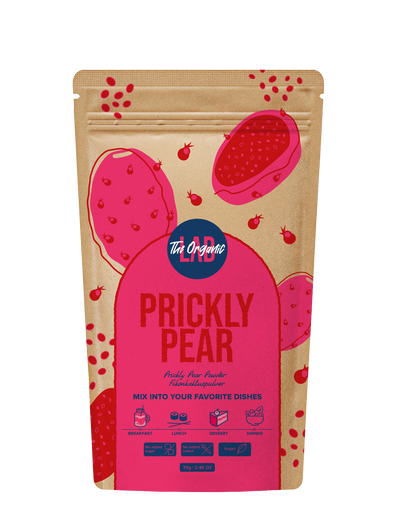
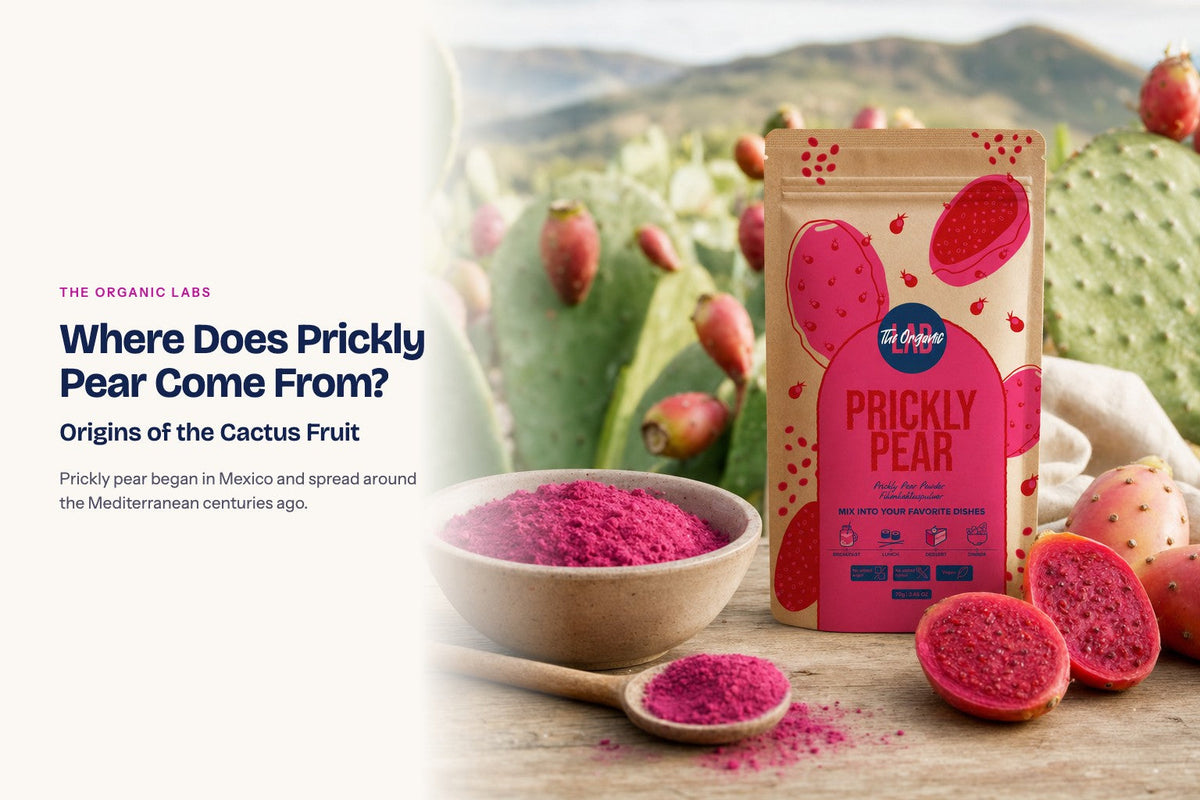
Dried and ground, the fruit becomes a very different proposition. Prickly pear powder keeps the pink colour and the fruit flavour in a form that can be stored, measured and shipped anywhere. That has opened the fruit to cafés, bakeries and ice cream makers far from any cactus, who now use it for pink lattes, frostings, gelato and smoothies.
The same vivid flesh that catches the eye at a Sicilian market stall is what makes a prickly pear latte stand out on a counter in Stockholm or Amsterdam. To learn more about the fruit itself, read our explainer on what prickly pear is, and for recipes and methods, our guide on how to use prickly pear powder.
Buying Prickly Pear Powder
Home cooks can try the fruit in powder form with the Prickly Pear Powder – 70g pack. Cafés, bakeries and producers who need regular volumes can request a quote for the Bulk Prickly Pear Powder 25kg, stocked and shipped from Sweden.


