

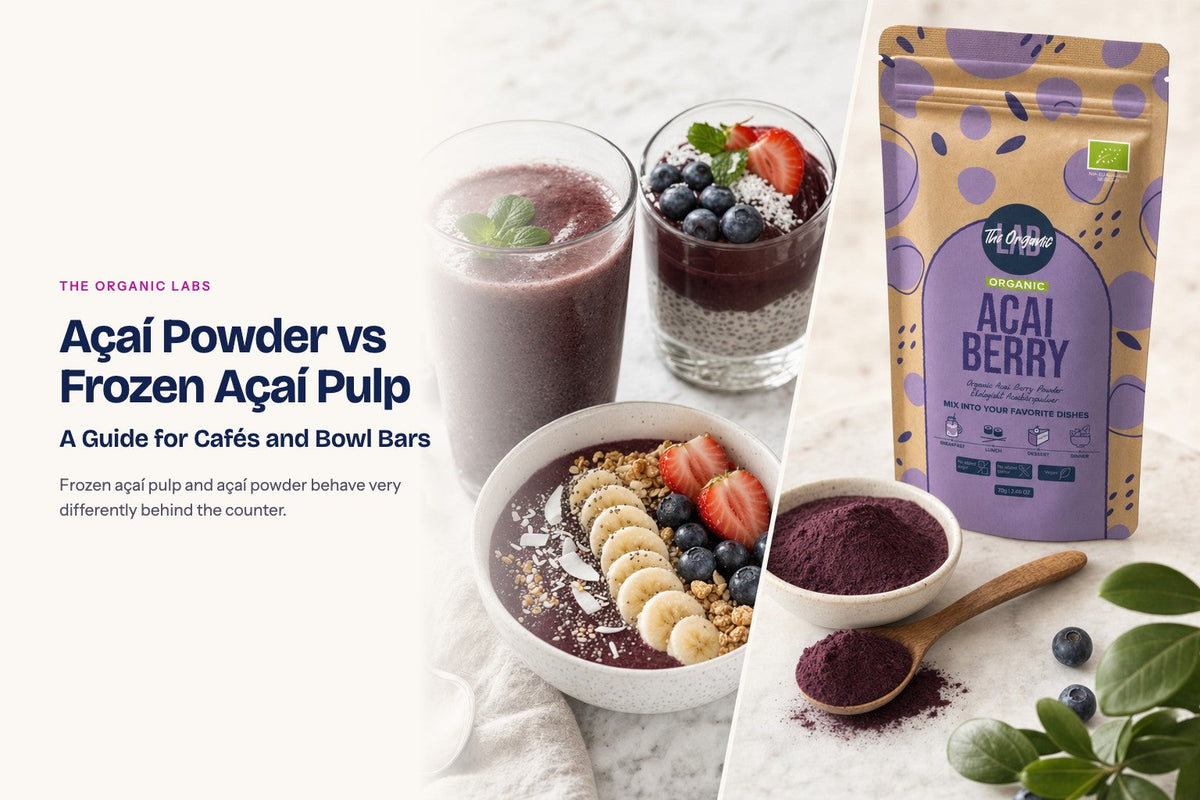
Ask a bowl bar how it makes its açaí bowls and the answer is usually frozen pulp: dense packs of purée blended straight from the freezer into a thick, spoonable base. Açaí powder is the other main format available in Europe, and it raises a fair question for any café: can it do the same job, or a different one?
The two formats come from the same fruit but behave very differently behind the counter. This comparison looks at storage, handling, colour, consistency and menu use, so you can decide which suits your business, or if you need both.
What Frozen Açaí Pulp Is
Frozen açaí pulp is the purée made by separating the pulp of the açaí fruit from its large seed and freezing it. Outside the growing regions it is typically sold in flat packs or blocks that are blended while still frozen.
Not all frozen pulp is the same. Some packs contain plain, unsweetened pulp; others are sweetened or mixed with syrups or other fruit. The label tells you which, and the difference affects both the flavour and how you describe the dish on your menu.
What Açaí Powder Is
Açaí powder is the fruit in dry form. The açaí powder from The Organic Labs is a fine, deep purple powder made from spray-dried açaí berries, with açaí powder as the only ingredient listed.
With the water removed, powder is far more concentrated than pulp. A small scoop carries a lot of colour and flavour, and the texture of the finished drink or bowl depends entirely on what you mix it with.
Storage: Freezer Space or Shelf Space
For smaller cafés, storage is often the deciding factor.
Frozen pulp has to stay frozen from delivery to blender. That means dedicated freezer capacity, deliveries that keep the cold chain intact and a plan for what happens if a freezer fails. A pack that has thawed should not simply go back into the freezer, so stock control around the blending station matters.
Açaí powder needs no freezer at all. The Organic Labs advises storing it in a cool place below 25°C. A sealed pack sits on a dry-store shelf with your other powders, and an opened pack only needs to be resealed properly to keep moisture out.
For a café that is already short of freezer space, that difference alone can decide whether açaí makes it onto the menu.
Handling and Preparation
Frozen pulp is quick once a routine is in place, but it has its quirks. Packs often need a few minutes to soften slightly or must be broken up before blending, and blending frozen blocks is hard work for a blender. Portion size is fixed by the pack, so a recipe that needs half a pack leaves an awkward remainder.
Powder is portioned by weight or with a measured scoop, so you use exactly what the recipe calls for. It does need technique: tipped into cold liquid all at once, açaí powder floats and clumps. Blending it in, or first stirring it into a little liquid to make a paste, gives a smooth result. Our guide on how to use açaí powder covers mixing methods step by step.
Consistency and Texture
This is where the two formats differ most.
Frozen pulp provides both the açaí and the body of a classic bowl. Blended with a little frozen fruit and very little liquid, it becomes thick, cold and spoonable, closer to soft sorbet than to a smoothie.
Açaí powder provides colour and flavour, but not that frozen body. To make a thick bowl base with powder, the structure has to come from other frozen ingredients, such as:
- frozen banana, for creaminess and gentle sweetness
- frozen berries, for body and a tart fruit note
- frozen mango or pineapple, for a brighter, tropical base
- a spoonful of thick yoghurt or a plant-based alternative
Blend the frozen fruit and powder with just enough liquid to get the blades turning, and add more only if needed. Too much liquid turns a bowl into a smoothie.
For drinks, the picture reverses. Powder blends into smoothies, milk drinks and shakes without any frozen fruit, while frozen pulp always brings its thick, icy texture with it.
Colour in the Bowl and the Cup
Both formats give the dark purple customers associate with açaí. The difference is control.
With frozen pulp, the colour comes with the portion and is diluted by whatever else goes in. With powder, intensity is set by the dose, so the same ingredient can give a deep purple bowl or a pale lilac milk drink.
Açaí’s pigments respond to the other ingredients. Milk and banana soften the colour towards mauve, while acidic fruit such as raspberries or a squeeze of lime keeps it closer to red-purple. Test your recipe with the exact ingredients you plan to serve.
Flavour and Sweetness
Plain açaí in either format tastes earthy and only gently fruity. The Organic Labs describes its powder as having a rich, earthy flavour with hints of berry and chocolate. Sweetened frozen pulp tastes noticeably sweeter, but the sugar level is decided for you.
With powder, sweetness comes from the fruit, syrup or other ingredients you choose, so you can set the sweetness of each recipe yourself and keep it the same across the menu.
Menu Use Beyond the Bowl
Frozen pulp excels at one job: classic açaí bowls and thick frozen smoothies. Powder reaches further across a menu:
- iced açaí milk drinks and shaken drinks
- açaí smoothies built on fresh or frozen fruit
- overnight oats, chia puddings and yoghurt pots
- frostings, glazes and fillings for the cake counter
- a fine dusting of colour over a finished bowl
For a café that wants açaí in several products, one dry ingredient can cover them all. Our guide for cafés and coffee shops has menu ideas built around açaí powder.
Which Should You Choose?
There is no rule that says you must pick one. Frozen pulp can stay for a signature bowl where the classic texture is the selling point, while powder covers drinks, bakery items and days when frozen stock runs short. If you run both, write separate standard recipes for each format and train staff not to swap them freely, as dose, texture and sweetness differ.
If you do want to pick one, this summary may help:
- Choose frozen pulp if açaí bowls are your main product, you have reliable freezer capacity and you want the classic texture with minimal recipe work.
- Choose powder if freezer space is tight, you want açaí in several menu items, or you need precise portions and control over sweetness.
- Choose both if bowls are central to your menu but you also want açaí in drinks and bakery products.
Order Açaí Powder for Your Business
To trial powder in your bowls and drinks, start with the Organic Açaí Powder – 500g pack. For larger quantities, request a wholesale quote. For açaí bowls at home, the Organic Açaí Powder – 70g pack is the easier size.


