

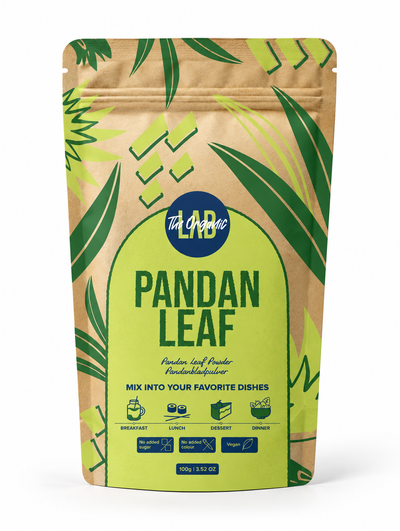
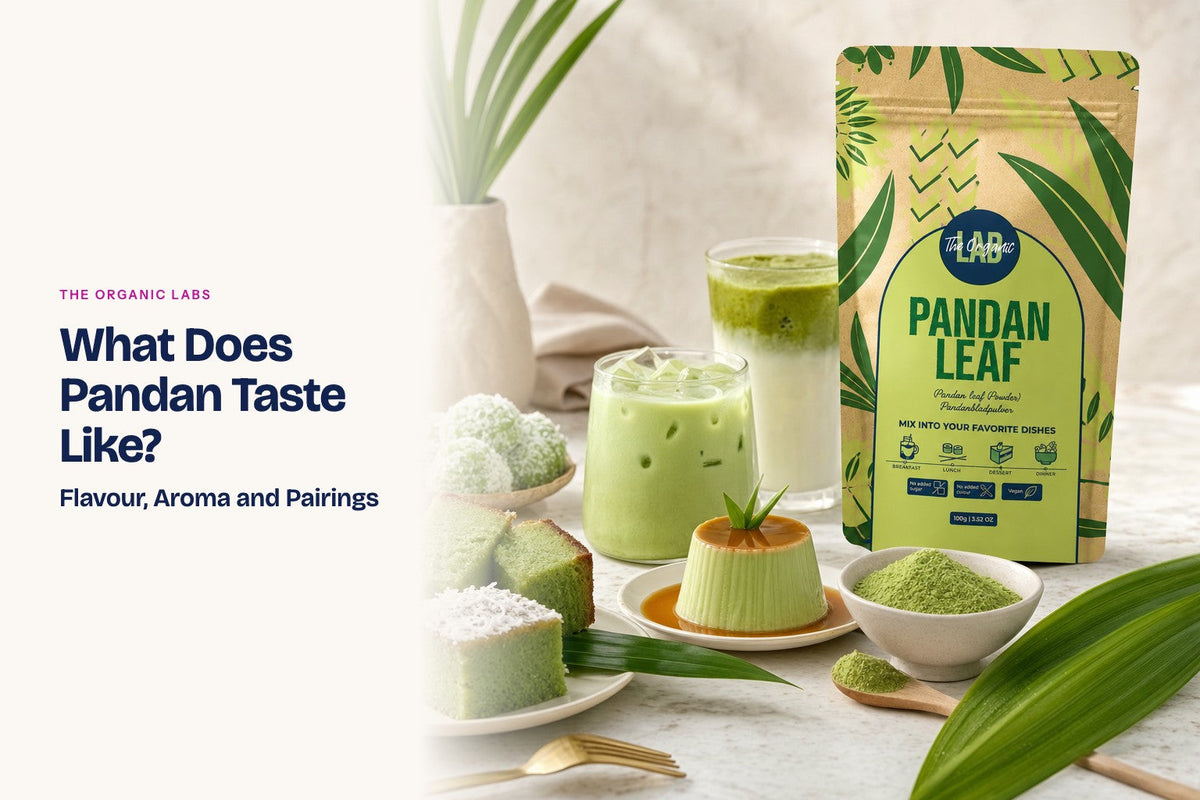
Ask someone who grew up with pandan what it tastes like and they may struggle to answer, in the same way that vanilla is hard to put into words. Pandan is more aroma than taste: sweet, warm and green at the same time, and instantly recognisable once you know it.
This guide describes pandan's flavour, how it changes in drinks, baking and frozen desserts, and which ingredients bring out the best in it.
The Short Answer
Pandan has a sweet, vanilla-like aroma with a soft grassy note, a slightly nutty warmth and subtle coconut notes. Many people say it reminds them of freshly cooked jasmine rice or warm bread crust. On the tongue it is mild, with little bitterness. Most of the experience is fragrance.
Aroma First, Taste Second
Pandan shares part of its aroma chemistry with fragrant rice and with the crust of freshly baked bread. That is why a pandan cake can smell almost toasty, and why pandan and rice turn up together so often in Southeast Asian cooking.
Tasted on its own, stirred into plain water, the powder is lightly green and leafy, and the aroma seems faint. The sweeter, rounder side appears when it meets milk, sugar, fat or warmth, which carry the fragrance and soften the grassy note. This is why pandan is almost always used in sweet, creamy or coconut-based recipes.
It also helps to know what people are comparing it with. Many bottled pandan pastes and essences are flavoured as well as coloured, so they can smell stronger and more perfumed than the leaf itself. A leaf powder tastes closer to fresh pandan, with its green note intact. Customers who know pandan from a paste may find a leaf-powder drink more subtle at first; a coconut milk base or a slightly higher dose bridges the gap.
How Pandan Compares With Vanilla
Pandan is often called the vanilla of Southeast Asia, and the comparison is useful. Both are used in modest amounts to add a sweet, comforting fragrance rather than a strong taste, and both shine in custards, cakes and ice cream.
The difference is that pandan has a fresh, green, rice-like side that vanilla lacks, and it brings a natural green colour as well. The two also work well together: a little vanilla rounds off pandan's grassy edge.
Pandan in Lattes and Milk Drinks
In a latte, pandan becomes creamy and dessert-like. Milk fat carries the vanilla-like aroma, and a little sweetener brings it forward. Coconut milk gives the most traditional result, oat milk adds a gentle cereal sweetness that suits pandan, and whole cow's milk gives a rich, rounded drink.
Iced pandan drinks taste lighter than hot ones, because cold dulls aroma, so a little more powder often helps. Adding espresso creates a sweet, nutty coffee drink, but coffee easily dominates, so keep the pandan dose generous if you want it to be noticed.
Pandan in Baking
Baked pandan develops a warmer, slightly toasty aroma that blends well with butter, eggs and sugar. Some of its fresh, grassy character is lost in the oven, and long, hot bakes reduce the fragrance more than short, moderate ones.
Light, airy cakes such as chiffon and sponge carry pandan best, because nothing in them competes with it. In rich, dark or heavily spiced bakes the flavour can disappear. Our guide to baking with pandan powder covers dosage and colour in the oven.
Pandan in Ice Cream and Cold Desserts
Cold mutes aroma, so pandan ice cream needs a confident dose to taste clearly of pandan. Once frozen, the flavour is clean, creamy and vanilla-like, with the grassy note almost gone. Coconut ice cream is the classic match, but pandan works just as well in a dairy base, and in panna cotta, rice pudding and set creams.
Chilled desserts that are not frozen sit in between. A pandan panna cotta or custard served from the fridge keeps more of its fragrance than ice cream, and a spoonful of palm sugar syrup or coconut cream on top brings the flavour forward without extra powder.
Ingredients That Pair Well With Pandan
- Coconut: milk, cream, water or grated flesh, the classic partner in almost every pandan dessert
- Palm sugar and brown sugar: a caramel depth that balances pandan's freshness
- White chocolate: sweet and creamy, without covering the aroma
- Vanilla: rounds out the green side
- Mango and banana: tropical fruit for smoothies, ice cream and cakes
- Glutinous rice and mung beans: traditional partners in Southeast Asian sweets
- Coffee: in balance, for a sweet and nutty iced drink
- Sesame and peanut: nutty notes that echo pandan's toasty side
Flavours to Use With Care
Strong flavours can easily cover pandan. Dark chocolate, cinnamon and other bold spices, dark-roasted coffee and sharp citrus all need careful balancing. Acidic ingredients also dull pandan's green colour, which matters when the colour is part of the appeal.
The dose matters too. Too little and the aroma is lost behind milk and sugar; too much and the leafy, grassy side takes over. Start in the middle of the recommended range and adjust by taste.
Describing Pandan on a Menu
Many European customers have never tasted pandan, so a short description helps. Words like sweet, fragrant, vanilla-like and coconut set the right expectation, and a reference to Southeast Asian desserts gives context. Avoid presenting it as a type of tea or a version of matcha: customers expecting a tea flavour may be surprised. Our comparison of pandan vs matcha powder explains the difference.
Taste It for Yourself
Businesses can ask for a sample of bulk pandan powder to taste it in their own recipes before ordering; it is supplied in 25 kg drums, with a certificate of analysis per batch. Home cooks will find mixing methods and amounts in our guide on how to use pandan powder.


