

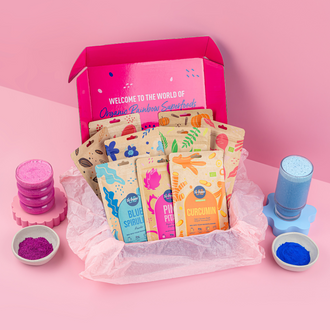

For bakeries and pastry kitchens, blue spirulina is a way to add a vivid blue to cakes, cookies, doughnuts and desserts with a powder that tastes of very little. It is the blue pigment of spirulina, phycocyanin from Arthrospira platensis, and its colour is bright, clean and easy to work into creams and icings.
The oven is where it needs care. Phycocyanin is sensitive to heat, so a blue batter rarely bakes into a blue crumb. Knowing where it works best, and where it needs testing, saves a lot of wasted batches.
What happens to blue spirulina in the oven
During baking, the blue fades and often shifts. Three things are at work:
- Heat: prolonged high temperatures break down the blue pigment, leaving a paler, duller colour.
- Base colour: butter, egg yolks and brown sugar give a yellow or tan background, and blue on yellow reads as green.
- Browning: crusts and edges darken as they bake, which further mutes any blue near the surface.
The practical result is that most baked items come out teal, sage or grey-green rather than bright blue. That can still look attractive, but it should be expected in development rather than discovered at the counter.
Where blue spirulina works best in a bakery
The brightest blues come from components that are not baked, or that go on after baking:
- buttercream, cream cheese frosting and whipped cream
- doughnut glazes, water icing and royal icing
- fillings, creams and mousses for cakes, choux and tarts
- no-bake cheesecakes and layered desserts
- piped decorations and sugar work
A useful rule for product planning: bake the structure, colour the finish.
Cakes and sponges
If the crumb itself needs a blue tone, a few choices help. White cakes made with egg whites rather than whole eggs, and with a pale fat, give a lighter background than a yellow butter sponge. Thin layers and shorter bakes expose the colour to less heat than a deep cake baked for a long time. Mixing the powder evenly through the flour and other dry ingredients before adding the liquids avoids streaks and specks.
Expect to use more powder than in a frosting to get a visible shade, and judge the result once the cake has cooled, not as batter. A lightly tinted sponge under a strongly blue frosting often gives the best overall look.
Cookies, biscuits and doughnuts
Sugar cookies and shortbread made with a pale dough hold colour better than brown-sugar cookies, and taking them out before the edges brown keeps the surface clearer. Rolled cookies can also be finished with blue royal icing or a glaze, which is more reliable than colouring the dough.
For doughnuts, colour the glaze or the filling rather than the dough. Frying puts the dough through high heat, while a glaze mixed with the powder and applied after cooling stays bright.
Buttercream and frostings
Frosting is where blue spirulina is at its best in a bakery. Whisk the powder into a small amount of milk, cream or water first, then beat it into the frosting so that it spreads evenly without specks.
The base matters. A classic butter buttercream is ivory or pale yellow, which pulls the blue towards turquoise. Beating the butter until very pale, or using whipped cream, cream cheese frosting or a white fat, gives a truer blue. Start with about ¼ to ½ teaspoon per 250 g of frosting and build up in small steps, then check again after the frosting has rested, since any undissolved powder shows up later as specks.
Fillings, creams and glazes
Cooked creams such as pastry cream are best coloured after cooking, once they have cooled to warm, so the blue is not held at high heat. White chocolate ganache can be coloured by adding the dissolved powder to the warm cream; the ivory chocolate will give a turquoise tone. Mirror glazes and gelatine-set creams can take the colour once cooled to their working temperature.
Simple water icing and doughnut glazes, made with icing sugar and a little liquid, give some of the brightest results of all, because the base is white and nothing is heated. Lemon curd and other acidic cooked fillings are a poor match: acid and cooking heat both work against the blue.
Acid, light and the display cabinet
Two more factors affect how blue products look by the time they are sold. Acidic ingredients such as lemon juice and some fruit purées can soften the colour over time, so test shelf life with the actual recipe. Bright cabinet lighting and direct sunlight can fade the blue on the surface of cakes and pastries held on display for long periods.
For the best results, colour finishes on the day they are made and keep blue items out of strong direct light.
Testing a new blue product
Before adding a blue item to the range, run a small, structured trial:
- Make two or three versions at different dosages.
- Photograph them in the same light after baking and cooling, and again after the time they would normally spend in the cabinet.
- Taste at serving temperature and check that no marine note comes through.
- Write down the chosen dosage by weight so every batch can be repeated.
Our guide to using blue spirulina powder includes mixing methods and colour combinations, and our blue spirulina flavour guide suggests pairings that suit a blue product.
Supply for bakeries
Once a blue product becomes a regular line, buying in bulk makes ordering simpler. The Organic Labs supplies Bulk Blue Spirulina Powder 25kg in 25 kg drums, with a certificate of analysis per batch and samples available to test in your own recipes. For home bakers, the Blue Spirulina Powder – 50g is the right size to start.


