


Pink pitaya powder gives bakers a vivid magenta colour from fruit, with a mild flavour that sits comfortably next to butter, vanilla and chocolate. It also has one important limit: its colour does not love the oven. Knowing where it shines and where it fades is what makes it work in a professional bakery.
This guide is for bakeries, pâtisseries and pastry kitchens using red dragon fruit powder in cakes, cookies, macarons, frostings and fillings. It covers dosage, heat behaviour and how to test the powder before a product goes on the counter.
What Pink Pitaya Brings to a Bakery
Pink pitaya powder is 100% dragon fruit, so it adds colour and a gentle fruity note with a single, recognisable ingredient. It suits vegan ranges, works in both butter and plant-based frostings, and pairs well with flavours bakeries already stock: vanilla, white chocolate, raspberry, lemon, coconut and lychee.
Because the powder is dry, it adds colour without adding water. That is a real advantage over liquid colours in moisture-sensitive work such as macarons, meringues and chocolate.
How Heat Affects the Colour
The pink comes from betalain pigments, which break down with prolonged heat. The longer and hotter the bake, the more the colour fades, and it can drift from magenta towards a dusty pink or brownish tone.
The inside of a bake fares better than the outside. The crumb stays cooler than the crust, so a sponge may keep a soft pink centre while its outer surface browns in the usual way. Recipe chemistry matters too: alkaline batters with a lot of baking soda fade faster, while slightly acidic batters hold the colour better.
The practical takeaway: in baked items, expect a softer, more muted pink than the dry powder suggests, and save the brightest effects for elements that are not baked.
Cakes and Sponges
For cakes and sponges, start at 3–6% of the flour weight. Sift the powder with the flour and raising agents so it is spread evenly before the wet ingredients go in. The powder absorbs moisture, so add a little extra liquid at the higher end of the range.
To keep as much colour as possible:
- Include acidic ingredients such as buttermilk, yoghurt or a little lemon juice.
- Rely on baking powder rather than large amounts of baking soda.
- Choose formats that cook quickly or gently, such as cupcakes, thin sponge sheets, roulades and steamed cakes, over deep, long-baked cakes.
- Bake at a moderate temperature and avoid over-baking.
Cookies, Shortbread and Biscuits
Cookies bake quickly, which helps, but their edges and bases brown. Pale, butter-rich doughs such as shortbread and sugar cookies show the colour best. Mix the powder with the flour and sugar, and bake at a slightly lower temperature to limit browning if you want the pink to stay clear rather than golden.
For a stronger effect, colour the decoration instead. A pink pitaya glaze, royal icing or a dip in coloured white chocolate gives a far brighter finish than the dough itself.
Macarons and Meringues
Macarons are a natural fit. Pink pitaya powder adds colour without water, so it does not loosen the meringue. Sift it in with the ground almonds and icing sugar. Shells lose some intensity during resting and baking, so colour the batter a shade deeper than the result you want, and bake at the lowest temperature that still gives good feet.
Meringues and pavlova bake or dry at low temperature, which treats the colour gently. A dusting of powder over a finished pavlova, or a swirl of pitaya cream on top, adds a bright accent.
Frostings, Buttercream and Glazes
Unbaked toppings are where pink pitaya powder performs best. Sift it with the icing sugar and beat it into buttercream, cream cheese frosting or glaze, adding a little at a time until the shade is right.
Butter is naturally yellow and pushes pink towards coral or salmon. Beating the butter until very pale before adding the colour gives a cleaner pink, and plant-based or white fats show the true magenta. For glazes, the acidity of lemon juice keeps the colour bright and adds a pleasant tang.
In white chocolate ganache, mix the powder into the cream or with the chocolate before emulsifying, and test the texture, as the extra dry matter firms the ganache.
Fillings, Creams and Doughnuts
Fillings give pink pitaya the stage it needs. A starting point is 3–6% of the recipe for fillings, spreads and confectionery.
- Pastry cream and crème diplomate: stir the powder in after cooking, while the cream cools, so it avoids prolonged heat.
- Whipped cream and mousse: sift the powder over the cream before whipping, or fold it in with the sugar.
- Doughnut glazes and fillings: a pitaya glaze on a plain ring doughnut is one of the simplest ways to put the colour on the counter.
- Cheesecake: no-bake versions keep the brightest colour; baked cheesecakes soften to a gentle rose.
Testing Before Launch
A fruit colour needs testing in your own recipe, oven and display conditions. A simple process for a professional kitchen:
- Bake or prepare a small ladder of dosages, for example at the low, middle and high end of the range.
- Photograph each under the same light, straight after production and again after a day on display.
- Check colour under your shop lighting, as strong light fades betalain colours over time.
- Taste each version alongside your existing product.
- Record the chosen dosage by weight in the recipe so every batch is made the same way.
For a side-by-side look at another plant-based pink, see our comparison of pink pitaya and beetroot powder. For drinks and other uses, our complete guide to pink pitaya powder has methods and amounts.
Supply for Bakeries
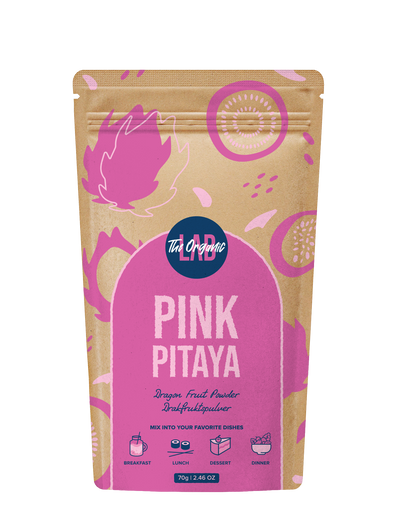
Bakeries using pink pitaya regularly can order Bulk Pink Pitaya Powder 25kg in drums, stocked and shipped from Sweden, and request a sample to test first. Home bakers can try the same ideas with the Pink Pitaya Powder – 70g pack.


