


Baking With Ube Powder – Guide for Bakeries & Food Businesses
Ube has moved beyond traditional Filipino desserts and is increasingly being used in cakes, cookies, pastries, cheesecakes and other bakery products.
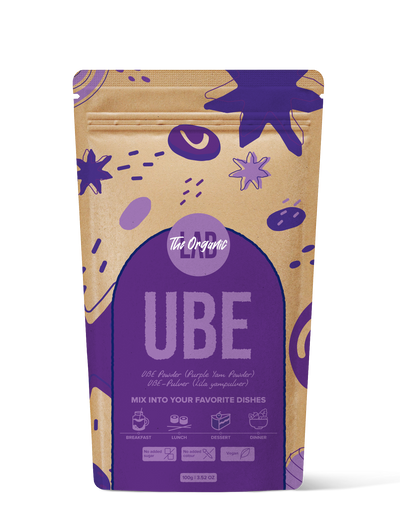
For bakeries and food businesses, Ube Purple Yam Powder provides a practical way to incorporate Dioscorea alata into recipes without handling fresh purple yam.
Its distinctive natural purple colour and mild flavour make it particularly interesting for bakeries developing new products, seasonal ranges or visually distinctive desserts.
However, Ube powder behaves differently from artificial colouring or liquid flavouring. When developing a commercial recipe, bakeries need to consider dispersion, moisture, flavour balance, colour and consistency between production batches.
What Is Ube Powder?
Ube is a purple yam botanically known as Dioscorea alata.
Ube powder is produced from the yam in a dried format that can be incorporated into bakery formulations and other food products.
It can be used in products including cakes, cookies, muffins, pancakes, waffles, cheesecakes, pastries, fillings and dessert components.
For professional bakeries, the powdered format also makes Ube easier to weigh and incorporate into standardised recipes.
Why Are Bakeries Using Ube?
Ube offers both flavour and visual differentiation.
Unlike an ingredient used purely for colouring, Ube contributes its own characteristic flavour to the finished product.
Its naturally purple appearance also makes it particularly attractive for bakery products where visual presentation is important.
This has helped Ube appear in products ranging from cookies and cakes to croissants, cheesecakes and pastries.
How to Use Ube Powder in Baking
Ube powder normally needs to be incorporated evenly throughout the recipe.
For many bakery applications, it can be combined with the dry ingredients before liquids are introduced.
This helps distribute the powder throughout the mixture and reduces concentrated pockets of powder.
The ideal method will depend on the particular formulation, so bakeries should test the ingredient within their own recipe rather than assuming one preparation method will work for every product.
Ube Powder in Cakes
Cakes are one of the most versatile applications for Ube powder.
It can be incorporated into sponge cakes, layer cakes, cupcakes, loaf cakes and other cake formulations.
When developing an Ube cake commercially, both flavour and texture should be evaluated.
Adding a powdered ingredient changes the balance of a formulation, particularly when larger quantities are used.
For this reason, bakeries should develop the recipe through controlled test batches before moving into larger-scale production.
Ube Powder in Cookies
Ube cookies have become another popular way to use purple yam.
The powder can be incorporated into cookie dough to create products with a characteristic Ube flavour and purple appearance.
Ube can work particularly well alongside ingredients such as vanilla, coconut and white chocolate.
Commercial bakeries should test how the dough behaves during mixing, resting and baking, as these stages can affect both the final texture and appearance.
Ube Powder in Muffins and Cupcakes
Ube can also be incorporated into muffins and cupcakes.
These formats allow bakeries to combine an Ube sponge with complementary toppings, fillings or frostings.
For example, the Ube flavour can be paired with vanilla, coconut or cream-based components without requiring every element of the product to contain Ube.
This can help create a more balanced finished product.
Ube Powder in Cheesecake
Cheesecake is particularly suitable for Ube because the creamy base complements its mild flavour.
Ube powder can be incorporated into the cheesecake mixture during recipe development.
The finished colour will depend on the amount of Ube used as well as the other ingredients in the formulation.
Bakeries should therefore evaluate flavour, texture and appearance together rather than attempting to achieve a particular shade simply by continually increasing the quantity of powder.
Ube Powder in Pancakes and Waffles
Ube can also be incorporated into pancake and waffle batters.
This makes it relevant not only for traditional bakeries but also cafés, brunch restaurants, hotels and other HoReCa businesses.
Ube pancakes can be combined with toppings such as cream, coconut, fruit or syrups to create a complete menu item.
For commercial service, the recipe should be standardised so the same amount of powder is used in every batch.
Ube Powder in Pastries
Professional bakeries can also experiment with Ube in pastry applications.
Rather than incorporating Ube directly into every type of dough, it may be used in fillings, creams or other components depending on the product.
This creates opportunities for products such as Ube-filled pastries, buns and croissant-style products.
Testing is especially important because different pastry processes involve different temperatures, moisture levels and production methods.
Ube Powder in Fillings and Creams
Ube does not necessarily need to be baked directly into a product.
It can also be incorporated into fillings, creams and dessert components.
This gives bakeries additional flexibility when developing Ube products.
A neutral pastry or cake, for example, can be combined with an Ube-based filling to introduce both flavour and colour without modifying the entire base formulation.
Does Ube Powder Affect Texture?
Potentially, yes.
Ube powder is a dry ingredient, so increasing its proportion can influence the moisture balance and texture of a recipe.
This is why professional recipe development should focus on the entire formulation rather than treating Ube powder purely as a colouring ingredient.
The correct quantity will depend on the product, the other dry ingredients and the desired flavour intensity.
What Happens to Ube Colour During Baking?
The colour of Ube can change during processing.
Ube contains naturally occurring pigments, and the appearance of a finished baked product can be influenced by temperature, pH, moisture and other ingredients.
A raw Ube batter therefore does not necessarily have exactly the same colour after baking.
This is normal when working with naturally coloured food ingredients.
Commercial bakeries should evaluate the finished baked product rather than judging the formulation only from the raw mixture.
Natural Ube Colour vs Artificial Purple Colour
Pure Ube powder should not be expected to behave like synthetic purple food colouring.
Natural Ube powder can range in appearance from muted lavender and violet tones to deeper purple depending on the raw material and processing.
The finished bakery product may also appear lighter or more muted once Ube is combined with flour, dairy and other ingredients.
For professional product development, flavour and ingredient authenticity may be more important than attempting to achieve an unnaturally intense purple colour.
Ube Powder vs Ube-Flavoured Baking Mixes
Businesses sourcing Ube should check exactly what they are purchasing.
Pure Ube powder is different from an Ube-flavoured premix.
Prepared mixes can contain additional ingredients such as sugar, flavouring, colour or other carriers.
For businesses specifically looking for purple yam, the botanical identity to look for is:
Dioscorea alata
This helps distinguish genuine Ube from other purple ingredients.
Developing an Ube Bakery Product
Before introducing an Ube product commercially, bakeries should run controlled trials.
The objective should be to determine:
- the appropriate amount of Ube powder
- how the powder should be incorporated
- whether moisture needs adjustment
- the final flavour after baking
- the finished colour
- texture
- production consistency
- shelf-life behaviour of the finished product
Once the desired result has been achieved, the formulation can be documented and reproduced consistently.
Ube Powder for Commercial Bakeries
The requirements of a commercial bakery are different from those of a home baker.
Once an Ube product moves into regular production, businesses need to consider ingredient availability, batch consistency, documentation, packaging sizes and purchasing volumes.
A bakery producing hundreds or thousands of products may also need substantially larger quantities than a café experimenting with an occasional Ube dessert.
This makes professional sourcing important once the product progresses beyond development trials.
Bulk Ube Powder for Bakeries in Europe
The Organic Labs supplies Ube Purple Yam Powder to professional customers across Europe.
Ube can be supplied for applications including bakery production, desserts, beverages, ice cream and broader food manufacturing.
For bakeries moving from product development into commercial production, bulk purchasing provides a more appropriate route than relying on small consumer packages.
Choosing Ube Powder for a Bakery
When evaluating Ube powder for professional baking, businesses should consider more than appearance alone.
Botanical identity, ingredient composition, flavour, particle size, documentation, packaging format and suitability for the intended application should all be evaluated.
The ingredient should then be tested in the bakery's actual formulation and production process.
This is particularly important when the product will eventually be produced at scale.
Ube Powder for Bakeries in Europe
Ube gives European bakeries an opportunity to develop products that combine a distinctive ingredient, recognisable purple appearance and an established connection to Filipino cuisine.
The possibilities extend well beyond a single Ube cake.
Cookies, cheesecakes, muffins, pancakes, pastries, fillings and other bakery products can all provide potential applications.
For professional businesses, the key is controlled recipe development followed by consistent sourcing and production.
Looking for Ube Powder for Your Bakery?
For bakeries, pastry businesses, food manufacturers and other professional buyers, explore our bulk Ube powder supply in Europe.


