

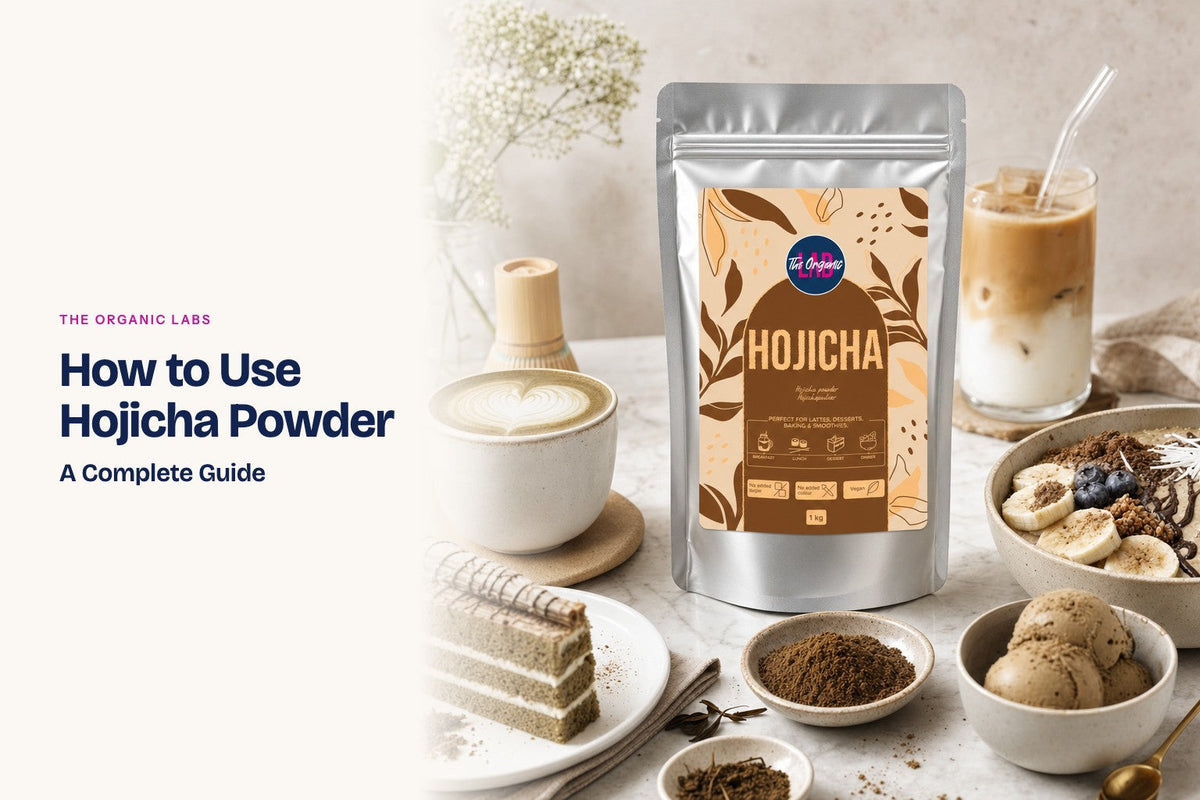
Hojicha powder is roasted green tea, finely milled. It brings a warm brown colour and a toasty, nutty flavour to whatever you add it to, and because it is a powder, there is nothing to steep or strain.
Using it well comes down to a few habits: sifting, mixing it into a paste before adding the rest of the liquid, and weighing it. This guide covers drinks, baking, desserts and ice cream, with amounts given as ranges you can adjust to taste.
Before You Start: Sift and Weigh
Fine tea powders clump easily, especially once a pack has been opened a few times. Pass the powder through a small fine sieve or tea strainer before use. It takes seconds and prevents lumps later.
Weigh rather than measure by the spoon. Spoon sizes vary, and a heaped spoon can easily hold twice as much as a level one. A kitchen scale that reads in single grams is the most useful tool for working with hojicha.
The Basic Method: Make a Paste
Hojicha powder disperses in liquid rather than dissolving. Tipped straight into a large glass of cold milk, it tends to float and clump. The reliable method:
- Sift the powder into a cup or bowl.
- Add a small amount of hot water, around 30–40 ml.
- Whisk until smooth, with no dry spots. A bamboo whisk, a small balloon whisk or a handheld milk frother all work.
- Add the rest of the liquid.
Hojicha is usually prepared with hotter water than matcha. Water just off the boil works well and helps the roasted aroma open up.
Hojicha Lattes
Hot latte
Whisk 3–5 g of hojicha powder with a little hot water, then top up with steamed or warm milk to around 300 ml. Sweeten to taste: brown sugar, honey and maple syrup all suit the roasted flavour.
Iced latte
Make the paste with hot water as usual, then pour it over ice and cold milk. Cold mutes flavour, so start from the top of the range. For a layered look, pour the milk over the ice first and the hojicha on top.
Choosing a milk
Dairy milk and oat, soy and almond drinks all work. Oat pairs especially well with the roast. Very thin plant drinks can make a latte taste watery; barista versions froth better and carry the flavour further.
Other Drinks
- Hojicha milk tea: make a slightly stronger paste, add cold milk and brown sugar syrup, and serve over ice.
- Smoothies and milkshakes: blend 3–5 g with banana, oats and milk, or with vanilla ice cream and milk for a shake.
- Hojicha and espresso: pour a shot of espresso over an iced hojicha latte for a doubly roasted drink.
- Hojicha without milk: whisk 1–2 g into a cup of hot water for a simple roasted tea.
Baking With Hojicha Powder
For cakes and sponges, use about 3–6% of the flour weight. For a recipe with 250 g of flour, that is roughly 7.5–15 g of hojicha. Sift it together with the flour, baking powder and other dry ingredients so it is evenly spread through the batter.
The powder absorbs moisture, so a batter may turn slightly thicker. Add a spoonful of extra milk or water if needed. Hojicha suits cookies, shortbread, banana bread, sponges, cheesecakes and brownie-style bakes, and it combines well with brown butter and white chocolate. Our guide to baking with hojicha powder has more detail.
Creams, Fillings and Desserts
Unbaked desserts show hojicha at its smoothest. Use around 3–6% of the recipe weight in fillings, spreads and creams:
- Whipped cream: whisk the powder with the sugar, then add the cream and whip as usual.
- Pastry cream and custard: whisk the powder into the milk before heating.
- Ganache: stir the powder into the warm cream before pouring it over white or milk chocolate.
- Panna cotta, puddings and layered desserts: mix it into the cream or mascarpone, and finish with a light dusting on top.
- Mochi and Japanese-style sweets: knead it into the dough or dust the finished pieces with a mix of hojicha and kinako.
Hojicha Ice Cream
For ice cream, use around 2–4% of the base. Mix the powder thoroughly with the sugar before it goes into the milk and cream: the sugar crystals keep the powder particles apart and stop them clumping. Freezing makes flavours taste weaker, so the base should taste a little stronger than you want the finished ice cream to be.
No ice cream machine? Whisk hojicha into a no-churn mix of whipped cream and condensed milk, then freeze. Read more in our guide to hojicha ice cream and gelato.
Quick Reference: How Much to Use
- Latte (300 ml): 3–5 g
- Plain hojicha in hot water: 1–2 g per cup
- Cakes and sponges: 3–6% of the flour weight
- Creams, fillings and spreads: 3–6% of the recipe
- Ice cream: 2–4% of the base
Start in the middle of each range, taste, and adjust next time. Darker, sweeter recipes can take more hojicha; plain, delicate ones need less.
Common Mistakes and Storage
- Adding powder straight to cold liquid, which leaves floating lumps.
- Using too much: beyond a certain point, hojicha turns bitter and slightly dusty.
- Measuring by the spoon and getting a different result every time.
- Leaving the pack open, so the powder loses aroma and takes up moisture.
To keep the powder at its best, store it sealed, in a cool, dry place below 25 °C, away from direct sunlight and strong smells. Use a clean, dry spoon so no moisture gets in, and close the pack straight after use. A fresh, toasty smell when you open it is the best sign that it is still at its best.
For Cafés and Businesses
Cafés serving hojicha every day will find service methods and menu ideas in our guide for cafés and coffee shops. Businesses can request bulk pricing, documents or a sample on the Bulk Hojicha Powder 25kg page.


