


Ube Powder for Bubble Tea & Beverage Production
Ube is becoming an increasingly popular ingredient for colourful drinks, milk-based beverages and modern café menus.
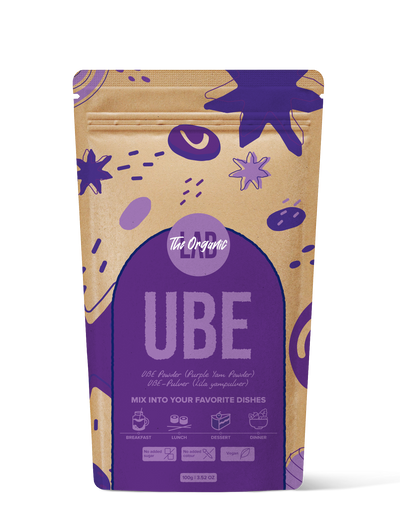
For bubble tea shops, beverage manufacturers and HoReCa businesses, Ube Purple Yam Powder provides a way to introduce genuine Dioscorea alata into drink formulations while creating a distinctive natural purple appearance.
From Ube milk tea and iced drinks to smoothies and speciality beverages, Ube powder can be used across a wide range of beverage concepts.
What Is Ube Powder?
Ube is a purple yam botanically known as Dioscorea alata.
Ube powder is produced from the yam in a dried, powdered format that can be incorporated into drinks, bakery products, desserts and commercial food formulations.
For beverage businesses, the powdered format makes Ube easier to store, measure and incorporate into standardised recipes.
Ube Powder for Bubble Tea
Bubble tea is one of the most interesting commercial applications for Ube.
Purple drinks are already familiar within the bubble tea market, but Ube and taro are different ingredients.
Ube is Dioscorea alata, while taro comes from a different plant.
For businesses developing an Ube bubble tea, confirming the botanical identity of the ingredient is therefore important.
Ube Milk Tea
Ube can be incorporated into milk-based beverages to create an Ube milk tea or creamy Ube drink.
The final formulation can use dairy or suitable plant-based alternatives depending on the concept.
Because Ube itself has a relatively mild flavour, sweetness and the choice of milk can have a significant influence on the finished beverage.
This allows businesses to develop different flavour profiles around the same core ingredient.
Ube Powder for Iced Drinks
Ube is particularly suitable for visually distinctive iced beverages.
An Ube base can be combined with milk, plant-based alternatives, ice and complementary ingredients to create drinks for cafés, bubble tea shops and beverage concepts.
The natural purple appearance can range from muted lavender to deeper violet tones depending on the amount used and the rest of the formulation.
Pure Ube should not be expected to produce the same neon-purple appearance as artificial food colouring.
Ube Powder for Smoothies
Ube powder can also be explored in smoothie formulations.
It can be combined with ingredients such as banana, coconut or other complementary flavours to create thicker beverages.
For commercial smoothie production, businesses should test how the powder disperses and how the flavour changes when combined with fruit and other ingredients.
Ube Powder for Milkshakes
Ube's mild flavour and natural compatibility with creamy ingredients also make it suitable for milkshake-style beverages.
Milk, ice cream or plant-based alternatives can be combined with Ube to create a thicker dessert beverage.
This provides another potential application for cafés, restaurants and dessert businesses that want to introduce Ube without developing an entirely new production process.
How to Mix Ube Powder Into Drinks
Proper dispersion is important when working with Ube powder.
Adding dry powder directly to a large volume of cold liquid can make even distribution more difficult.
Depending on the formulation, businesses may find it useful to disperse the Ube powder first in a smaller quantity of liquid before incorporating it into the complete drink.
Commercial operators should establish a standard preparation method so different staff members can reproduce the same beverage consistently.
Creating an Ube Base for Beverage Service
For busy cafés and bubble tea shops, preparing every drink completely from scratch can slow service.
One approach during product development is to establish a standard Ube base that can be measured consistently for each drink.
The appropriate preparation method and holding conditions will depend on the complete recipe and the business's own food-safety procedures.
The objective is consistency: the same Ube flavour, colour and portion should be delivered each time the drink is prepared.
Ube Powder vs Ube Syrup
Ube powder and Ube-flavoured syrup are not the same ingredient.
A syrup is typically formulated for convenience and may contain sugar, flavourings, colours or other ingredients depending on the product.
Ube powder produced from Dioscorea alata provides businesses with the actual purple yam ingredient.
This can be particularly relevant for brands that want greater control over sweetness and the overall formulation of their drinks.
Ube Powder vs Ready-Made Ube Drink Mixes
Businesses should also distinguish pure Ube powder from ready-made beverage mixes.
Premixed powders can contain additional ingredients such as sugar, milk powder, flavouring, colouring or carriers.
These products may have their own advantages for certain beverage concepts, but they are different from sourcing Ube itself as an ingredient.
Businesses specifically looking for purple yam should check the ingredient declaration and botanical identity.
Ube and Taro in Bubble Tea
Ube and taro are frequently confused because both appear in purple drinks and Asian-inspired desserts.
However, they are botanically different ingredients.
Ube is purple yam (Dioscorea alata).
Taro is a different plant with its own flavour, colour and characteristics.
A drink marketed specifically as an Ube beverage should therefore be developed using an ingredient that is actually derived from Ube.
Ube Powder for Bubble Tea Shops
For independent bubble tea shops, Ube provides an opportunity to expand beyond conventional flavours.
Potential menu applications can include Ube milk drinks, Ube bubble tea, iced Ube beverages and combinations with complementary ingredients.
Once a recipe has been developed, portion control becomes important.
Using a defined amount of Ube powder for every serving helps control flavour, colour and ingredient cost.
Ube Powder for Bubble Tea Chains
Businesses operating several locations have additional requirements.
A recipe that works in one shop needs to produce a similar result across every location.
This makes standardised preparation instructions, ingredient specifications and reliable sourcing increasingly important.
Central purchasing of Ube powder can also help businesses maintain greater consistency between locations.
Ube Powder for Beverage Manufacturers
Ube is also relevant beyond cafés and bubble tea shops.
Beverage manufacturers can explore Ube for chilled drinks, dairy beverages, plant-based beverages and other commercial drink concepts.
Industrial product development requires more extensive formulation and stability testing than preparing drinks individually in a café.
Manufacturers should therefore evaluate Ube within their specific production process and intended shelf life.
Natural Ube Colour in Beverages
The natural colour of Ube is one of the reasons it has attracted attention in modern drinks.
However, genuine Ube powder does not necessarily produce an extremely saturated purple drink.
The final colour can be affected by concentration, milk, pH, processing and other ingredients.
This variation should be considered during commercial product development.
Consistency in Commercial Ube Drinks
Consistency becomes increasingly important as beverage volumes increase.
Businesses should standardise factors such as the quantity of powder, liquid ratios, mixing method and serving size.
For manufacturers, the same principle extends to production batches.
A documented formulation helps ensure that the product developed during trials can be reproduced when commercial production begins.
Developing a Signature Ube Beverage
Ube can also provide a foundation for more distinctive menu concepts.
Rather than offering only a basic Ube milk drink, businesses can develop combinations using ingredients that complement its mild flavour.
Coconut, vanilla, coffee and matcha are examples of flavours commonly explored alongside Ube.
The objective should be to create a balanced drink where Ube remains identifiable rather than being overwhelmed by other ingredients.
Bulk Ube Powder for Beverage Businesses
Once an Ube beverage moves from testing into regular service or production, purchasing requirements can increase considerably.
Bubble tea chains, beverage manufacturers and HoReCa businesses may therefore require commercial quantities rather than consumer-sized packaging.
Bulk sourcing can also simplify purchasing for businesses operating multiple locations or producing larger beverage volumes.
Choosing Ube Powder for Beverage Production
Businesses evaluating Ube powder should consider more than colour alone.
Botanical identity, ingredient composition, flavour, powder characteristics, documentation and consistency should all be evaluated.
The ingredient should then be tested in the actual beverage formulation and production process.
For genuine Ube, the botanical identity to look for is:
Dioscorea alata
Ube Powder for Bubble Tea & Beverages in Europe
The growth of Ube in European cafés and speciality drinks is creating opportunities for bubble tea businesses and beverage manufacturers to develop new products around purple yam.
The Organic Labs supplies Ube Purple Yam Powder from Sweden to professional customers across Europe.
For businesses developing Ube bubble tea, milk drinks, smoothies or commercial beverage formulations, consistent ingredient sourcing becomes increasingly important as production grows.
Looking for Ube Powder for Beverage Production?
For bubble tea shops, beverage manufacturers, café groups and other professional buyers, explore our bulk Ube powder supply in Europe.


