

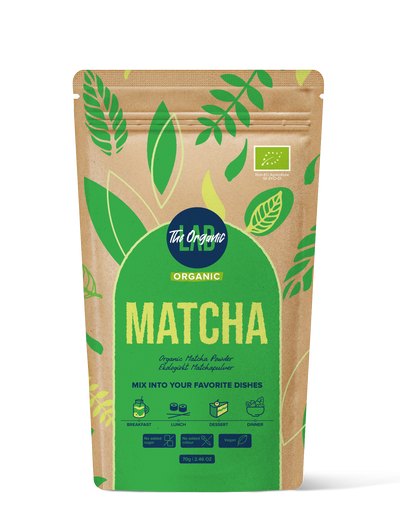

Matcha is a fine green powder made from the leaves of the tea plant, Camellia sinensis. Unlike loose-leaf tea, which is steeped and then removed, matcha is whisked straight into water or milk, so the whole leaf ends up in the cup, the cake or the ice cream.
That one difference explains most of what makes matcha useful in a kitchen: a strong green colour, a savoury and slightly sweet flavour with a bitter edge, and a format that blends into drinks, batters and dessert bases. This guide covers what matcha is, how it is made and how it is used today.
Matcha Comes From the Tea Plant
All true tea, whether green, black or oolong, comes from Camellia sinensis, an evergreen shrub of the camellia family. The differences between those teas lie in how the leaves are grown and processed, not in the plant species.
Matcha is a green tea. The leaves are heated soon after picking to stop the natural browning, known as oxidation, that would otherwise turn them into a darker tea. In Japan this heating is traditionally done with steam, which helps keep the leaf a fresh, clear green.
What sets matcha apart from other green teas is everything that happens before and after that step: how the bushes are shaded, how the leaves are sorted and how they are milled.
How Matcha Is Made
Shading before harvest
For several weeks before the spring harvest, tea bushes grown for matcha are covered to block most of the sunlight. Traditionally this was done with screens of reed and straw; today growers often use dark netting.
With less light, the leaves grow thinner, softer and darker green, and their chemistry shifts towards a rounder, more savoury taste with less astringency. Shading is the main reason matcha looks and tastes different from ordinary green tea.
Steaming, drying and sorting
After picking, the leaves are steamed and dried flat rather than rolled, which is how most steeping teas are made. The stems and veins are then removed, leaving small, flaky pieces of leaf known in Japan as tencha. Tencha is the raw material for matcha.
Milling
The tencha is ground into a very fine powder. The traditional method uses granite millstones that turn slowly, so the leaf is not overheated as it is ground. Stone milling produces only a small amount of powder per hour, which is one reason matcha takes more work to make than ordinary powdered tea.
Why Is Matcha So Green?
The colour comes from chlorophyll, the pigment found in all green leaves. Shading encourages the leaves to produce more of it, which gives matcha its deep jade to bright green tone.
Chlorophyll is sensitive. Heat, light, air, moisture and acidity can all shift it from bright green towards olive or brown. This is why matcha is packed away from light and air, why an opened pack should be resealed quickly, and why a baked matcha cake never looks quite like the powder that went into it.
Colour also varies naturally. Harvest, leaf quality and processing all affect the shade, so two batches of matcha are rarely identical in the way two batches of a synthetic colour would be.
What Does Matcha Taste Like?
Good matcha tastes fresh and vegetal, with a savoury depth often described as umami, a mild natural sweetness and a gentle bitterness at the finish. Matcha made for drinking with water tends to be smoother and sweeter; matcha made for cooking is usually bolder, which helps it hold its own against milk, sugar and butter.
We cover flavour, pairings and how the taste changes in drinks and baking in our guide to what matcha tastes like.
Matcha Grades Explained
Matcha is often sold under labels such as ceremonial grade and culinary grade. These are trade terms rather than formal standards, so their exact meaning varies from seller to seller. In general:
- Ceremonial-style matcha is made from young, early-harvest leaves and is intended to be whisked with water and drunk on its own. It tends to be brighter in colour and smoother in taste.
- Culinary or café matcha is intended for lattes, baking and desserts. It usually has a stronger, more astringent taste that stays noticeable after milk and sugar are added.
For a café or bakery, the useful question is not which label a powder carries but how it performs in the actual recipe: its colour in the finished product, its flavour after mixing and how easily it disperses.
Matcha vs Other Green Tea Powders
Not every green tea powder is matcha. Powder ground from unshaded leaves, or milled with the stems still in, usually looks duller and tastes grassier and more astringent. It has its uses, but it behaves differently from matcha in drinks and desserts where colour and smoothness matter. We explain the details in matcha vs green tea powder.
How Matcha Is Used Today
In Japan, matcha is whisked with hot water in a bowl using a bamboo whisk and served in the tea ceremony. Japanese confectioners have also long used it in sweets, and matcha ice cream is a familiar dessert there.
Outside Japan, matcha is now best known as a café drink, and it has spread from there into bakeries and dessert shops. Common uses include:
- hot and iced matcha lattes made with dairy or plant-based milk
- matcha milk tea and bubble tea
- sponges, roll cakes, cookies and financiers
- frostings, ganache, creams and fillings
- ice cream, gelato and other frozen desserts
- chocolate, confectionery and mochi
Like all tea made from Camellia sinensis, matcha contains caffeine.
From Tea Bowl to Kitchen Ingredient
Because matcha is already a fine, dry powder, it travels and stores more easily than fresh ingredients and can be weighed precisely for a standard recipe. It does need some care: keep it sealed, cool, dry and away from light, and sift it before use, because the fine particles tend to clump.
Those handling habits matter as much as the grade. A well-stored culinary matcha used in a tested recipe will often give a better result than a more expensive powder that has been left open on a shelf for weeks.
Buying Matcha for Your Kitchen or Business
Home cooks can start with the Premium Organic Matcha Powder – 70g, a small pack for lattes and weekend baking. Cafés, bakeries, gelato makers and food manufacturers who need regular volumes can request a quote for Bulk Organic Matcha Powder 25kg, supplied in 25 kg drums and stocked and shipped from Sweden.


