



Matcha is so closely linked with Japan that it is easy to assume it began there. Its story actually starts in China, where whisked powdered tea was once the fashionable way to drink tea. The method then moved to Japan, where it was refined over centuries and became the heart of the tea ceremony.
Today matcha is grown mainly in Japan and served in cafés from Stockholm to Lisbon. This guide traces where the tea plant grows, how matcha developed and how it found its way onto European menus.
The Tea Plant and Where It Grows
Matcha is made from Camellia sinensis, the tea plant. The species is native to the region around south-western China and its neighbours, and grows best in warm, humid climates with plenty of rain and well-drained, slightly acidic soil.
Tea is now cultivated across Asia, Africa and beyond, but the shaded leaf needed for matcha is grown mainly in Japan. Powdered green teas are also produced in China and other tea-growing countries, with their own styles and methods.
Powdered Tea in China
Tea drinking in China goes back a very long way and has taken several forms. During the Song dynasty, tea leaves were ground to a powder and whisked with hot water in a bowl. Whisking contests, judged on the colour and foam of the tea, were a popular pastime among the educated classes.
Over time, Chinese tea drinking moved towards steeping whole leaves, and the powdered style faded there. It survived, and developed much further, in Japan.
Matcha Arrives in Japan
Japanese monks who travelled to China to study Buddhism brought back tea seeds and the method of preparing powdered tea. The Zen monk Eisai, who returned from China in the late twelfth century, is traditionally credited with spreading tea drinking in Japan.
At first, powdered tea was drunk mainly in Zen temples. From there it spread to the warrior class and the court, and tea gatherings became social and cultural occasions in their own right.
The Tea Ceremony
Over the following centuries, the preparation and serving of matcha developed into the Japanese tea ceremony, known as chanoyu or chadō, the way of tea. Tea masters shaped it into a practice of simplicity and careful movement, in which every step, from cleaning the bowl to whisking the tea, follows a set form. The tea master Sen no Rikyū, active in the sixteenth century, is the figure most closely associated with it.
The ceremony uses two main preparations: usucha, a thinner tea whisked to a light foam, and koicha, a much thicker tea made with more powder and less water.
How Shade Growing Developed
The practice of shading tea fields, which gives matcha its deep colour and savoury flavour, developed in Japan. Growers around Uji, near Kyoto, became known for covering their bushes with screens of reed and straw before the spring harvest, and Uji tea gained a reputation that it keeps to this day.
The steps that followed, steaming the leaf, drying it flat, removing stems and veins and grinding it slowly on stone mills, turned shaded leaf into the matcha we know.
The Spring Harvest
Tea bushes in Japan are picked several times a year, but the first harvest in spring is the most prized for matcha. After the winter, the new shoots grow slowly and stay tender, and these young leaves give the smoothest, sweetest powder. Leaf from later harvests is generally bolder in taste and is more often used for culinary matcha, the type found in lattes and baking.
The leaf is processed into tencha soon after picking. Tencha keeps better than fine powder, so it is often stored and milled closer to the time of sale.
Japan's Matcha Regions Today
- Uji, Kyoto Prefecture: the historic centre of matcha and the name most often associated with it.
- Nishio, Aichi Prefecture: a long-established area known for growing tencha, the leaf that is milled into matcha.
- Kagoshima and Shizuoka: major tea-growing prefectures that also produce leaf for matcha.
- Yame, Fukuoka Prefecture: an area known for shade-grown teas.
Region alone does not define quality. Cultivar, shading, harvest time, processing and milling matter just as much, and powders from the same area can differ considerably.
From Japanese Sweets to Global Cafés
In Japan, matcha long ago moved beyond the tea bowl. Confectioners use it in traditional sweets, and matcha ice cream, cakes and soft-serve are familiar sights. These uses showed that matcha works as a flavour and a colour in food, not only as a drink.
Outside Japan, the matcha latte was the turning point. Combining matcha with steamed milk made it approachable for people who found plain whisked tea too bitter, and it fitted naturally on a café menu next to coffee.
How Matcha Reached European Cafés
In Europe, matcha was first found mainly in specialist tea shops and Japanese restaurants. In recent years it has become a standard item on café menus in many European cities, usually as a hot or iced latte, often made with oat or other plant-based milk.
Bakeries, gelato makers and bubble tea bars followed with matcha cakes, croissants, gelato and milk teas, and its striking green has made it a favourite for menus built around colour.
That growth has created demand for reliable supply within Europe. Our guide for cafés and coffee shops serving matcha covers drinks and preparation, and our page on matcha powder supply in Europe explains bulk sourcing.
Getting Matcha for Your Kitchen or Business
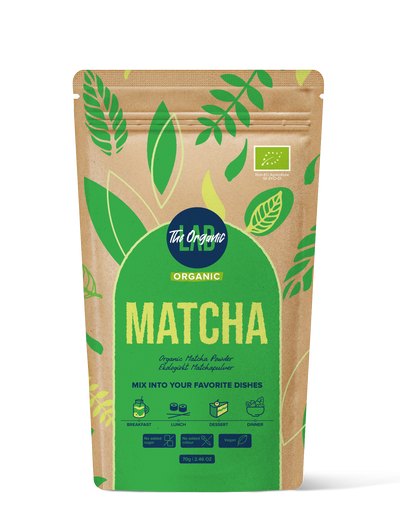
To try matcha at home, the Premium Organic Matcha Powder – 70g is a convenient pack. Cafés, bakeries and manufacturers can request a quote for Bulk Organic Matcha Powder 25kg, stocked and shipped from Sweden.


