

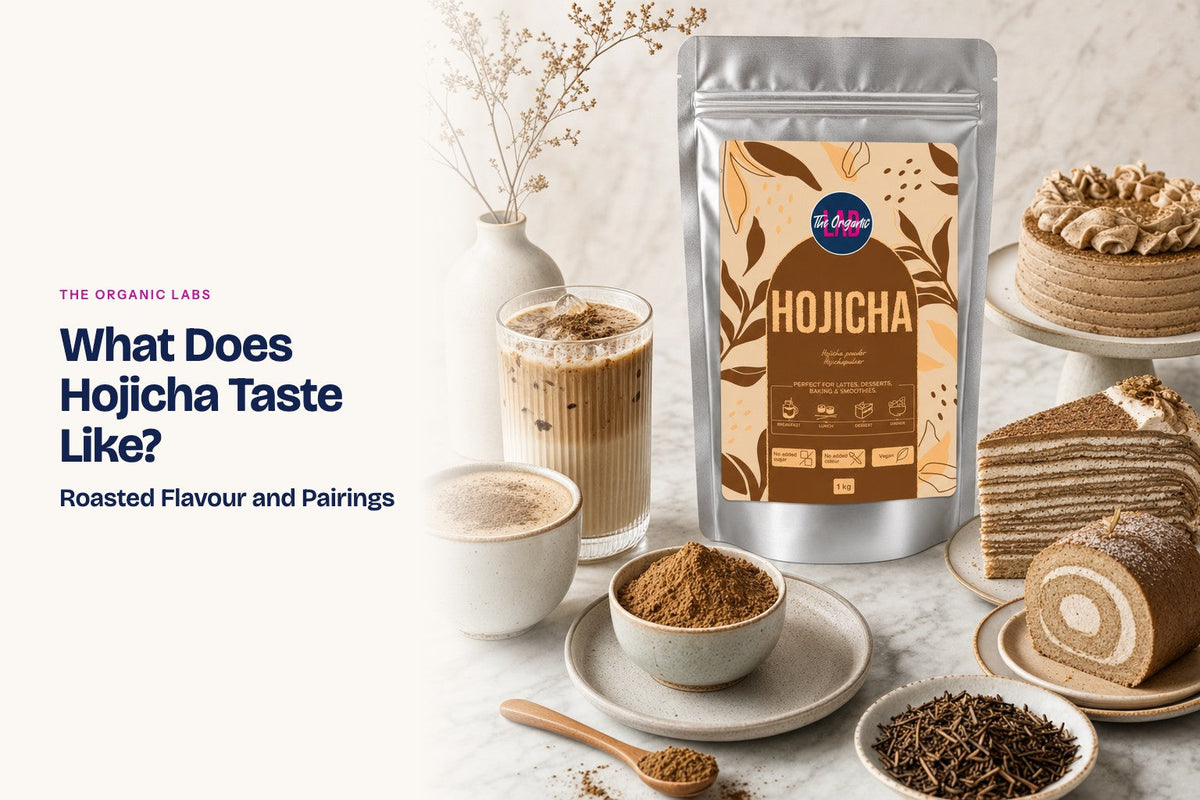
If you know green tea or matcha, hojicha can be a surprise. It is made from green tea, yet it tastes nothing like a grassy cup of sencha. Roasting gives it a warm, toasty character that many people find closer to toasted nuts or caramel than to fresh leaves.
This guide describes the flavour of hojicha, how it changes in drinks, baking and frozen desserts, and which ingredients bring out the best in it.
The Flavour of Hojicha
In short, hojicha tastes toasty, nutty and smooth, with roasted tea notes and a gentle natural bitterness. The fresh, vegetal flavour typical of green tea is largely replaced by the aroma of roasting. Taken apart, the flavour has four elements.
Toasty and roasted
The first impression is roast. Think of toasted grain, the crust of fresh bread or lightly roasted nuts. It comes from the high-heat roasting of the tea leaves, and it is also what you notice when you first open a pack.
Nutty and caramel-like
Behind the roast sits a rounded, nutty sweetness. With milk and sugar, many tasters pick up caramel or brown sugar notes.
Smooth
Hojicha is smooth on the palate. Roasting takes away the sharp, grassy edge that some green teas have, so the flavour feels round rather than bright.
Gentle bitterness
Like any tea, hojicha has a natural bitterness. It is gentle, and it works much like the bitterness in cocoa: it gives depth and keeps sweet recipes from tasting flat.
Light and Deep Roasts
Not every hojicha tastes the same. The depth of roast shapes the flavour as much as the leaf does. A lighter roast keeps a little more tea character, with a paler colour and a softer toasted note. A deeper roast gives a darker brown, a fuller roasted flavour and slightly more bitterness, closer to cocoa or toasted grain.
Neither is better. Lighter roasts suit plain drinks and delicate creams; deeper roasts stand up well to milk, sugar and baking. If you use hojicha regularly, the important thing is that the roast stays consistent from one pack to the next.
How Hojicha Compares With Other Flavours
- Green tea and matcha: both are fresh and vegetal, while hojicha is warm and roasted. Matcha also has a stronger savoury, umami note.
- Coffee: both are roasted, but hojicha is lighter and softer, without the heavy roast or the acidity of many coffees.
- Genmaicha: green tea with roasted rice also tastes toasty, but it keeps a green tea base. In hojicha, the tea itself is roasted.
- Cocoa: hojicha shares some of cocoa's warm, slightly bitter depth, which is why the two combine so well.
With Water, Milk and Sugar
Whisked into hot water on its own, hojicha tastes lean and clean: roasted tea, a light sweetness and a dry, gently bitter finish. It is the best way to judge a powder, because nothing hides its character.
Milk changes it the most. Fat and milk sugars round out the bitterness and turn the roast towards caramel. Sugar does something similar, and darker sugars such as brown sugar or muscovado add their own toffee notes, which echo the roast rather than simply sweetening it.
Hojicha in Lattes
Milk is hojicha's most popular partner. Dairy milk rounds off the bitterness and brings the caramel side forward. Oat drinks add their own cereal sweetness and suit the roast particularly well; soy gives a fuller body; almond lets the nutty notes come through. Coconut milk is more dominant and works best blended with another milk.
Iced, hojicha tastes lighter and a little less aromatic, because cold mutes aroma. Use the upper end of the usual dose, around 5 g for a 300 ml drink, or a touch more sweetener to compensate. Our guide for cafés and coffee shops has more drink ideas.
Hojicha in Baking
Because its flavour comes from roasting, hojicha copes well with the oven. The roasted note stays recognisable in cookies, sponges and cheesecakes, although the lightest aromatics soften during long bakes. Butter carries the flavour well, and browned butter in particular echoes the toasty character.
In bakes, hojicha reads as warm and bittersweet, somewhere between tea and caramel. Our article on baking with hojicha powder goes into dosage and technique.
Hojicha in Desserts and Ice Cream
In cream-based desserts such as panna cotta, custard, mousse and whipped cream, hojicha shows its smoothest side. Fat and sugar soften the bitterness and lengthen the roasted finish.
In ice cream and gelato, cold dulls flavour, so the base should taste slightly stronger than you want the finished ice cream to be. A good hojicha ice cream tastes like milky roasted tea with a caramel edge.
What Pairs Well With Hojicha
- Sweet and caramel: brown sugar, caramel, toffee, maple syrup, honey and condensed milk
- Chocolate: white and milk chocolate especially, dark chocolate in moderation
- Nuts and seeds: hazelnut, almond, walnut, pecan, chestnut and black sesame
- Japanese pairings: sweet red bean paste, mochi and kinako (roasted soybean flour)
- Fruit: banana, pear, apple and fig
- Spice and dairy: vanilla, cinnamon, cream cheese and mascarpone
Sharp citrus and tropical fruits need more care. Use them in small amounts, as a contrast to the roast rather than its main partner.
Getting the Flavour Right
Too little hojicha tastes vaguely of tea; too much becomes bitter and slightly dusty. As starting points, use 3–5 g of powder for a 300 ml drink, 3–6% of flour weight in cakes and 2–4% of an ice cream base. Taste, then adjust.
Freshness matters too. Hojicha powder loses its toasty aroma gradually once opened, so keep it sealed, cool and dry. A flat, dull smell is a sign that the powder is past its best. Our guide to how to use hojicha powder covers mixing methods and amounts in detail.
Trying Hojicha
Home cooks can explore the flavour with the methods in our hojicha guides. Cafés, bakeries and food producers can request a sample with their quote on the Bulk Hojicha Powder 25kg page and taste it in their own recipes.


